Top Lead Generation Tools That Will Transform Your Small Business
Small businesses face a constant challenge: acquiring and identifying customers. Paying for lead-generation platforms can make a difference when time and funds are short.
These tools enhance how leads are captured, managed, and ultimately converted into paying customers, thereby improving the business’s growth.
In this article, readers will learn about the best lead generation tools, their advantages, key features, and why small businesses should adopt them.
What is a lead generation tool?
A lead generation tool is software that helps organizations target and acquire users. These tools use lead generation technologies to find, communicate with, and cultivate leads until they are ready to purchase.
Some examples include email marketing software, Customer relationship management software, and web forms that capture contact information.
A robust lead generation system can automate outreach, track customer behavior, and improve conversion rates, saving time and effort.
Lead generation tools usually help you find potential customers through site visits, email, or social networks. These companies then take these prospects through a sales channel and convert them into loyal customers.
These tools are critical for small enterprises that want to maximize sales without taxing their employees.
Why is lead generation important?
Lead generation is essential for small businesses because:
- Increased sales: A strong lead generation system identifies and nurtures prospective buyers, boosting sales.
- Targeted marketing: Tools like b2b lead generation software focus on high-potential customers, reducing wasted resources.
- Sustainable growth: Consistent lead flow ensures stability and scalability for long-term business success.
- Improved ROI: Lead-generation automation minimizes manual effort and maximizes efficiency.
91% of marketers say lead generation is their top goal, underscoring its crucial role in business growth and revenue.
High-quality leads drive higher conversion rates and improved customer retention, underscoring the importance of making the right tool investments.
How to choose the right lead generation tools for Small Businesses
Finding the best lead-generation tools for your business depends on several factors:
- Budget: Look for affordable tools with the essential features you need. Free plans or tiered pricing can help startups.
- Scalability: Ensure the tool can grow with your business as your needs evolve.
- Ease of use: Intuitive tools save time and reduce your team’s learning curve.
- Integration: Compatibility with existing CRMs, social media platforms, and email marketing tools is crucial.
- Features: Automation, analytics, and targeting capabilities are must-haves for effective lead generation.
- Customer support: Reliable support ensures smooth implementation and troubleshooting when needed.
Reading customer reviews and trying free trials can also help you make an informed decision. Small businesses should also evaluate how well a tool aligns with their industry.
Best tool for cold email
Email remains a crucial channel for lead generation. According to several studies, 80% of buyers prefer to be contacted by email, and personalized cold emails can boost response rates by up to 35%.
Below are the top tools for this purpose:
1. Snov.io
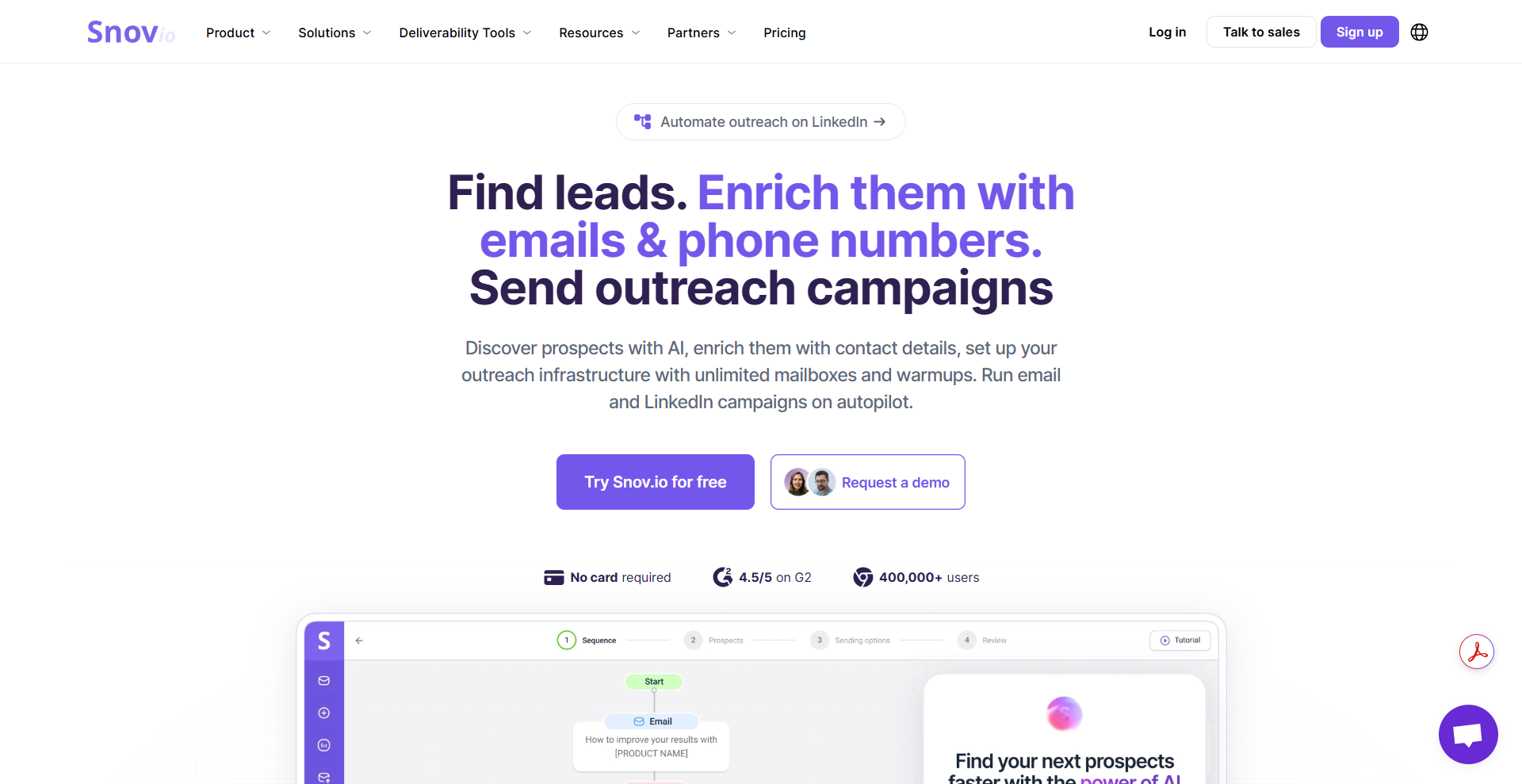
Snov.io is a comprehensive b2b lead-finder and lead-generation software that offers email outreach, contact verification, and CRM integration.
Key Features:
- Email finder and verifier for accurate contact discovery.
- Drip campaign automation for personalized follow-ups.
- Integration with CRMs like HubSpot and Salesforce.
Pros:
- Affordable pricing for small businesses.
- Built-in automation for follow-ups.
- Extensive data enrichment capabilities.
Cons:
- Limited integrations compared to other tools.
- Slightly steeper learning curve for beginners.
Snovio is best for companies that use bulk-targeted emails and need a tool that integrates easily with a CRM.
2. Hunter.io
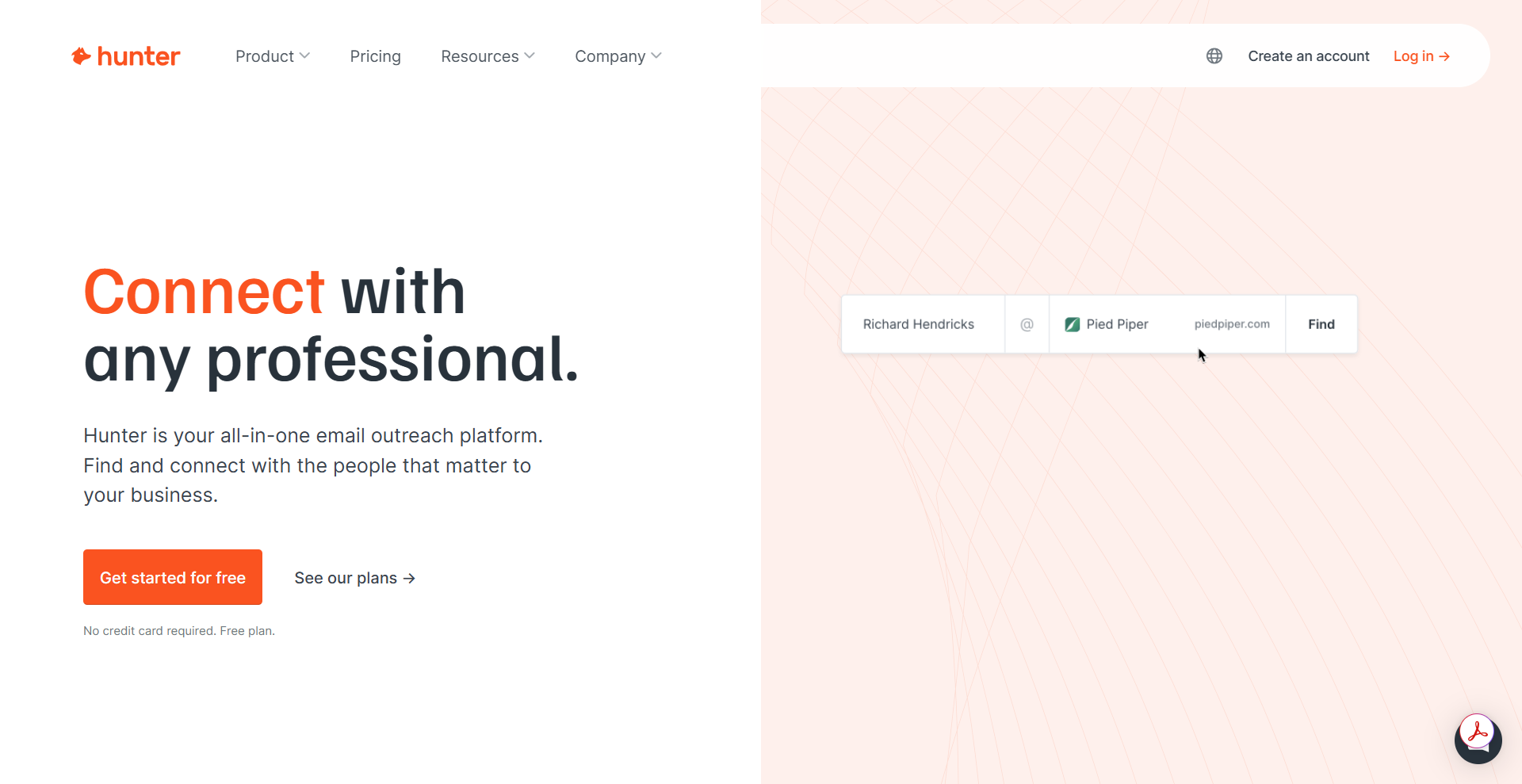
Hunter.io specializes in finding and verifying professional email addresses, making it a favorite among sales teams.
Key Features:
- Email discovery from domains and websites.
- Bulk email verification for more extensive campaigns.
- API access for custom integrations.
Pros:
- Accurate email discovery for targeted outreach.
- Simple interface for quick use.
- Free plan available for startups.
Cons:
- Limited functionality beyond email finding.
- No advanced automation features.
Hunter.io is particularly useful for small businesses that need to build targeted contact lists quickly.
3. Mailchimp
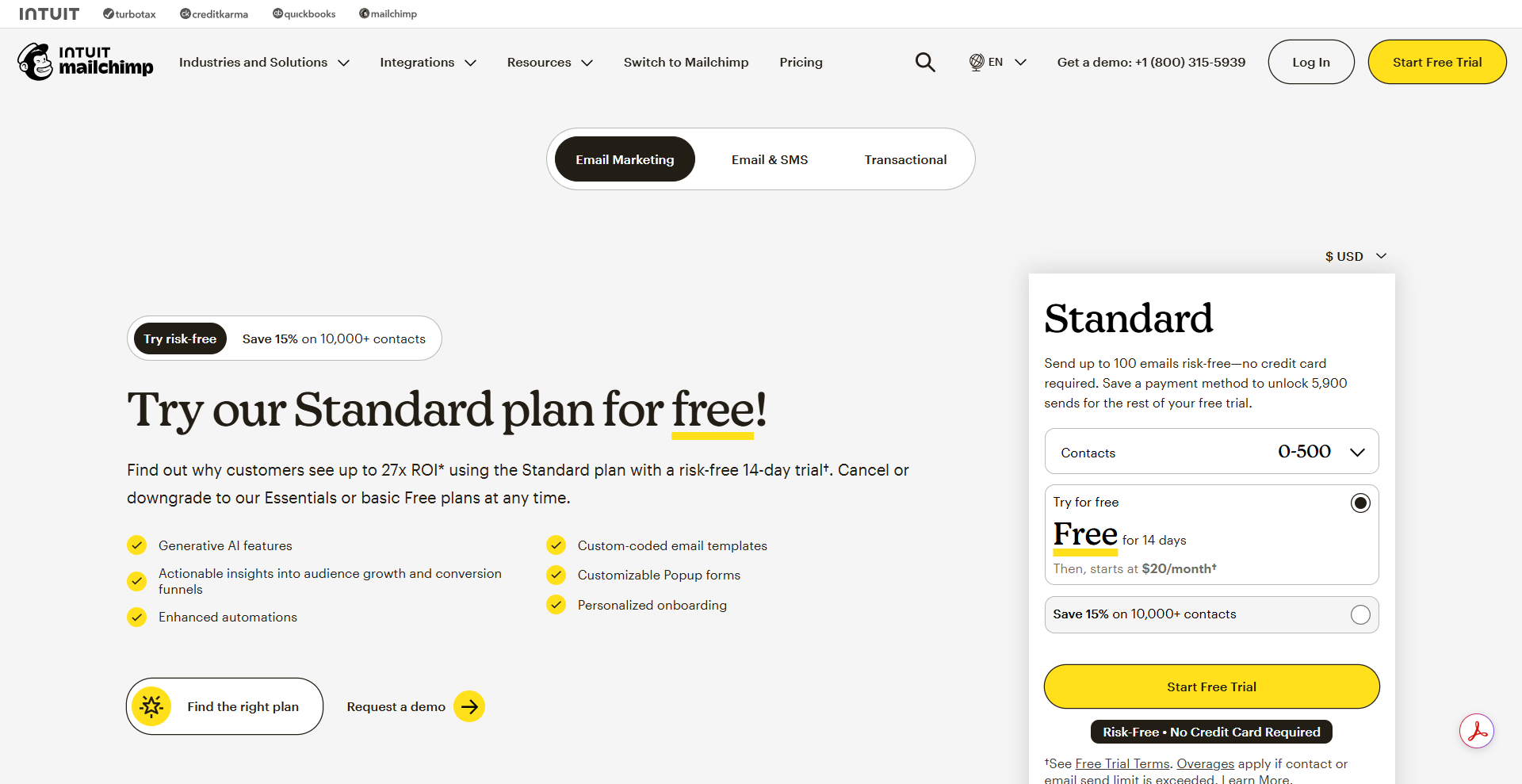
Mailchimp is a leading marketing platform combining email campaigns with advanced analytics.
Key Features:
- Pre-built templates for email campaigns.
- AI-powered audience segmentation.
- Detailed insights on campaign performance.
Pros:
- Its intuitive drag-and-drop editor is a key feature.
- Data analysis and decision reporting capabilities.
- Strong integrations with e-commerce platforms.
Cons:
- Higher pricing for advanced features.
- Limited automation compared to dedicated tools.
Mailchimp fits best for small businesses with multiple marketing needs because it covers email marketing, social ads, and landing pages.
4. MailerLite
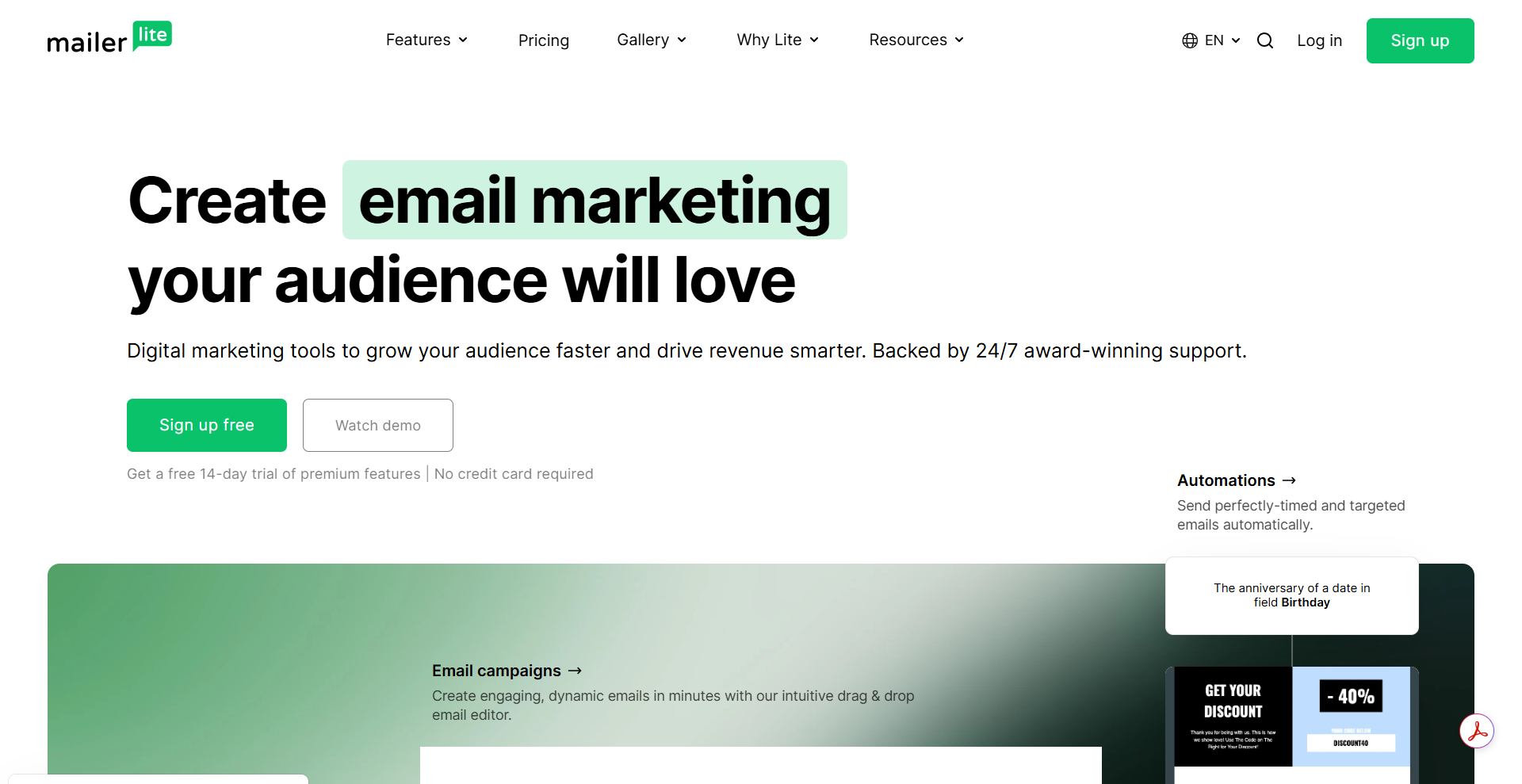
MailerLite is an affordable option for small businesses that need email marketing features.
Key Features:
- Advanced email automation with triggers.
- A/B testing to optimize campaigns.
- Simple landing page builder.
Pros:
- Affordable pricing with generous free plans.
- User-friendly interface with a clean design.
- Advanced features like A/B testing and automation.
Cons:
- Limited CRM functionality.
- Fewer integrations with other software.
MailerLite is a great choice for business owners who need efficient email marketing solutions but have a limited budget.
5. HubSpot
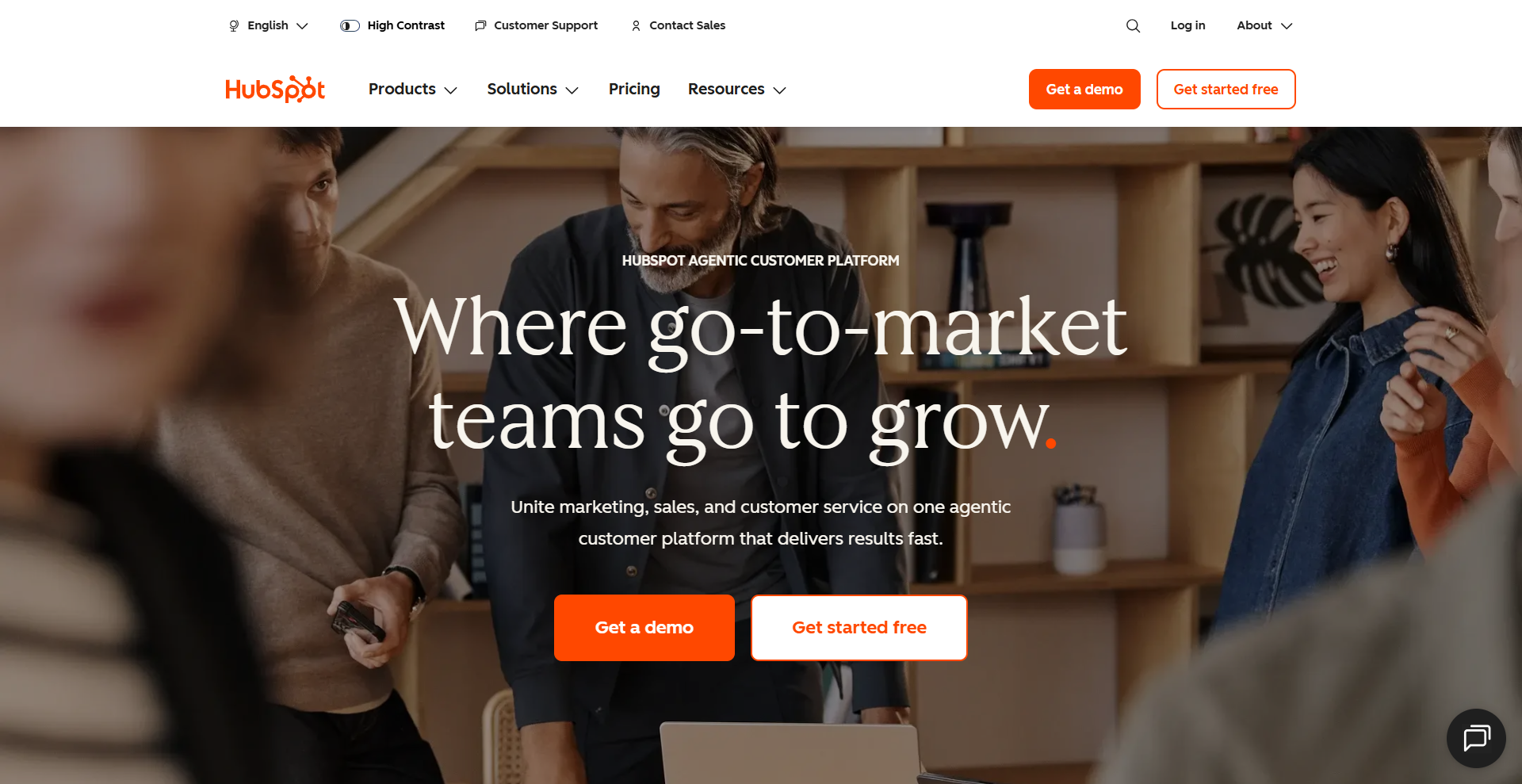
HubSpot is a comprehensive inbound marketing and lead generation platform with features that enable CRM creation and email sending.
Key Features:
- Built-in CRM with detailed contact management.
- Advanced email marketing and automation tools.
- Robust analytics and reporting capabilities.
Pros:
- Comprehensive features beyond email marketing.
- Free CRM for small businesses.
- Scalable for future growth.
Cons:
- Expensive for premium plans.
- Complex setup process for beginners.
For businesses that want an all-in-one solution to find leads and create and manage sales and customer relationships, HubSpot aims to be that all-encompassing bucket.
6. Woodpecker
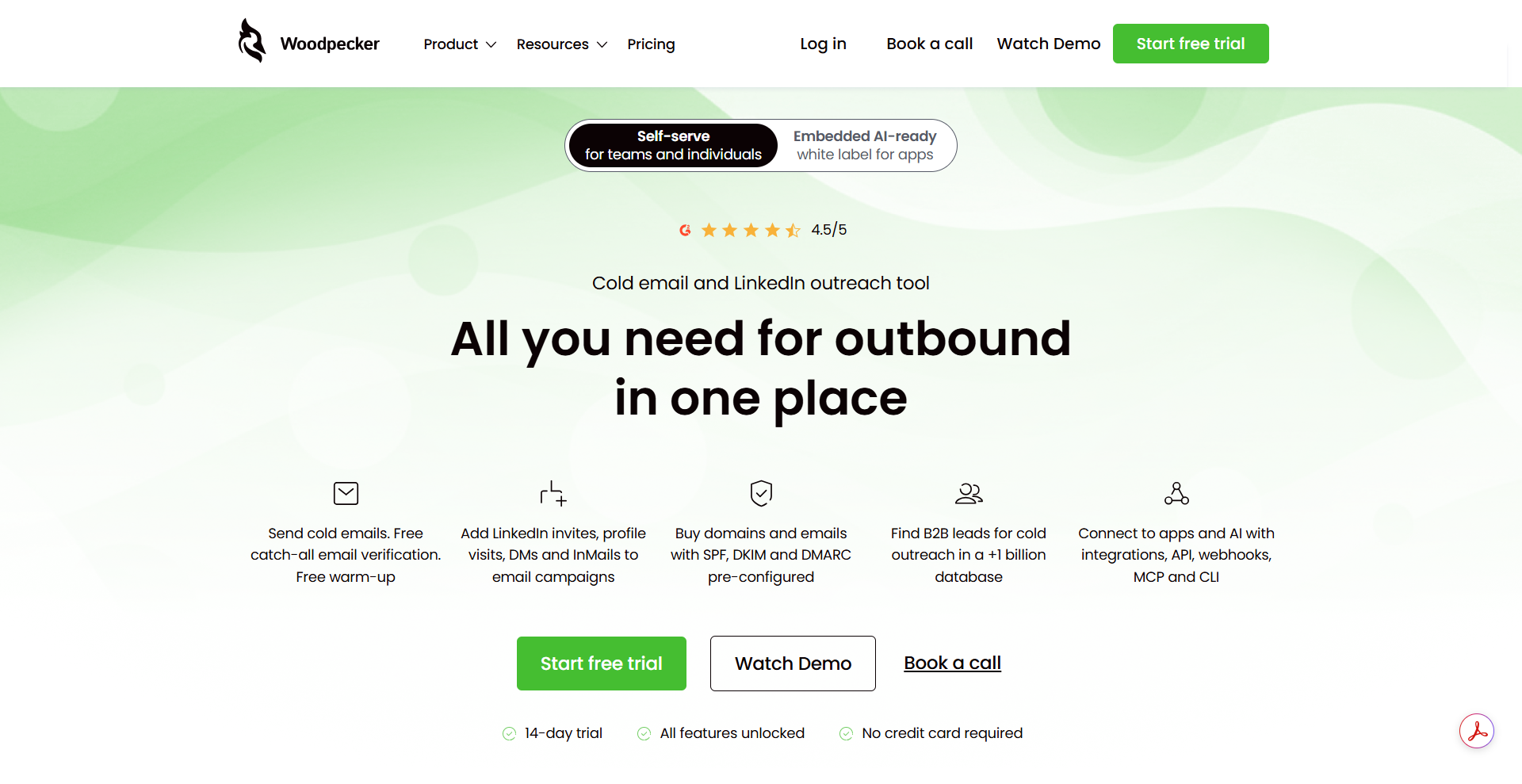
Woodpecker is a cold email and sales outreach platform built for B2B teams that want to automate personalized prospecting and follow-ups.
Key Features:
- Automated cold email sequences and follow-ups.
- Email personalization for targeted outreach.
- Built-in email verification and deliverability features.
- CRM and sales-tool integrations.
Pros:
- Focused specifically on cold outreach and lead generation.
- Helps small sales teams automate follow-ups while keeping messages personalized.
- Campaign analytics help teams track replies and outreach performance.
Cons:
- More specialized than an all-in-one CRM or marketing platform.
- Teams looking mainly for newsletters or inbound marketing may need additional tools.
Woodpecker is most suitable for small businesses and B2B sales teams that rely on personalized cold email to start conversations with prospective customers.
Here are 7 targeted FAQs for the article “Top Lead Generation Tools That Will Transform Your Small Business”:
Frequently Asked Questions
1. What are lead generation tools, and how do they benefit small businesses?
Lead generation tools are specialized software applications that automate the process of capturing, qualifying, and managing prospective customers. They help small businesses save time, capture higher-quality leads from website traffic, track prospect interactions, and scale customer acquisition without needing a massive marketing budget.
2. What types of lead generation tools should a small business start with?
A well-rounded lead generation tech stack typically includes:
- Form & Popup Builders: Tools to capture email addresses on your website (e.g., OptinMonster, HubSpot).
- Email Outreach & Automation Software: Platforms to nurture leads automatically (e.g., Mailchimp, ActiveCampaign).
- B2B Prospecting Tools: Platforms for discovering verified contact information (e.g., Apollo.io, LinkedIn Sales Navigator).
- Live Chat & Chatbots: Automated tools to engage website visitors instantly (e.g., Drift, Intercom).
3. How do I choose the right lead generation software for my budget?
Focus on your primary sales channel first. If you rely on inbound website traffic, prioritize conversion rate optimization tools like interactive forms or popups. If you rely on outbound sales, invest in contact discovery databases. Look for platforms that offer scalable tiered pricing or free trials so you can test ROI before committing long-term.
4. Is lead generation software suitable for B2B and B2C small businesses?
Yes, but the ideal tools vary by business model. B2B businesses benefit more from account-based marketing tools, LinkedIn outreach software, and cold email enrichment databases. B2C businesses see higher results using social media lead ads, visual popups, SMS marketing tools, and interactive quizzes.
5. How do lead generation tools integrate with CRMs?
Most modern lead generation software offers native integrations or API connections (via Zapier or Make) to popular CRMs like HubSpot, Salesforce, or Zoho. This ensures every newly captured lead automatically syncs to your sales pipeline with all relevant contact history and source attribution.
6. What is the difference between inbound and outbound lead generation tools?
- Inbound tools attract and convert prospects who are actively visiting your digital assets (e.g., landing page builders, website chatbots, lead magnet popups).
- Outbound tools help your team proactively identify and reach out to target prospective clients who haven’t discovered your business yet (e.g., email scraper tools, cold sales outreach platforms).
7. How do I measure the ROI of my lead generation tools?
Track key metrics such as Cost Per Lead (CPL), Form Conversion Rate, Lead-to-Customer Conversion Rate, and Customer Acquisition Cost (CAC). Calculate ROI by comparing the net revenue generated from software-sourced leads against the monthly subscription cost of the tools used.
Wrap up
The best lead generation tools form the backbone of small-business growth and support continuously evolving pro formas. Popular email finders include Snov.io and Hunter.io, while email marketers may prefer Mailchimp, MailerLite, or HubSpot.
Lead generation technologies can help small companies grow their customer base and revenue.
These tools help build an ideal lead generation system, positioning the organization for future success and ensuring ongoing lead generation for years to come.
With these tools, small businesses can compete effectively in a competitive environment while engaging customers and optimizing their marketing efforts.