Local SEO for Financial Planning Marketing: Win “Near Me” Searches
To win “near me” searches, you’ll tighten your local SEO basics first: keep your Name, Address, and Phone identical on your site, footer, contact page, directories, and Google Business Profile. Fully optimize GBP with accurate hours, appointment links, compliant photos, and the most specific categories you truly offer. Publish city and neighborhood service-area pages with an embedded map, clear directions, FAQs you can stand behind, and required disclosures. Keep going to see how reviews, local links, and tracking turn visibility into consults. Optimizing your financial planner business is crucial for online success.
Start With the Local SEO Quick Wins

Where should you start if you want to show up for “financial planner near me” searches without overhauling your entire marketing plan? Tighten the on-page basics: add your city and neighborhoods to title tags and H1s, and make sure your NAP is identical across your website, footer, and contact page. Publish a concise “Areas Served” section and embed a map on location pages (don’t imply endorsements). Strengthen local branding by aligning your imagery, tone, and value proposition with the communities you serve, and add compliant disclosures where needed. Build trust with community partnerships—co-host webinars with local employers, CPAs, or nonprofits, then earn local links from their sites. Track calls, form fills, and direction requests to validate impact fast.
Optimize Your Google Business Profile (GBP)

How do you win more “financial planner near me” searches without chasing every ranking factor? You start with disciplined GBP optimization that proves you’re real, local, and trustworthy. Complete local verification fast, then lock your Name, Address, and Phone to match your website and directories exactly. Add precise office hours, appointment links, and a service-area map that reflects where you can meet clients. Publish compliant photos of your office, team, and signage to reduce ambiguity and boost confidence. Use Posts to share educational updates and event notices, avoiding performance claims or individualized advice. Turn on messaging only if you can archive conversations and respond promptly. Finally, monitor Q&A and reviews, reply with privacy-safe language, and flag sensitive content before it escalates.
Choose GBP Categories and Services That Convert

Why do some firms show up for “financial planner near me” while others disappear even with solid reviews? Your GBP categories and services drive topic relevance, telling Google exactly what you do in your city and who you serve. Choose the most specific primary category you legitimately offer (for example, “Financial Planner” vs. “Financial Consultant”), then add tightly related secondary categories that match regulated activities you’re permitted to advertise.
Next, list services using client language and local intent: retirement planning, tax-aware investing, college planning, and fee-only planning—only if accurate. Write short, plain descriptions that avoid promises, performance claims, or individualized advice. Pair this with creative outreach: highlight workshop-style services or virtual-first onboarding for your metro area. You’ll attract better “near me” clicks and higher-quality calls.
Fix Your Name, Address, and Phone Everywhere
A consistent Name, Address, and Phone number (NAP) across your Google Business Profile, website, and every directory listing strengthens your local trust signals and keeps prospects from hitting dead ends. Treat NAP like regulated data: one approved format, then replicate it everywhere you appear in your city and surrounding suburbs. If you’ve rebranded, moved suites, or added a call-tracking line, update every citation so your brand voice stays coherent and your compliance posture stays clean. Tight NAP hygiene also streamlines client onboarding, because prospects reach the right office and the right team fast.
- Standardize your legal name, suite style, and primary phone
- Audit top directories and data aggregators for mismatches
- Redirect outdated URLs/phones and document changes for oversight
Get More Google Reviews (the Right Way)
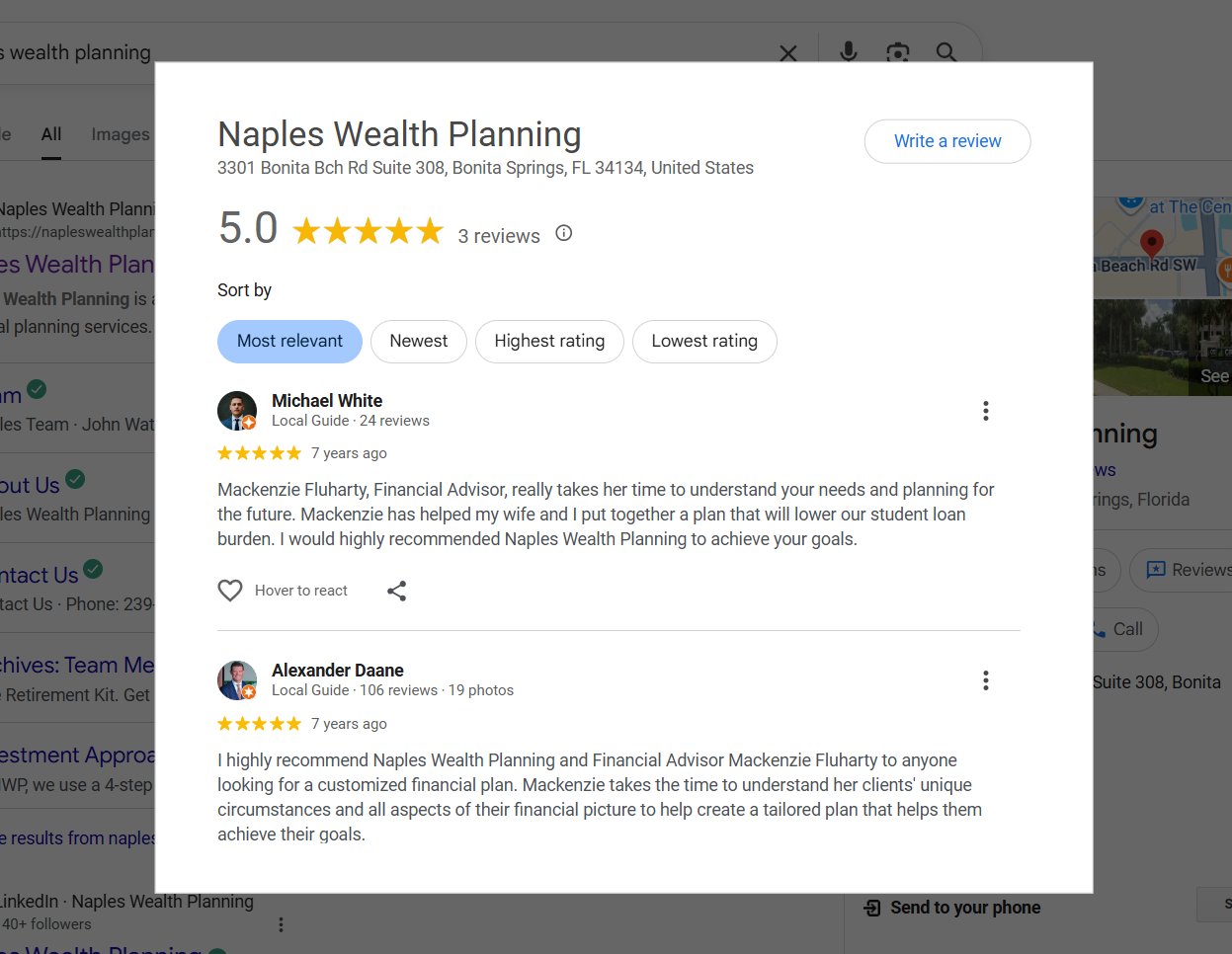
Google reviews help you stand out in local “near me” searches, but you’ve got to request ratings ethically—no incentives, no gating, and no coaching clients on what to say. Make it easy by sending a simple, compliant follow-up with a direct Google review link and clear instructions right after a meeting. When you do this consistently across your location, you build trust signals that support both your reputation and your local rankings.
Request Google Ratings Ethically
Three ethical review habits can lift your local visibility fast: ask every client consistently, time the request right after a completed milestone, and keep the message neutral. In every neighborhood you serve, your reputation compounds when you practice ethical rating solicitation and document it for compliance auditing.
- Ask uniformly: invite all clients, not just promoters, so your Google profile reflects your true local client mix and avoids cherry-picking risk.
- Stay factual: use plain language like “If you’d like, you can share your experience on Google,” and never suggest a star rating, outcomes, or endorsements.
- Disclose boundaries: remind clients not to post account details, performance figures, or nonpublic info, and confirm you won’t offer gifts, discounts, or other incentives.
Done consistently, you’ll earn durable trust and stronger “near me” rankings.
Streamline Rating Request Process
How do you earn more Google reviews without creating extra compliance risk or staff burden? You streamline rating requests with a simple, repeatable workflow that fits your firm’s policies and your city’s client experience. Use a compliant template that asks for feedback, avoids incentives, and never nudges for a “5-star” result—only ethical requests.
Automate timing: trigger a single review link after a completed annual review or onboarding milestone, then send one polite reminder. Route replies through your CRM so you can log outreach, retain evidence, and respond consistently. Train staff to use approved language and to escalate sensitive comments to compliance before responding publicly. Finally, monitor your Google Business Profile weekly, reply with privacy-safe wording, and highlight your local office hours and neighborhood service area.
Build Service-Area Pages for Each City You Serve

You’ll win more “near me” searches when you create city-specific service pages for each place you serve, with clear disclosures and no exaggerated promises. Map local-intent keywords (like “financial planner in [City]” and “retirement planning [City]”) to each page so Google and prospects see an exact match to their location and need. Keep every page accurate, consistent with your firm’s offerings, and focused on how you work in that community.
City-Specific Service Pages
A well-built city-specific service page helps your financial planning firm show up when prospective clients search “financial planner near me” in the exact communities you serve. You’ll earn trust faster by matching your message to each location while staying compliance-aware—avoid guarantees, keep disclosures visible, and describe your process plainly. Build pages that reinforce local branding and reflect industry trends, like digital-first onboarding and secure client portals, without overselling outcomes.
- Add city-specific proof: office address, service radius, parking/transit info, and local partnerships.
- Explain who you help in that city: life stages, business owners, or retirees, with balanced, non-promissory language.
- Include credibility signals: advisor bios, licenses, fee transparency, review highlights, and a compliant call-to-schedule-a-consultation.
Local Intent Keyword Mapping

City-specific pages work best when each one targets the exact phrases locals type into Google, so map local-intent keywords to every service-area page you publish. Start with your core offers (retirement planning, tax-aware investing, wealth management), then pair them with city modifiers and “near me” variants. Build a keyword mapping sheet that assigns one primary phrase and a few compliant secondary phrases per city page, avoiding cannibalization across locations.
On-page, mirror that intent in the title tag, H1, and a brief first paragraph, then support it with locally relevant proof points: office address, service radius, parking notes, and community affiliations. Add clear disclosures, don’t promise performance, and keep testimonials policy-aligned. You’ll earn trust while signaling relevance to both users and search engines.
Write Local Content Prospects Actually Search
Where do local prospects actually start when they need financial guidance—Google, with a “near me” search tied to a specific question. Your job is to publish hyper-relevant pages that match local intent and close content gaps without drifting into promises or performance claims. Anchor every topic to your city, neighborhoods, and service area, and support it with plain-language disclosures and your actual process.
- Build “service + location + situation” pages (e.g., “retirement planning in Austin for tech employees”) with FAQs you can stand behind.
- Create locally specific guides using data and events (tax deadlines, employer changes, relocation waves) and cite sources.
- Add trust signals: credentials, team bios, office directions, accessibility, and what a first consult covers.
Measure Map Rankings, Calls, and Consults
How do you know your local SEO’s actually working—beyond a bump in website traffic? Track where you appear in the map pack for “financial planner near me” from your target ZIP codes, on mobile and desktop. Monitor shifts tied to local ranking signals like proximity, reviews, and profile completeness, then log changes in visibility by neighborhood, not just citywide averages.
Next, connect rankings to real outcomes. Use mobile lead tracking to attribute calls, form fills, and direction requests to specific listings and pages, while keeping disclosures and recordkeeping aligned with your firm’s compliance program. Tag consult requests by location, service line, and source to see which areas generate qualified prospects. If rankings rise but consults don’t, refine your offer, intake script, and review strategy.
Conclusion
When someone searches “financial planner near me,” you want to show up where trust starts: the map pack. Google reports that **76% of people who search for something nearby on their phone visit a business within a day**, so every missed listing, review, or city page can cost you real conversations. Keep your GBP accurate, your NAP consistent, and your reviews authentic—no incentives, no pressure. Track calls and booked consults to prove what’s working.