Hyper-Personalized Marketing: Everything You Need To Know
76% of customers are more likely to purchase when brands offer personalized experiences. But 63% of marketers struggle to meet these expectations.
If your marketing feels more “one-size-fits-all” than tailored, you can address this challenge with hyper-personalized marketing.
In this guide, we will walk you through 10 actionable digital marketing strategies to keep your campaigns highly personal and avoid ending up in spam folders. Let’s kick in.
What Is Hyper-Personalized Marketing & Why Is It Important?
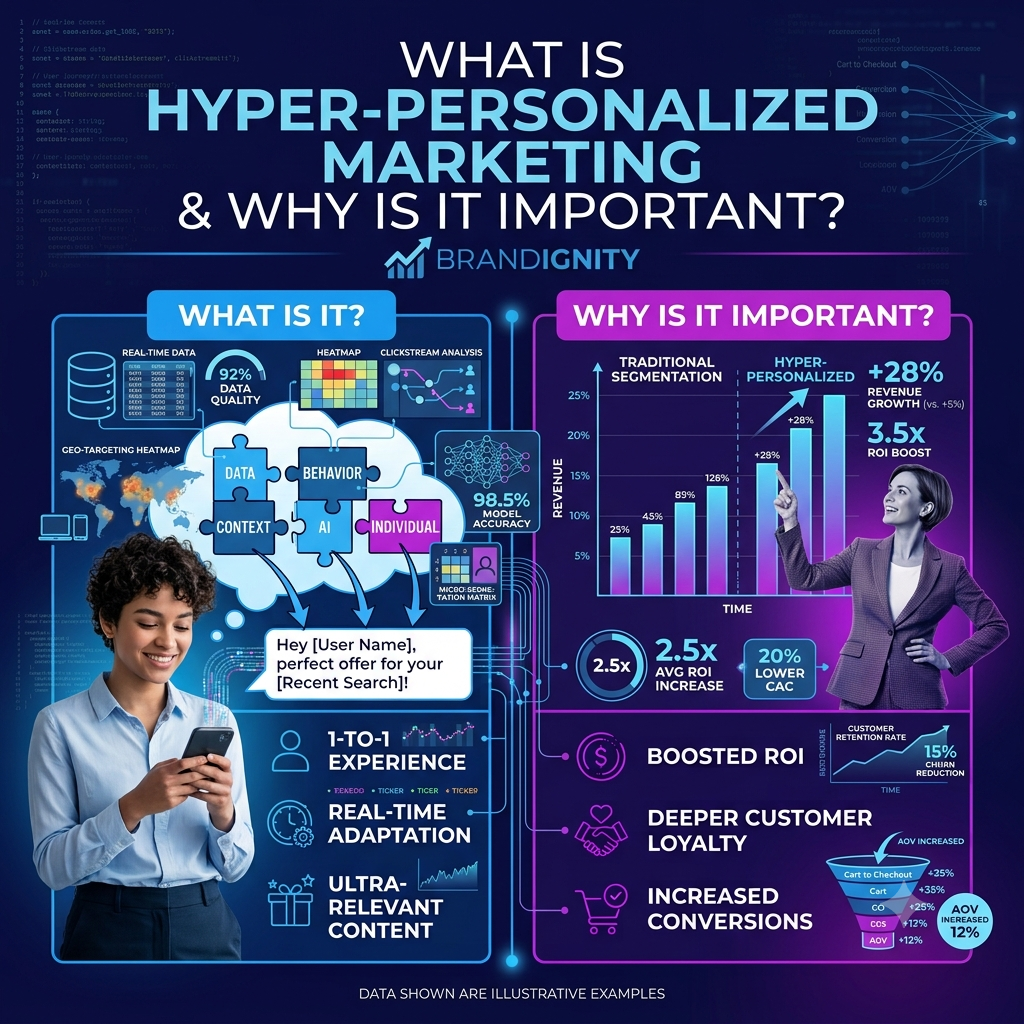
Hyper-personalized marketing is a strategy that creates messages and offers tailored to each customer. Unlike traditional personalization, it uses machine learning, artificial intelligence, and A+ data analysis to understand what people like, how they behave, and what they need, then tailors content just for them.
Why is it important?
- Gets customers’ attention
- Builds personal connections
- Drives a 10-30% increase in ROI
- Increases conversion rate by 20%
10 Tested Hyper-Personalized Marketing Strategies To Implement
Review your current purchase history and email engagement, and list the key strategies you can apply to your marketing workflows.
1. Use First-Party Data To Create Hyper-Specific Personas
First-party data is information you collect directly from customers, like what they click on your website, what they buy, or how they interact with your emails. Use this data to create highly detailed customer personas that highlight your customers’ preferences, behaviors, and needs.
Why is it effective?
First-party data is more reliable than third-party data because it comes from your customers. It also protects privacy data and reduces reliance on third-party cookies.
Key data points to collect:
- Browse behavior
- Purchase history
- Support interactions
- Content preferences
To start, identify where you currently collect first-party data (ex., CRM systems, website analytics, customer surveys). Use this data to group/segment customers based on shared characteristics (like demographics, purchase behaviors, and engagement patterns).
For each group, create a profile that includes quantitative data (such as age, location, and purchase frequency) and qualitative insights (such as goals, challenges, and motivations). The more detailed your persona is, the more targeted your marketing strategies will be.
Take this example:
| Attribute | Details |
| Persona Name | Jake Peters |
| Age | 32 |
| Location | New York, NY |
| Occupation | Digital Marketing Specialist |
| Income | $85,000 annually |
| Browsing Behavior | Visit pages about SEO strategies, content marketing, and paid ads |
| Purchase History | Invests in SEO tools, ad platforms, and digital marketing courses |
| Support Interactions | Look for help with ad optimization & campaign performance |
How To Use This Data
Once your personas are ready, use them to deliver highly relevant content and product recommendations. This can include industry insights on SEO strategies or a social media management guide to help improve their ad campaigns and increase customer retention.
2. Integrate SEO To Personalize Search Experiences
Personalized search results increase customer satisfaction and conversion rates by 20%. Integrating AI and SEO improves how search engines display content and ensures it aligns with customers’ search intent.
Here are key inputs to consider:
- Consider the stages of the buyer’s journey (awareness, consideration, decision) and personalize content for each stage.
- Focus on user intent, not just keywords. For example, if a user searches for “how to build high-quality backlinks,” show content that details these types of backlinks (ex., guest posts and broken link building) to provide more targeted content.
- Personalize search results based on location (for “near me” searches) and device (mobile-friendly content or desktop optimizations) to drive more relevant traffic.
- Create dynamic content that adjusts based on user interactions. For example, if a user browses a product category, show more related items when they search.
For a first-time visitor without past purchase data, show them a general range of popular products, such as camping tents, hiking boots, and backpacks, based on search queries like “best camping gear.” For a returning customer (who previously bought a tent), display personalized recommendations for tent accessories, like sleeping bags or portable stoves.
If you find it challenging to personalize your SEO efforts, partner with a digital marketing agency like Brandignity, SIXGUN, or Slaterock Automation to optimize your site’s UX and convert visitors into loyal customers. Outsourcing increases ROI by 20% and lets you focus more on core operations like product development or optimizing your sales funnel for higher conversion.
3. Use User-Generated Content (UGC) For Social Proof
User-generated content (UGC) is content your customers create about your brand, such as reviews, photos, or videos. This strategy lets you gain even more trust from your customers. Seeing real users share their experiences builds credibility, which makes potential customers feel more confident about your product or service.
Here are ways you can enable UGC for social proof:
- Ask your customers to share their experiences on social media with specific hashtags to tag your brand.
- Feature your customers’ content on your website or social media channels to show appreciation and inspire others to join in.
- Organize fun contests where customers submit content, like photos, and give fun prizes. This motivates participation and spreads the word about your brand.
- Set up a community space, such as a Facebook group or online forum, where customers can interact and share their experiences. This makes your brand feel more engaging.
As you do the above, make sure to ask for permission to use customers’ content. See to it that the UGC reflects genuine experiences rather than being forced. Feature UGC most often to keep momentum or engagement going.
4. Tailor Emails With Dynamic Content Blocks
Personalized email campaigns have 29% higher open rates and 41% higher click rates than generic ones. Design email campaigns that show different content based on each individual’s needs, making the content feel directly relevant to them.
Key elements to personalize:
- Special offers
- Visual elements
- Content suggestions
- Product recommendations
Set up email sequences that respond to specific actions, like someone who opened your last email but did not purchase. If they have preferences saved in their profiles (ex., product categories), show content that matches those interests.
Use Mailchimp or Klaviyo to automate the sending of personalized emails to address cart abandonment or new sign-ups. Personalize images, too, like displaying a user’s first name in the banner or showcasing recently viewed items in the email body, like what Amazon does:
5. Build Customized Landing & Product Pages For Different Users
Instead of showing the same content to everyone, this strategy adapts based on location, browsing history, and user preferences. Customizing them will help users stay on the page, explore products, and complete a purchase.
Here are the elements and examples to consider:
| Element | Customization Strategy | Example |
| Headlines | Use urgency | “Hurry! 24-Hour Flash Sale – Don’t Miss Out!” |
| Banner/Pop-up | Show personalized messages | “Welcome Back! Enjoy 10% Off Your Next Purchase” |
| Product Details | Highlight product features and benefits | “Say Goodbye to Back Pain – Feel The Comfort With This Ergonomic Chair ” |
| Product Displays | Show related or upsell products | “Enhance Your Style with These Trending Items” |
| Pricing | Show personalized offers based on purchase history | “Special Price for You – Save on Your Next Purchase” |
| Social Proof | Show user-generated content (photos/videos) | “See How [Product] Works for Our Happy Customers!” |
| CTAs | Create urgency | “Shop Now – Limited Stock Remaining!” |
6. Set Up Smart Chatbots That Learn & Evolve With Users
Smart chatbots go beyond basic FAQ responses. They learn from each interaction to provide 24/7 personalized support. The key is to train them with real customer data and conversations so they can understand the context and provide relevant responses that improve over time.
Consider these key points when setting up a chatbot:
- Set up the chatbot’s purpose (ex., support or sales).
- Create clear, user-friendly conversation flows.
- Connect the chatbot with your CRMs, websites, and apps to improve UX.
- Choose a platform that supports advanced AI capabilities, like Dialogflow.
- Make sure to optimize the chatbot to handle increasing traffic and functionality.
7. Design Custom Promotions For High-Value Customers
This strategy focuses on recognizing and rewarding customers’ loyalty and engagement with personalized perks that make them feel valued. Use customer data to identify high-value leads with this lead-scoring guide, and create promotions that resonate with their interests and purchase patterns.
Here are the types of promotions to consider:
- Loyalty rewards
- Birthday specials
- Referral programs
- Early access deals
To create custom promotions for high-value customers, define what makes a customer VIP. Look at how often they buy, how much they spend, and their loyalty to your brand. Consider all aspects and don’t overlook segments like elderly customers whose annual spending exceeds $15 trillion, making them an essential part of the equation.
After that, set up a tiered system where customers earn rewards based on their engagement or spending levels. You can offer different rewards for different tiers.
Then create special promotions or triggers available only to these VIP customers, such as exclusive discounts or early access to sales. You can also test different types of personalized rewards to see which ones work best, like birthday specials or referral bonuses.
8. Trigger Context-Aware Ads Based On Real-Time Behavior
Create ads that adapt in real-time based on user behavior and context. Instead of showing the same ad to everyone, display content that matches customer browsing behavior and patterns. This makes your ads more relevant and more likely to convert.
Follow these steps to do this:
- Set up tracking tools on your website or app to monitor user activity, like browsing behavior, product searches, cart activity, and time spent on pages.
- Identify behavior patterns, such as users who abandoned their carts, those who searched for key products, or visitors who spent more time on your website.
- Use ad platforms like Google Ads to create personalized ads. Add a sense of urgency with time-limited offers, or remind users of items in their cart or of recently viewed products to signal limited availability.
Here are the examples to get ideas from:
| Trigger | Ad Example |
| Cart Abandonment | “Looks like you left something behind! Your cart is waiting – complete your purchase now and save 10%! Hurry, offer ends in 24 hours!” |
| Search History | “Still looking for the perfect shoes? Check out these top-rated styles based on your recent search. Shop now and enjoy free shipping!” |
| Time Sensitivity | “Flash Sale – 48 Hours Only! Get your top favorites before they are gone. Don’t miss out. Shop now and save big!” |
| Recently Viewed Products | “You were eyeing that leather jacket! It’s still available, but only a few left in stock. Check it out here!” |
9. Send Personalized Post-Purchase Follow-Ups With Relevant Offers
Stay connected with customers after they buy with personalized recommendations and content. This will help turn one-time buyers into repeat customers through relevant suggestions. Also, it is way cheaper to retain existing customers than to acquire new ones.
Key elements to highlight include:
- Cross-sell offers
- Review requests
- Timing sequences
- Product suggestions
For example, if a customer recently purchased a wireless headset with mic for work, send them a personalized post-purchase follow-up email immediately. This will enhance their shopping experience and encourage future deals.
Here is an example of a follow-up email:
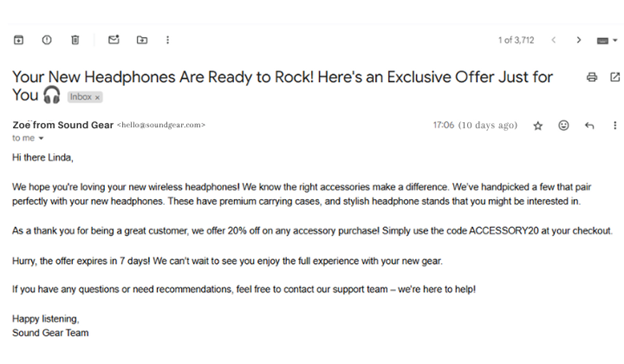
This post-purchase follow-up email is a great example because it:
- Suggests relevant accessories that complement the customer’s recent purchase.
- Offers a 20% discount on related products to incentivize customers to make another purchase.
- Use friendly and customer-centric language that enhances their shopping experience and makes them feel valued.
- Create a sense of urgency by adding an expiration date to the discount, prompting the customer to act now.
- Simplify the call-to-action (CTA) with a guide on how to redeem the discount, which makes it easy for the customer to follow through.
- Nourish customer loyalty by acknowledging their purchase and offering a special deal to encourage future purchases and repeat business.
10. Simplify Checkout Processes That Reflect User Preferences
68% of shoppers abandon carts because of complicated checkout processes. Personalized checkout can reduce this by 35%.
This strategy streamlines the buying process by remembering customer preferences and previous choices. The goal is to remove friction from the purchase process by automatically filling out customer data and offering personalized options based on past behavior.
Here are ways to simplify this process:
- Retain information about customers’ past preferences, like product choices and payment options.
- Create custom shipping rules to tailor options based on customer location, preferred order size, or loyalty status.
- Set up payment preferences by saving the customer’s preferred payment method, such as a credit card, PayPal, or a digital wallet.
- Enable one-click purchasing for products customers buy most often, such as subscriptions, to provide a seamless repeat-shopping experience.
- Track completion rates to monitor how many customers start and finish the checkout process. This helps identify where customers drop off, optimizing the customer experience.
3 Real-World Examples Of Brands That Use Hyper-Personalization
Take a look at how these brands use hyper-personalization, and consider how you can adapt similar ideas.
I. Amazon
Amazon personalizes shopping experiences with product recommendations based on user behavior. It tailors the experience to each customer as their strategy to drive more sales.
Here are ways how Amazon uses hyper-personalized offers:
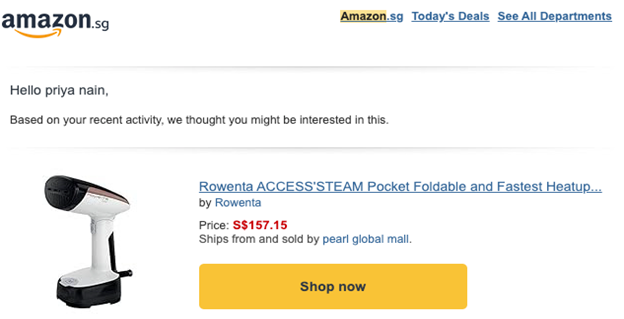
- Adjust the price or offer discounts to make the deal more enticing.
- Sends emails with product recommendations before they run out of stock.
- Uses its algorithm to predict complementary products you might not have thought of.
- Provides personalized sneak peeks of upcoming sales to make sure you are aware of deals before the event begins.
II. Spotify
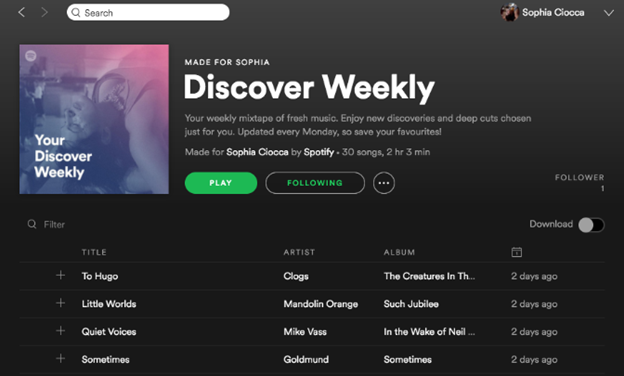
Spotify recommends songs and playlists tailored to customer preferences and likes. It improves your music experience by saving your previous playlists and looking at your search history to help you discover new content.
Here’s how Spotify makes it happen:
- Suggest music tailored to your location, time of day, or device.
- Create mood-based playlists that fit your emotional state or activity.
- Make personalized playlists like Discover Weekly based on listening habits
- Offer personalized radio stations based on specific songs, artists, or genres you enjoy.
- Track your music journey with Spotify Wrapped, which highlights top tracks and artists.
III. Stitch Fix
Stitch Fix curates personalized fashion recommendations using data and human stylists to match your preferences. It simplifies clothing shopping with selections tailored just for you.
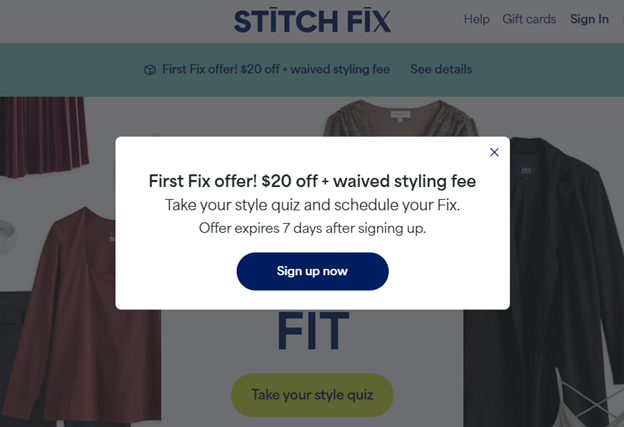
Find out how Stitch Fix crafts a winning hyper-personalization strategy here:
- Use feedback from past orders to improve future clothing choices.
- Adjust recommendations based on what you say about size, fit, and style.
- Send personalized outfits by asking you a style quiz to learn what you like.
- Consider your lifestyle and special occasions when picking clothes for you.
Frequently Asked Questions
1. What is hyper-personalized marketing and how does it differ from traditional personalization?
Traditional personalization often relies on basic, static customer attributes like a person’s name, age, or broad demographic segmentation (e.g., addressing someone by name in an email). Hyper-personalized marketing takes this a step further by using artificial intelligence (AI), machine learning, and advanced data analysis to evaluate real-time customer behavior, preferences, and needs. This allows brands to create highly customized messages, product recommendations, and offers that feel uniquely tailored to an individual in the exact moment.
2. Why is hyper-personalization important for my brand’s digital marketing strategy?
In a crowded digital landscape, generic, “one-size-fits-all” marketing easily gets lost in spam folders or ignored. Hyper-personalization is crucial because it immediately grabs a customer’s attention and builds deeper personal connections. From a business performance standpoint, implementing these strategies can drive a 10% to 30% increase in marketing ROI and boost conversion rates by an average of 20%.
3. How can I use first-party data to improve my personalization efforts?
First-party data is information you collect directly from your audience—such as what they click on your website, their purchase history, or how they interact with your emails. By combining quantitative data (like location or age) with qualitative insights (like their motivations, goals, and challenges), you can build highly detailed customer personas. These granular personas allow you to map out and deliver hyper-specific content or product recommendations that address exactly what that user is looking for.
4. What are some actionable ways to hyper-personalize email campaigns?
Personalized email campaigns boast a 29% higher open rate and a 41% higher click-through rate than generic blasts. Rather than sending the same email to everyone, you can use dynamic content blocks to automatically alter the email based on the recipient’s behavior. Key elements to dynamically personalize include:
- Special or localized promotions
- Tailored visual elements
- Bespoke content suggestions and relevant product recommendations
5. Can website landing pages and product pages be hyper-personalized?
Yes. Instead of greeting every visitor with identical text and imagery, websites can dynamically adapt headlines, imagery, and product displays based on a user’s location, browsing history, and real-time preferences. Tailoring these components keeps users engaged on the page longer, encourages them to explore more products, and increases the likelihood that they will complete a purchase.
6. How does hyper-personalization help reduce shopping cart abandonment?
Data shows that a staggering 68% of shoppers abandon their online carts due to overly complicated checkout processes. By leveraging data to simplify and personalize the checkout experience based on individual preferences, brands can reduce cart abandonment rates by up to 35%. Additionally, if they do leave, tracking behavior patterns allows you to trigger automated, highly targeted follow-ups or ads featuring the exact items they left behind.
Conclusion
As you apply these hyper-personalized marketing strategies, use AI to help, but always keep the human element at the core of your customer relationships. Start by targeting 1 customer group and see how they respond. Tackle the next tactics above to create more meaningful connections until you achieve a flawless shopping experience.
To make the process easier, Brandignity has hands-on expertise to make your digital marketing strategies hyper-personalized to customers. We craft A+ content and develop SEO campaigns (with free site analysis) customized to your needs. Get a glimpse of our portfolio to know how we helped our clients achieve their marketing KPIs, and contact our team to get started today.
Author Bio:
Burkhard Berger is the founder of Novum™. He helps innovative B2B companies implement modern SEO strategies to scale their organic traffic to 1,000,000+ visitors per month. Curious about what your true traffic potential is?