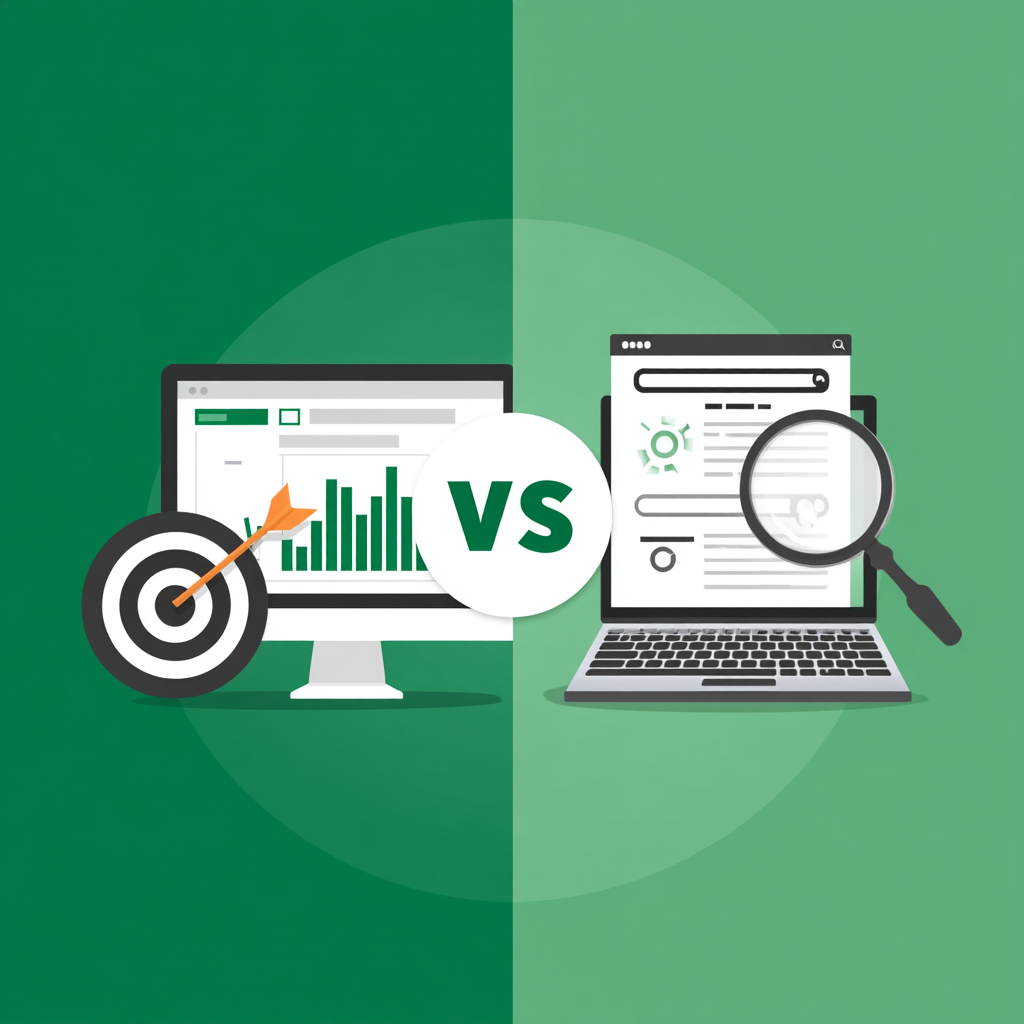
PPC vs. Organic Traffic: Which Marketing Strategy Wins?
When it comes to online marketing, every company goes through this war. It’s almost like a do-or-die situation: should they focus on their PPC campaigns or build up their traffic in the long term using SEO? It is worth noting that these strategies have unique merits and strengths in serving various marketing goals. Selecting either of the two might have a significant impact on the brand’s online visibility, cost-effectiveness, and long-term growth.
This article imparts the differences, benefits, and drawbacks of both PPC and organic traffic. Additionally, we have also determined which strategy works best in different scenarios and concluded with a clear verdict, based on current data and expert insight.
What is PPC?
PPC refers to digital advertising, where advertisers pay for the ad whenever a user clicks on it. Google Ads, Bing Ads, Facebook Ads, and Instagram Ads are the most common platforms. Ads appear right at the top or next to organic search results, ensuring that your business is always visible to potential customers.
Key Features:
- Instant visibility
- Sharply targeted audience reach
- Real-time performance tracking
- Control over budget
What is Organic Traffic?
Organic traffic is when people come to your website through unpaid search appearances. This type of traffic is earned with time by strategically implementing content generation, backlinking, and on-page SEO techniques. For organic traffic, unlike PPC, the per-click payment system doesn’t work — you pay for content and optimization.
Key Features:
- Long-term cost-effective
- Credibility and trust-building
- Requires pro-longed SEO
- Can take time to generate results
Pros and Cons of PPC
Pros:
- Instant Results: As soon as PPC campaigns go live, they can generate traffic, making them perfect for time-sensitive promotions or product launches.
- Targeting at Its Best: Advertisers can tweak campaigns according to the location, language, device, and user behavior to ensure that ads are seen by the right people.
- Performance You Can Measure: PPC platforms offer marketing analytics to allow a business to track metrics such as impressions, clicks, and conversions, enabling decision-making rooted in actual data points.
- Flexibility: The real-time changing or pausing of campaigns helps you adapt to rapid changes in the market or your budget.
Cons :
- Expenses: Highly competitive keywords are often as costly ad spend and must be consistently paid to renew traffic flow.
- Temporary Visibility: Once the campaign stops, the visibility ceases since it is the payment with which the program is in action that defines it.
- Ad Blindness: Some users will purposely or unconsciously ignore paid ads meaning that it would be difficult to get the best results.
- Complex Management: Costly wasted budgets and optimum performance can only be achieved by continuous monitoring and optimization of effective PPC.
Pros and Cons of Organic Traffic
Pros:
- Economical: Organic web traffic does not involve any incidental per-click costs following the initial outlay for optimization at a reasonable price, hence promoting sustained investment in the long run.
- Credibility and Trust: Organic results are often viewed by users as more credible than paid advertisements, thus further enhancing brand reputation.
- Sustainable Traffic: Ranking organically high can bring continuous visitors and help you generate sales leads without requiring money again and again.
- Better User Experience: SEO improves the web structure and content, resulting in higher engagement and satisfaction of users.
Cons :
- Time-Consuming: Getting genuine organic rankings can take several months, and hence requires patience and continuous efforts.
- Dependence on Algorithm: Search engines keep on updating and changing the algorithms, which generally affect the ranking in an unpredictable manner; requires constant change in the required procedure.
- Resource-Intensive: Implementing proper SEO is a combination of various techniques and methods such as technical knowledge, content creation, link building, etc.; therefore, it is resource-extensive as well.
- Competitive Difficulty: The highly sought-after keywords can already be held by the already-established players making it difficult for freshers even to get to the top ranks.
PPC vs. Organic Traffic: Key Metrics Compared
| Metric | PPC | Organic Traffic |
| Cost | High (per-click charges) | Low ongoing cost |
| Speed of Results | Immediate | Slow (months to build) |
| Longevity | Short-term | Long-term |
| Conversion Rate | High (targeted ads) | Medium (broader traffic) |
| Trust Factor | Lower (perceived as paid) | Higher (seen as credible) |
| Scalability | High (with budget increase) | Moderate (content scale) |
| Maintenance | Requires daily attention | Requires ongoing SEO |
When to Use PPC
PPC is best for:
- Fast visibility for launching products or promotions.
- Temporary or seasonal sales.
- High-margin industries where the ROI outweighs advertising costs.
- Brand awareness campaigns targeting new demographics.
- Example: Fashion brand that develops summer collection must use PPC along Google and Instagram to drive traffic quickly and draw buzz in a short window. Similarly, AliExpress Dropshipping sellers launching trending products often rely on PPC ads to generate instant visibility and drive impulse purchases.
When to Focus on Organic Traffic
Reason of organic strategies would be practical when:
- To develop long-term brand authority.
- When your audience is searching for your product/service, most commonly through search engines.
- Limited advertising budgets but plenty of time to invest in SEO.
- When you want continual traffic with cumulative results.
For example, a health blog that offers weekly articles on nutrition and fitness would gradually gain organic traffic due to keyword-focused content, backlinks, and a strong domain reputation. These patterns are also reflected in healthcare SEO, where domain authority and content structure play a significant role.
Combining PPC and Organic: The Hybrid Approach
The combination of PPC and SEO is undoubtedly the most effective digital marketing strategy. This hybrid model serves both short-term needs and long-term growth.
Advantages of Integration:
- PPC keywords can help with an SEO plan for content.
- Remarketing PPC campaigns can be targeted at users who initially found you through an organic search.
- On the other hand, through A/B testing in PPC, you can test messaging before launching it as organic content.
- SERP dominance: Appear in both ads and natural results for higher CTR.
Example: The SaaS business will advertise on Google for competitive keywords like “project management software” while appearing organically in the blog post “how to select the best project management tool.”
Real-World Statistics
- Although SEO leads are responsible for only a closed rate of 14.6 percent, outbound leads such as cold calls only have closed rates of 1.7 percent.
- The average Google Ads ROI is $2 for every $1 spent. (Google Economic Impact Report)
- Seventy-five percent of consumers never scroll past the first page of search results, making organic rankings even more valuable.
- Paid ads attract twice as many visitors as SEO, but the cost is significantly higher.
Final Verdict: Which Strategy Wins?
The answer is not straightforward—PPC and organic traffic win, albeit in different ways.
- Choose PPC for quick traffic generation, precise targeting, and if you have a flexible budget.
- Opt for Organic in cases when you want sustainable visibility, brand trust, and long-term ROI.
- What’s the best bet? Use Both: a blended strategy gives you the best of both worlds.
An investment in SEO builds a solid foundation, while the immediate go-to strategy for sales is PPC. SEO-related positions are growing as more companies try to achieve organic results and minimize their spending. The two (PPC vs. SEO) contrast with each other and cover all areas of the marketing funnel, from discovery straight through to conversion.
Conclusion
PPC and Organic Traffic are more concerned with complementary strategies that align with your goals, budget, and timeline than an either-or choice in today’s competitive digital environment. PPC is a fast-paced sprint that generates results; organic SEO is a slow-burning marathon with its rewards coming later.
Go with PPC if you’re launching a product and want leads tomorrow, or if you need fast data. Go organic if you’re building a brand, educating your audience, and want sustainable traffic. Even better, create a marketing strategy to bring awareness by balancing both, optimizing for short-term wins while honouring long-term success.