
You should invest in dental implant ads when you need consults fast and want to capture high-intent searches with tight budget control and clear cost-per-lead tracking. You should invest in dental implant SEO when you can wait a few months to build compounding visibility that stabilizes lead flow and lowers marginal CPL over time. Use ads to validate offers and fill schedule gaps, then grow SEO pages to reduce boom-bust weeks—keep going to see a month-by-month CPL comparison.
SEO vs Implant Ads: Which Fits You?
How do you choose between SEO and paid dental implant ads when you’re trying to grow high-value cases without wasting budget? Start with your constraints: timeline, tracking maturity, and capacity. If you need fast demand capture, ads let you target high-intent searches, control geos, and measure cost per consult daily. If you can invest in compounding equity, SEO strategies build visibility across “near me,” financing, and procedure-intent queries, lowering acquisition cost over time. In Implant marketing, match channel to patient journey: ads reach ready-to-book prospects, while SEO nurtures researchers comparing options and outcomes. Use data, not gut: model LTV, close rate, and show rate, then back into acceptable CPL and CAC. Choose what scales without stressing your schedule.
Choose Implant SEO for Predictable Monthly Leads

When you choose implant SEO, you build a steady monthly flow of leads from patients actively searching for dental implants in your area. As your pages rank higher and earn more clicks over time, your search visibility compounds, so you’re not restarting from zero every month as you do with ads. That typically pushes your cost per lead down while keeping your schedule filled with higher-intent consult requests.
Steady Lead Flow
Although no marketing channel can promise perfectly predictable results, implant-focused SEO typically delivers a steadier month-to-month lead flow than short-term ad campaigns because it compounds over time. When you optimize for high-intent implant searches, you attract patients already comparing providers, financing, and timelines, so your consult calendar stays fuller even when ad spend pauses. You’ll also see fewer “boom-bust” weeks because organic demand doesn’t shut off at midnight when a budget caps. Track ROI by tying form fills, calls, and booked consults to specific implant pages, then improve conversion rates with faster load times and clearer FAQs. For lead generation, this creates consistent results you can forecast: more qualified inquiries, lower cost per consultation over quarters, and smoother chair utilization.
Compounding Search Visibility
One strong implant SEO asset can keep sending qualified consult requests month after month because every optimized page you publish—“full-arch implants,” “All-on-4 cost,” “implant financing,” “bone graft timeline”—builds on the last and expands your total search footprint. As your library grows, Google indexes more entry points, and patients find you at multiple stages: research, comparison, and ready-to-book. You’re not betting on a single campaign; you’re engineering durable discoverability. Use search engine optimization to connect intent to outcomes with fast mobile pages, structured FAQs, and conversion-focused location signals. Track ranking lift, impressions, click-through rate, and consult-form completions to validate ROI. Over time, organic traffic compounds, stabilizing demand even when competitors surge. This visibility also strengthens local referrals and brand trust.
Lower Cost Per Lead
That compounding visibility shows up in your numbers as a lower, more predictable cost per implant lead. Instead of paying for every click, you build a conversion engine that captures high-intent searches like “all-on-4 near me” and routes them to fast, mobile-first pages with clear financing and outcomes. You’ll see CPL stabilize because rankings don’t reset when you pause spending.
With a lower investment than aggressive ad bidding, you can fund content that answers patient questions, earns local trust signals, and improves call and form conversion rates. Track organic leads, booked consults, and cost per case, not just traffic. Over 6–12 months, those long-term benefits compound: more qualified inquiries, fewer wasted impressions, and steadier monthly implant starts—even as ad costs rise.
Choose Implant Ads When You Need Consults Fast
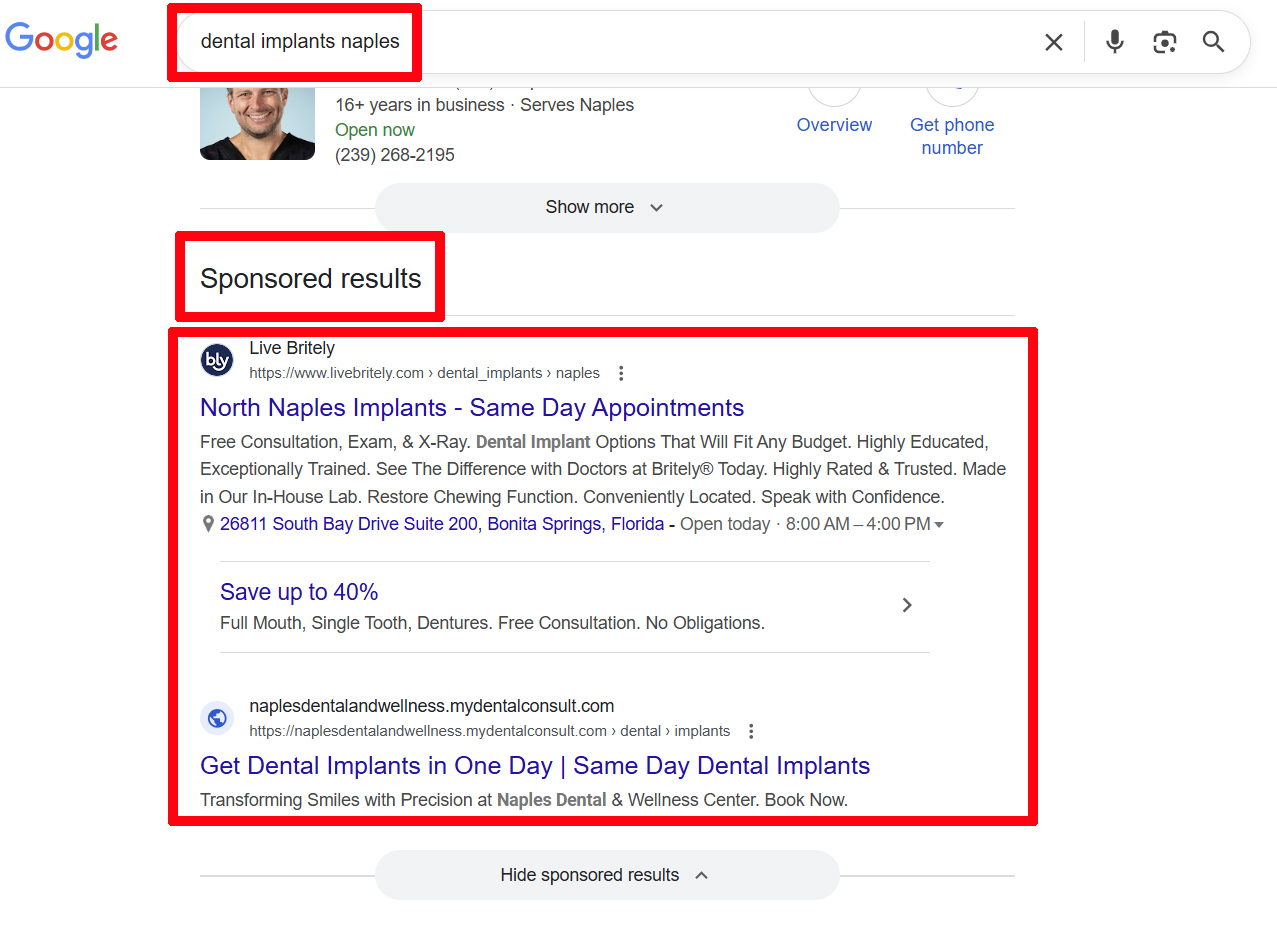
When you need implant consults fast, you can turn on paid ads and start generating calls and form fills the same day. You’ll launch a time-sensitive campaign in hours, target high-intent searches, and track cost per lead and cost per consult to protect ROI. If your schedule has gaps or you’re running a limited-time offer, ads help you move patients from click to booked consult quickly.
Immediate Lead Generation
A well-structured dental implant ad campaign can start generating consultation requests within days—not months—because you control targeting, budget, and offer placement in real time. With targeted outreach, you reach high-intent patients searching “implant dentist near me,” “All-on-4,” or “same-day teeth,” instead of waiting for rankings to mature. That speed drives immediate ROI: you can track cost per lead, cost per consult, and revenue per case, then reallocate spend to the best-performing keywords, audiences, and landing pages. You also reduce friction with click-to-call, online booking, and insurance/financing messaging that answers objections at the moment of intent. If your schedule has open chair time, ads let you fill it predictably while maintaining control over volume and geography.
Time-Sensitive Campaign Launch
If your calendar’s light and you need implant consults this week, paid search and social ads give you a launch-to-lead timeline you can measure in days—then optimize in real time. With tight time constraints, you can target “dental implants near me,” retarget site visitors, and schedule ads around high-intent hours so patients see you when they’re ready to book. Build a campaign strategy that ties every click to outcomes: calls, form fills, consults, and cases started. Set conversion tracking, call recording, and a cost-per-consult threshold, then shift budget toward keywords, audiences, and creatives that produce qualified leads. You’ll validate messaging fast, reduce wasted spend, and keep chair time filled while you scale longer-term SEO gains.
Your Implant Ad Funnel: Page, Offer, Follow-Up
Although your implant ads can generate clicks fast, you won’t generate predictable revenue unless your funnel does three jobs in sequence: convert the right patient on the landing page, present an offer that qualifies and motivates them, and follow up quickly enough to book the consult. Start with funnel optimization and ad targeting that match intent: “full-arch,” “same-day,” financing, and location. Your page should load fast, answer fear-and-cost questions, and prove outcomes with before/after cases, credentials, and transparent next steps. Your offer should filter tire-kickers: a paid CBCT + consult credit, a financing pre-check, or a limited “second-opinion” slot—each with a clear call-to-action. Then automate follow-up: text-first within 5 minutes, reminders, and a live handoff to schedule, so interest doesn’t decay.
Cost per Implant Lead: SEO Vs Ads (Month 1–12)
Because implant cases carry high revenue but high intent friction, your cost per lead hinges on how fast you can capture “ready now” demand with ads versus how quickly you can earn “research mode” trust with SEO. In months 1–3, ads typically deliver the lowest time-to-lead, but you’ll pay a premium as you test keywords, audiences, and landing pages. From months 4–6, optimization and tighter qualification can reduce wasted clicks, stabilizing CPL while keeping volume predictable. SEO usually starts slower in months 1–3, then improves in months 4–9 as pages rank, reviews compound, and educational content answers patient objections. By months 10–12, SEO often drives a lower marginal CPL, helping your lead generation strategies and marketing budget allocation stay ROI-positive.
Combine Implant SEO + Ads to Scale Safely
CPL trends over months 1–12 show a clear pattern: ads drive immediate implant demand, while SEO builds trust and lowers marginal acquisition cost over time. To scale safely, you’ll blend both so patients see you everywhere without overpaying for every consultation. Use ads to validate offers and capture high-intent searches; use SEO to win comparison shoppers and improve conversion rates with proof, FAQs, and outcomes.
- Allocate 60% ads / 40% SEO until organic leads hit 30% of total volume.
- Route paid traffic to implant-specific pages, then retarget education content to reduce no-shows.
- Build SEO around financing, candidacy, and recovery to pre-qualify better cases.
- Track LTV: CAC and close rate weekly, and iterate implant marketing strategies and digital outreach techniques.
Conclusion
You don’t have to pick one lane forever. If you need implant consults fast, ads deliver immediate visibility and measurable cost per lead. If you want predictable monthly leads and lower long-term acquisition costs, SEO compounds over 6–12 months. Track calls, forms, show rates, and cost per booked consult to protect ROI and patient experience. When you combine both, you cover your bases—ads fill the pipeline now, SEO stabilizes growth later.