
SaaS startups build backlinks by starting with free, high-authority placements like software review sites, then layering in guest posting, digital PR, integration partnerships, and linkable assets over time. The key difference from established companies is the sequence. When you have zero brand recognition and a domain rating under 10, you need tactics that work without brand authority first.
That gap between “I know link building matters” and “I have no idea where to start with a brand-new product” is where most SaaS founders get stuck. The strategies that work for HubSpot do not work for a bootstrapped startup launching its first product. Building a backlink profile from scratch requires a specific order of operations, and getting that order wrong wastes months of outreach effort on tactics that only work once you already have authority. If you reach a point where you want outside expertise to accelerate your link acquisition, fhseohub is a SaaS link building agency worth knowing before you start scaling your outreach. What follows is an honest, phase-by-phase approach that matches your actual stage of growth.
Why Link Building for SaaS Startups Is a Different Challenge
Most link-building guides assume you already have something to leverage. They tell you to reclaim unlinked brand mentions without acknowledging that nobody has mentioned you yet. They recommend broken link building as if you already have a library of content ready to pitch.
The reality for an early-stage SaaS startup is simpler but harder. You are building credibility from nothing. You cannot borrow authority you have not earned. And unlike eCommerce or local businesses, your product is intangible, which makes it harder for sites to naturally reference you.
That constraint actually clarifies your priorities. You start with platforms designed to list products like yours. Then you earn your way into conversations. Then you build assets that attract links without outreach. The phase matters more than the tactic.
What Makes a Good Backlink When You Are Starting Out
Before going into tactics, understanding what you are actually chasing changes how you work.
- Topical relevance beats raw domain authority. A link from a DR 40 blog covering SaaS tools will outperform a DR 80 lifestyle site for your purposes. Google reads relevance as a signal of trust within your industry. For a new SaaS startup, every link should come from somewhere your potential users or buyers would actually spend time.
- The traffic on the linking page matters too. A backlink from a page with no organic visitors sends no referral traffic and minimal SEO value. When prospecting, prioritize pages that rank and receive real visitors.
- Contextual placement inside the body of an article passes more link equity than a sidebar or footer mention. A dofollow link embedded naturally in a paragraph is worth more than ten directory footer links. Even nofollow links from high-authority publications like TechCrunch carry value through brand exposure and qualified referral traffic.
- Anchor text diversity also matters early. A natural backlink profile mixes branded anchors, generic anchors, and partial-match keyword phrases. Avoid over-optimizing with exact-match anchor text on every link, as this pattern can look manipulative to Google’s algorithm.
Phase 1: Free, Fast Wins Before Anyone Knows You (Week 1 to 4)

The first thing any SaaS startup should do is claim every available structured listing. These platforms exist specifically to feature software products and many carry domain ratings above 70 or 80.
Submit your product to G2, Capterra, TrustRadius, GetApp, and TrustPilot. Fill out every field, upload screenshots, and write a clear description. These are not just backlinks. They are the pages that show up when buyers research your category before purchasing. A complete listing gets indexed fast and passes real authority.
Product Hunt deserves its own mention. It has a domain authority of 91 and attracts 3.7 million monthly visitors. A well-prepared Product Hunt launch can generate dozens of backlinks from blogs covering new product releases, alongside significant referral traffic. You do not need to wait until your product is perfect. Launch early, engage the community, and use the exposure.
Beyond the major platforms, submit to AlternativeTo, SaaSHub, and BetaList. These are niche SaaS directories that rank for long-tail comparison queries that your target audience actively searches for. They are free, fast to complete, and give your new domain its first referring domains before any outreach campaign begins.
This phase alone can build 15 to 30 high-quality backlinks within the first month at zero cost.
Phase 2: Guest Posting and Outreach When You Have No Blog Yet
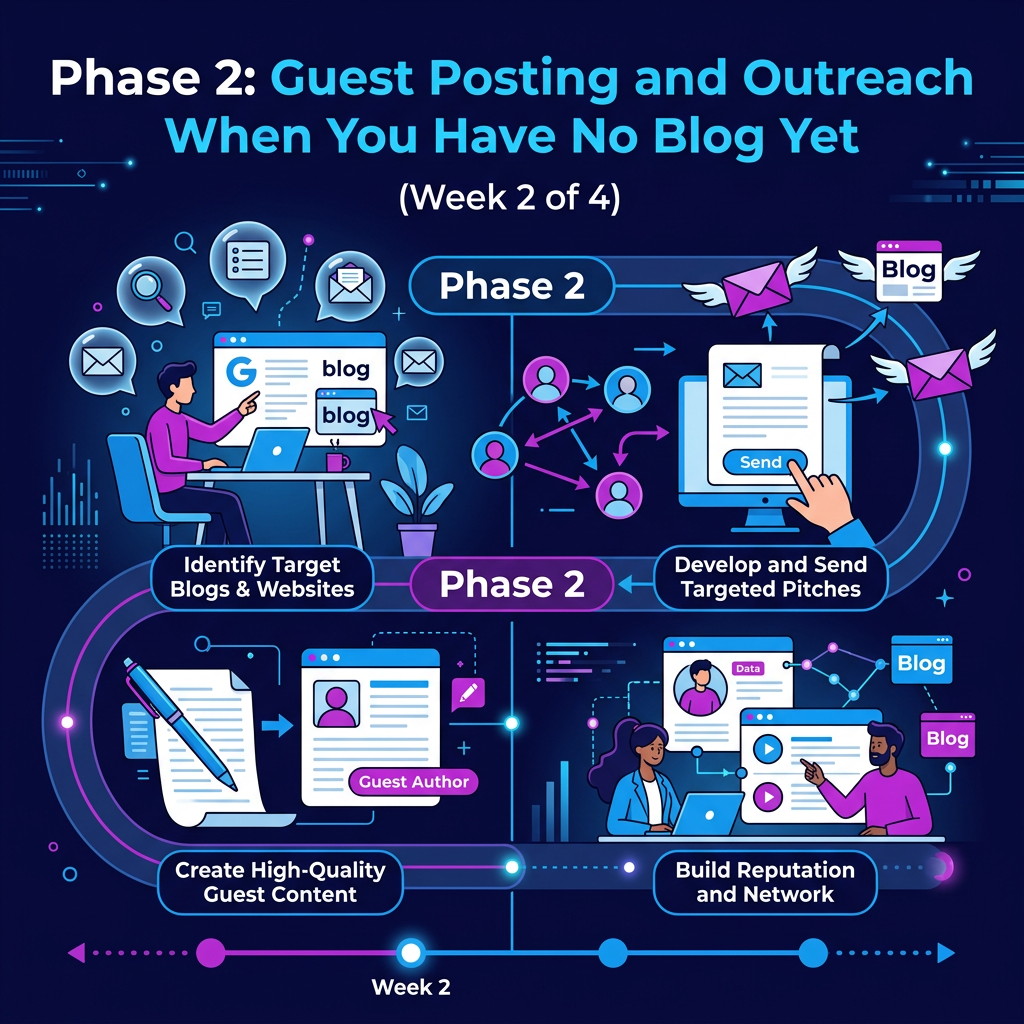
This is the tactic most SaaS startup founders overlook because they assume their own blog needs to exist first. It does not.
Several founders have built 30 to 40 guest posts on relevant industry sites before their own blog was live. When they launched, they immediately reached out to those publications for backlinks to their new site. The result was a fast jump in domain authority from day one of their content program.
Guest posting works for early-stage startups because it lets you borrow the credibility of an established platform. Find SaaS, marketing, productivity, or industry-specific blogs that publish guest contributions. Search Google for queries like “write for us” combined with your niche, or use Ahrefs Content Explorer to find sites accepting guest submissions in your category.
Pitch with a specific article idea, not a vague offer to write something. Editors receive dozens of generic pitches weekly. A pitch that references a recent article on their site, identifies a gap, and proposes a concrete title with a brief outline converts at a significantly higher rate. Include links to any writing you have done elsewhere, even LinkedIn articles or Medium posts.
When writing the guest post, include one or two natural contextual links back to relevant pages on your own site. The link to your homepage carries less SEO value than a link to a specific blog post or feature page. Write with that in mind.
One important note on link outreach: avoid sites that accept any guest post for a fee and publish dozens of low-quality articles per week. These are guest post farms. A link from a site that posts three times a day and has no editorial standards carries minimal value and may actively signal a manipulative backlink profile to search engines.
Phase 3: Linkable Assets and Digital PR (Months 3 to 6)
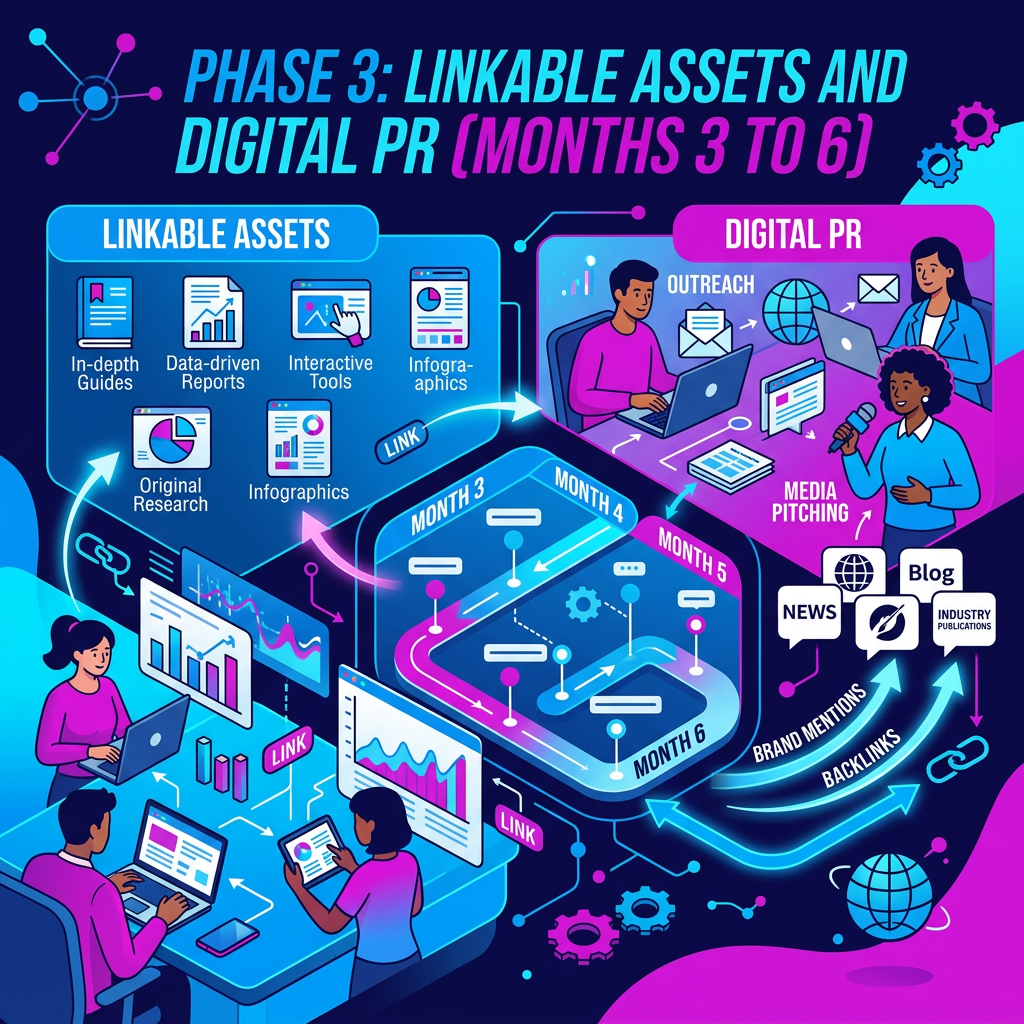
At this stage, you need something worth linking to that earns organic backlinks without requiring you to personally ask everyone.
Data-driven content is the most reliable linkable asset for SaaS companies. Original research, surveys, and industry reports attract links from journalists, bloggers, and other content creators who need data to cite. Buffer’s annual State of Remote Work report generated over 5,000 backlinks from more than 2,000 referring domains, including Forbes and BBC. Nextiva’s customer service statistics page earned over 1,500 backlinks by simply curating publicly available data into one organized resource.
You do not need a massive audience to do this. Survey 100 to 200 users or industry professionals. Publish the findings as a dedicated report page. Reach out to journalists covering your industry and offer an exclusive preview. Even a modest report with genuine data will earn citations from writers who need a source.
Free tools are the second category that consistently earns editorial backlinks for SaaS startups. A calculator, a grader, a checklist generator, or a template hub creates utility that users bookmark and share. Ahrefs’ free backlink checker generates tens of thousands of monthly visits and has accumulated backlinks from over 9,000 referring domains. Start with one focused tool that solves a specific pain point your audience regularly faces.
HARO (now operating as Source of Sources) and Qwoted connect journalists with expert sources for upcoming articles. Journalists from Forbes, TechCrunch, Entrepreneur, and Business Insider post daily queries seeking expert insight. Respond quickly with concise, data-backed answers. When your quote gets published, you typically earn a dofollow backlink from a high-authority domain. This takes consistency. Respond to every relevant query for several weeks before expecting results, but the payoff is links that would otherwise be impossible to earn through outreach.
Phase 4: Integration Partnerships and Product-Led Backlinks (Month 6 and Beyond)
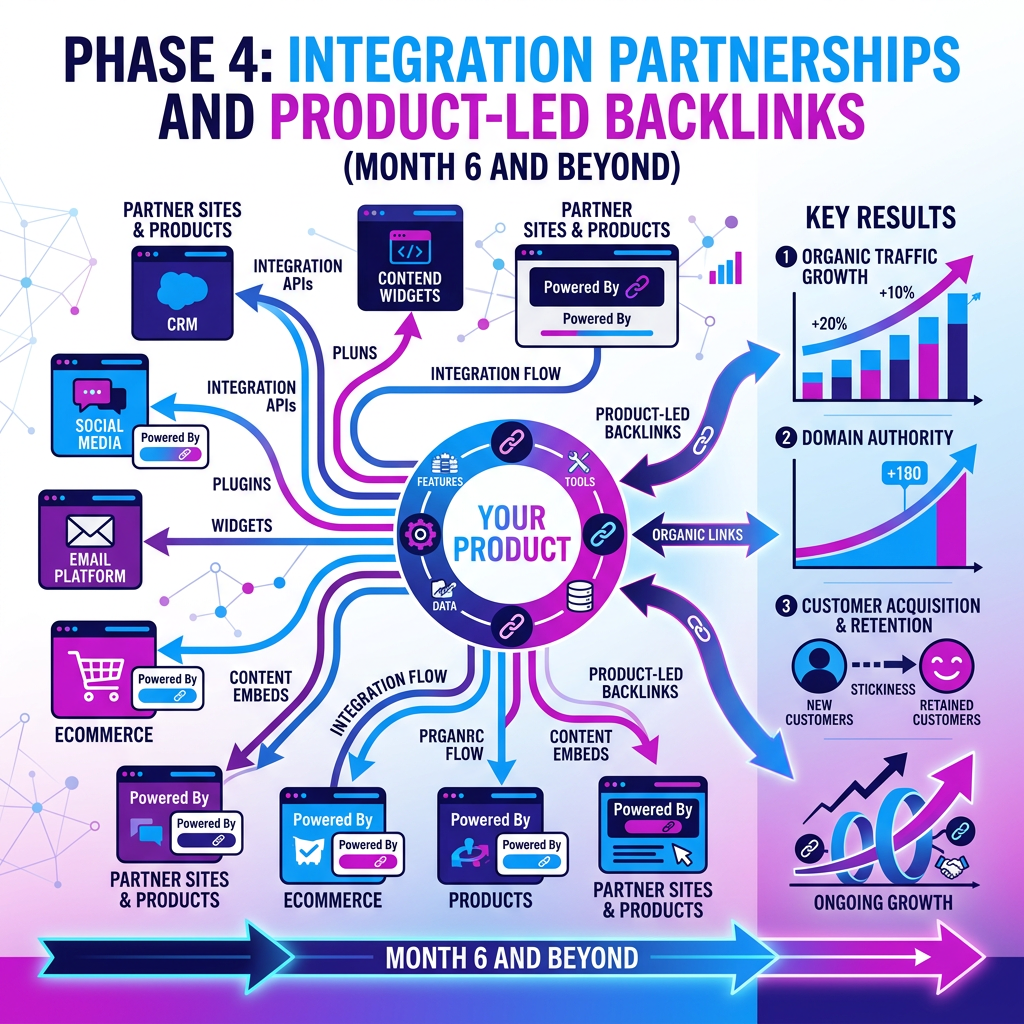
Once your product has real users and integrations with other tools, an entirely new category of backlinks opens up.
Integration directories are among the most underused link sources in SaaS. Zapier’s app directory, the HubSpot App Marketplace, Slack’s app directory, and similar platforms carry exceptional authority and are read by your exact target audience. Getting your product listed in these directories provides both high-quality backlinks and qualified referral traffic from users actively looking for tools that connect to platforms they already use.
Beyond directories, integration partners often write about tools they connect with. Zapier published a blog post explaining how to use Mailchimp integrations, and Mailchimp earned a backlink through that content without doing any outreach. Ask your integration partners if they would like to publish a co-written guide on how to use your products together. Both sides earn a natural backlink and reach a shared audience.
Product embed links work for specific SaaS categories. Typeform’s embed feature automatically includes a “powered by Typeform” link wherever a form is embedded on external sites. That single feature generated over 107 million backlinks. Not every SaaS product can replicate this at scale, but any tool with an embeddable output, a widget, a badge, or a shareable report can build a similar mechanism.
Customer testimonials placed on vendor sites also generate contextual backlinks. If you use other SaaS tools in your operations, reach out and offer a testimonial. Many companies display these with a link to the reviewer’s company website. It takes ten minutes and costs nothing.
How Long Does This Take?
This is the question every SaaS founder eventually asks, and the honest answer is longer than most people expect.
Most SaaS startups begin seeing measurable improvements in organic search rankings within three to six months of consistent link building. The first 30 referring domains usually produce the most visible jump in domain authority. After that, growth compounds more gradually. Links earned in month two continue building value in month twelve.
The mistake most startups make is treating link building as a one-time campaign rather than an ongoing program. The companies that build durable backlink profiles treat it like a monthly process, with a small number of quality links earned consistently rather than large bursts of activity followed by silence
What to Avoid Completely
- Buying backlinks from link farms, Fiverr sellers, or bulk link packages is the fastest way to trigger a Google penalty. These links come from low-quality or irrelevant sites and can drop your rankings significantly when detected.
- Excessive link exchanges, in which two sites repeatedly swap links, are also flagged by Google’s algorithm as manipulative. A natural reciprocal link happens organically. Manufacturing dozens of them does not.
- Private blog networks (PBNs) are networks of fake sites created solely to provide backlinks. Google actively identifies and devalues these. Sites caught relying on PBNs face ranking drops that take months or years to recover from.
- Black-hat tactics might produce short-term gains, but for a SaaS startup focused on long-term organic growth, the risk is not worth any temporary gain.
Conclusion
How SaaS startups build backlinks comes down to matching your strategy to your current stage. Start with structured listings that require no brand authority. Layer in guest posting and digital PR outreach. Build linkable assets that earn links passively over time. Then unlock partnership and integration-based links as your product matures. The startups that build durable domain authority are not the ones that chase the most links. They are the ones who build the right links in the right order and treat it as a recurring commitment rather than a one-time campaign. In 2025 and beyond, those same backlinks also increasingly determine whether your SaaS product gets cited by AI search tools when buyers ask which software solves their specific problem.
Frequently Asked Questions
Start with free, high-authority platforms designed for software listings. G2, Capterra, Product Hunt, and AlternativeTo all accept new products and provide backlinks with domain ratings above 70. These require no existing authority and can be completed in the first week of launch.
Software review site listings, guest posting on relevant industry blogs, and digital PR through HARO and Qwoted work best in the early stages. These strategies do not require existing brand recognition and produce measurable results within 30 to 60 days.
By creating content worth linking to, contributing guest posts, getting listed in software directories, appearing on podcasts, and responding to journalist queries through HARO or Qwoted. All of these are free and produce high-quality, white-hat backlinks.
Most startups see measurable ranking improvements within three to six months of consistent link building. The first 20 to 30 unique referring domains typically produce the most noticeable authority increase.
By getting listed in integration directories like Zapier and HubSpot’s marketplace, co-creating content with integration partners, and implementing branded embed features that include a link back to the product page whenever a user embeds the tool on an external site.
Yes, though it now operates as Source of Sources after HARO shut down. Qwoted and Featured.com offer similar opportunities. Responding consistently to relevant journalist queries can earn backlinks from Forbes, TechCrunch, Entrepreneur, and Business Insider over time.
For highly competitive keywords, no. Low-competition, long-tail queries can occasionally rank with strong on-page SEO alone, but building a backlink profile is the primary driver of domain authority and ranking ability across competitive SaaS categories.
Topical relevance to your industry, page-level organic traffic, a dofollow attribute, contextual placement in the body of an article, and a referring domain that your target audience actually reads. One link meeting all five criteria outperforms 50 directory footer links.