Common Google Ads Mistakes That Waste Ad Spend
Pay-per-click advertising can be one of the fastest ways to generate traffic, leads, and sales. However, many businesses struggle to achieve positive returns due to avoidable mistakes in their Google Ads campaigns. When executed incorrectly, PPC marketing can quickly drain budgets without delivering meaningful results.
Understanding where campaigns go wrong is the first step toward improving performance. Below are some of the most common Google Ads mistakes that waste ad spend—and how smarter PPC marketing strategies help prevent them.
1. Targeting Keywords That Are Too Broad
One of the biggest mistakes in PPC marketing is choosing overly broad or vague keywords. While broad keywords may generate higher traffic volumes, they often attract users who are not ready to convert—or are searching for something entirely different.
For example, bidding on generic terms without a clear intent can result in clicks from users who are still researching or looking for free information. This leads to high costs and low conversion rates.
Better approach:
Focus on intent-driven keywords that match what users are actually looking to do. Using phrase match, exact match, and long-tail keywords helps ensure ads appear for more relevant searches.
2. Ignoring Negative Keywords
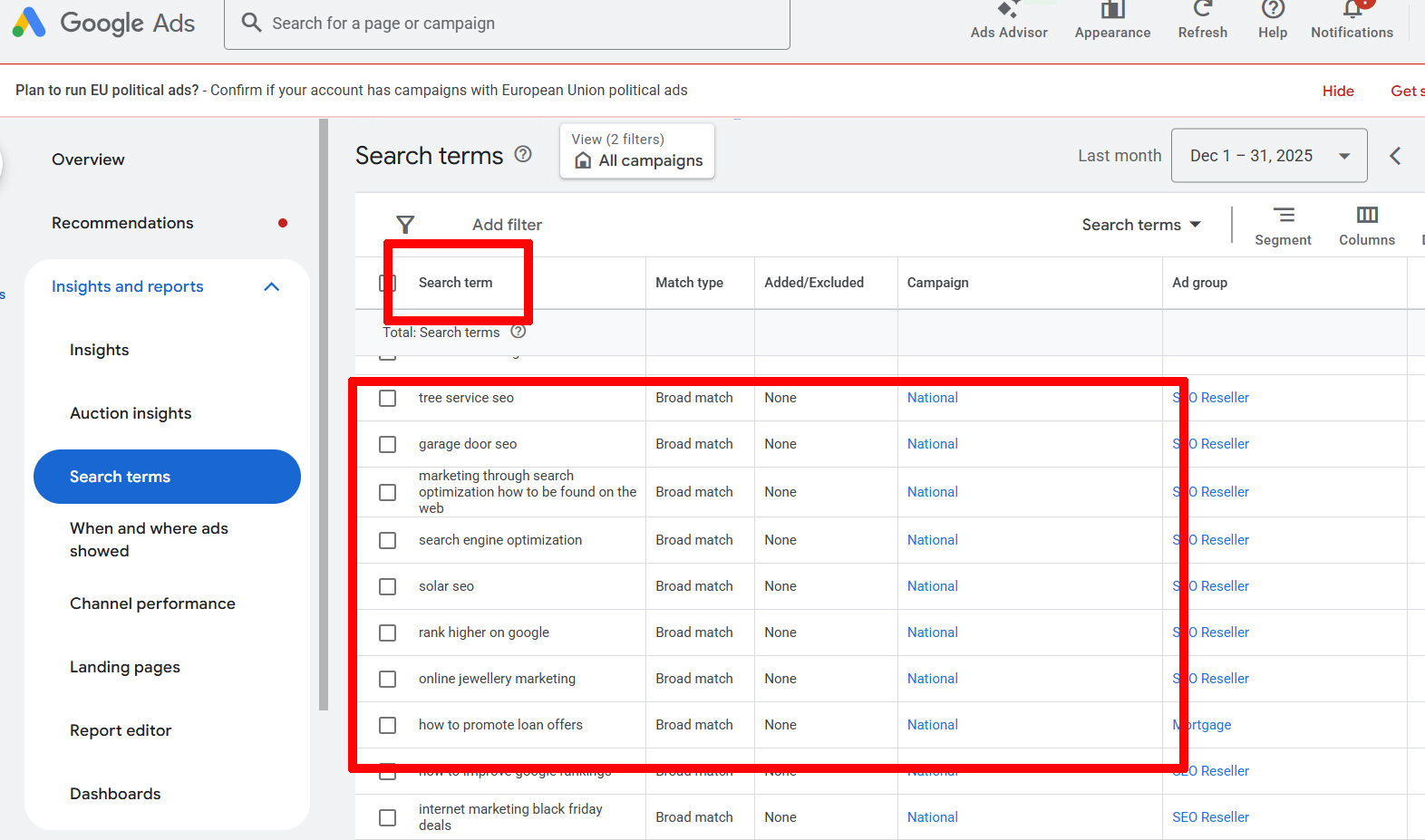
Many advertisers overlook negative keywords, even though they play a crucial role in controlling ad spend. Without them, ads may appear for irrelevant searches, wasting clicks and budget.
For instance, failing to exclude words like “free,” “jobs,” or “how to” can cause ads to appear to users who have no intention of purchasing.
Better approach:
Regularly review search term reports and add negative keywords to filter out unqualified traffic. This is a foundational best practice in effective PPC marketing.
3. Poorly Written Ad Copy
Even with strong targeting, weak ad copy can significantly reduce campaign performance. Ads that are generic, unclear, or fail to address user intent often result in low click-through rates (CTR), which can drive up costs.
Better approach:
High-performing PPC marketing campaigns use ad copy that:
- Clearly matches the user’s search intent
- Highlights a specific benefit or solution
- Includes a clear call to action
Testing multiple ad variations is essential to identify what resonates with your audience.
4. Sending Traffic to the Wrong Landing Pages

A common and costly mistake is directing ad traffic to a homepage or irrelevant page. When landing pages don’t align with the ad message, users leave quickly—wasting clicks and increasing bounce rates.
Better approach:
Each PPC marketing campaign should have dedicated landing pages that closely match the keyword theme and ad copy. Strong landing pages are clear, fast, mobile-friendly, and conversion-focused.
5. Not Tracking Conversions Properly
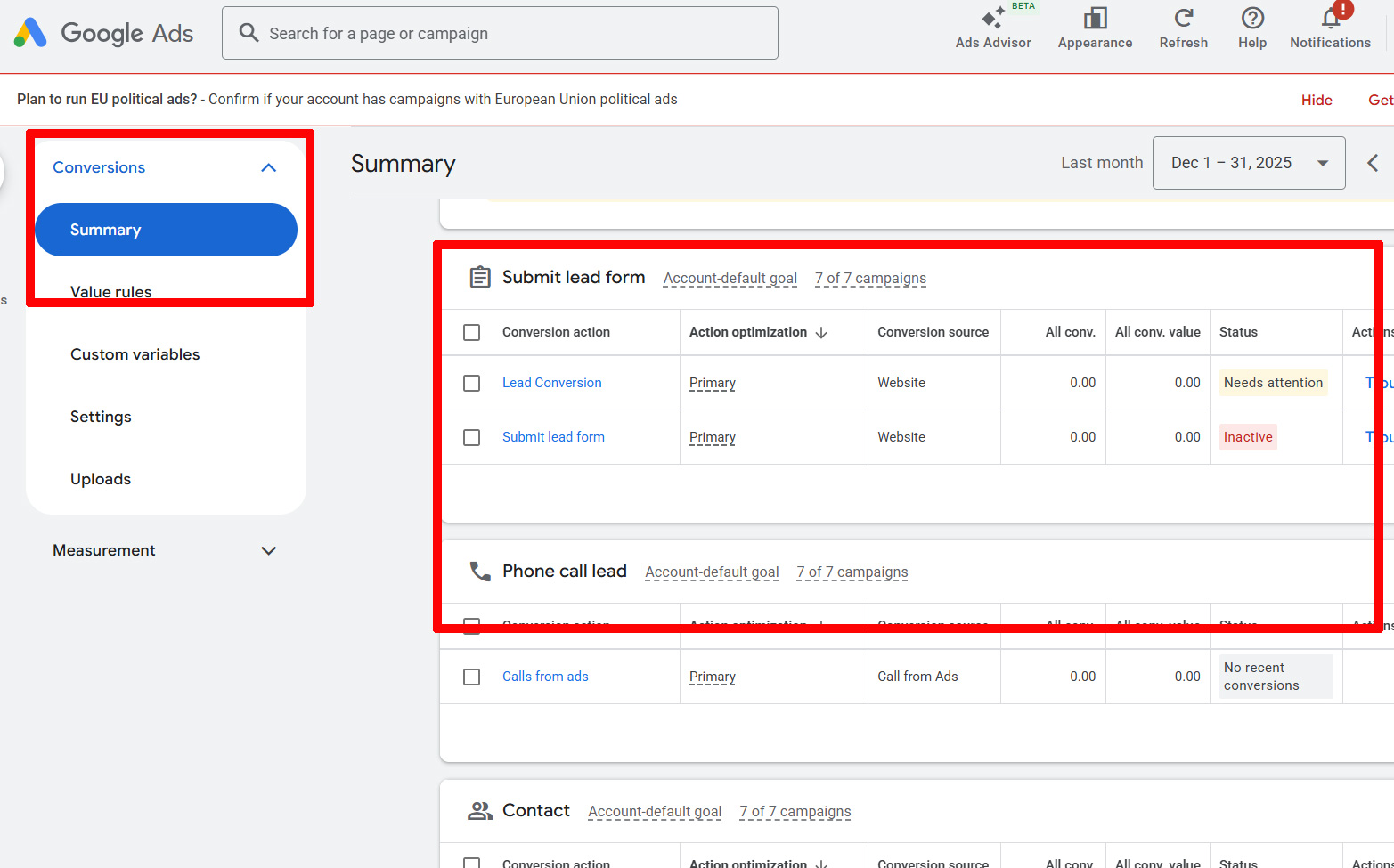
Without accurate conversion tracking, it’s impossible to know which campaigns are actually generating value. Many advertisers rely solely on clicks or impressions, which don’t tell the full story.
Better approach:
Set up conversion tracking for actions such as form submissions, phone calls, purchases, or downloads. Effective PPC marketing is data-driven and focused on measurable outcomes—not vanity metrics.
6. Failing to Optimize Campaigns Over Time
Launching a Google Ads campaign is only the beginning. One of the most expensive mistakes is letting campaigns run without ongoing optimization.
Markets change, competitors adjust bids, and user behavior evolves. Static campaigns often become less effective over time.
Better approach:
Successful PPC marketing involves continuous testing and refinement, including:
- Adjusting bids
- Improving Quality Scores
- Testing ad copy and landing pages
- Refining audience targeting
Ongoing optimization helps maximize ROI and minimize wasted spend.
7. Overlooking Audience Targeting Options
Google Ads offers advanced audience targeting features, but many advertisers rely solely on keyword targeting. This limits reach and efficiency.
Better approach:
Layering audiences—such as remarketing lists, in-market audiences, or demographic targeting—can significantly improve PPC marketing performance by focusing spend on users more likely to convert.
Final Thoughts
Google Ads can be an extremely powerful channel, but only when campaigns are built and managed correctly. Many businesses waste ad spend due to poor targeting, insufficient tracking, and limited optimization.
By avoiding common mistakes and following proven PPC marketing best practices, advertisers can turn paid search into a scalable, reliable growth channel. Whether managed internally or with professional support, the key to success lies in strategy, data, and continuous improvement—not guesswork.
Frequently Asked Questions
A $10 daily budget for Google Ads can be sufficient for small businesses or testing campaigns, especially when targeting a narrow audience with highly specific keywords. However, the effectiveness depends on your industry, competition, and campaign goals. Lower budgets may limit the reach and volume of traffic but can still generate valuable leads if managed carefully with precise targeting and optimized ads. For sustained growth and more competitive markets, higher daily budgets often deliver better results by allowing more clicks and conversions. Many professional Google Ads marketing services recommend starting with a budget aligned to your business scale and adjusting based on performance data to maximize ROI.
A $20 daily budget for Google Ads is generally a reasonable starting point for small to medium-sized businesses aiming to gain measurable results. It provides more flexibility than $10 per day to target relevant keywords, test different ad copies, and utilize advanced features like audience targeting and conversion tracking. With professional management, a $20 daily spend can be optimized to reduce wasted clicks through the use of negative keywords, precise match types, and landing page alignment. This budget allows enough room for ongoing optimization, which is crucial since markets and user behaviors change over time.
Google Ads charges depend on your campaign’s daily budget, bid amounts, and the number of clicks or impressions received. If you were charged $500, it likely reflects your ad spend over a billing cycle based on clicks or conversions generated. Costs can accumulate quickly if your ads receive high traffic or if you’re bidding on competitive keywords without sufficient optimization. To avoid unexpected charges, it’s important to set clear daily budgets and monitor campaigns regularly. Using negative keywords, focusing on intent-driven keywords, and optimizing bids can help control spend. If you’re unsure about charges, reviewing your Google Ads billing and campaign reports or consulting with a Google Ads marketing service can provide clarity.
Google Ads marketing service costs vary widely depending on the provider, campaign complexity, and ad spend. Typically, agencies charge management fees ranging from 10-20% of your ad spend or a flat monthly retainer that can range from $1000 to $5000 or more. These fees cover services like keyword research, ad copy creation, bid management, and landing page optimization. Some providers require a minimum ad spend or a contract term of 3-6 months to ensure campaigns are properly optimized for performance. When budgeting, consider both your ad spend and management fees to evaluate the total investment needed to achieve meaningful results.
Managing Google Ads yourself can save on management fees but requires significant time, expertise, and continuous optimization to avoid common pitfalls like broad keyword targeting, poor ad copy, and inadequate conversion tracking. Without experience, campaigns may waste budget on irrelevant clicks or fail to generate meaningful leads. Hiring a professional Google Ads marketing service offers strategic benefits including expert keyword research, advanced audience targeting, ongoing data-driven optimization, and dedicated resources for ad creation and landing page alignment. This often leads to better conversion rates, improved ROI, and time savings, making it a worthwhile investment for many businesses.
Initial results from Google Ads campaigns can typically be seen within 2 to 4 weeks after launch, depending on factors like budget, industry competition, and campaign setup quality. Early data helps identify which keywords, ads, and audiences perform best. However, meaningful optimization and scaling often require ongoing management over several months. Continuous testing of ad copy, landing pages, and bid adjustments is essential to improve Quality Scores and maximize conversion rates. Many agencies recommend a minimum commitment of 3-6 months to fully realize campaign potential.
Google Ads management services typically include comprehensive campaign setup and ongoing optimization. Key components are keyword research focusing on intent-driven and long-tail keywords, creation of compelling ad copy tailored to user intent, bid management to maximize budget efficiency, and landing page optimization to improve conversion rates. Additional services often involve setting up and monitoring conversion tracking, adding negative keywords to avoid wasted spend, audience targeting enhancements such as remarketing and demographic filters, and detailed performance reporting to inform strategic decisions.
ROI and success of Google Ads campaigns are measured by tracking conversions such as sales, leads, form submissions, or phone calls, rather than just clicks or impressions. Setting up accurate conversion tracking within Google Ads enables data-driven decisions about which keywords and ads are delivering tangible business outcomes. Analyzing metrics like cost per acquisition (CPA), conversion rate, click-through rate (CTR), and return on ad spend (ROAS) helps optimize campaigns. Regular performance reviews and adjustments ensure budgets are spent efficiently to maximize profitability.
Many Google Ads marketing agencies require a minimum contract term, often between 3 to 6 months, to allow sufficient time for campaign setup, data collection, testing, and optimization. PPC campaigns typically improve over time with continuous refinement, making long-term commitments beneficial. However, contract terms vary by provider, and some offer flexible month-to-month options. It's important to clarify contract length and cancellation policies upfront to align with your business goals and budget.
If you stop using a Google Ads marketing service, your Google Ads account remains your property and is not deleted. You retain full control and can continue running campaigns independently or with another provider. However, without ongoing professional management, campaigns may become less optimized over time, potentially reducing effectiveness and increasing wasted spend. It’s advisable to request a comprehensive handover including account access, historical performance data, and campaign insights to ensure a smooth transition and maintain campaign continuity.