- Crawlability & indexation (robots.txt, XML sitemaps, crawl budget, canonicalization)
- Site architecture & internal linking (logical hierarchy, hub pages, breadcrumbs)
- Core Web Vitals & performance (LCP, INP, CLS; image optimization; caching; CDN)
- Mobile-first readiness (responsive layouts, viewport config, tap targets)
- HTTPS + security hygiene (TLS, mixed content fixes, security headers where applicable)
- Redirect management (301 mapping, redirect chains/loops cleanup)
- Duplicate/thin content controls (canonicals, parameter handling, faceted pages)
- Structured data/schema (Organization, Product/Software, FAQ, Article, Breadcrumb)
- URL structure & normalization (clean slugs, consistent trailing slash, lowercase)
- JavaScript rendering checks (SSR/CSR issues, pre-rendering, hydration problems)
- Error handling (4xx/5xx monitoring, custom 404, soft-404 detection)
- Log file analysis (bot behavior, wasted crawl, priority URLs not crawled)
- International/geo targeting if needed (hreflang, regional pages)
- Image/asset SEO (next-gen formats, lazy loading, alt attributes, asset compression)
- Pagination & infinite scroll handling (indexable pagination, crawl paths)
- Site search & faceted navigation controls (noindex rules, canonical strategy)
- Head tag consistency (titles, meta descriptions, robots meta, hreflang placement)
- Content delivery & hosting checks (TTFB, server response, uptime, DNS)
- Analytics & tag health (GTM/GA4 firing, event integrity, consent mode alignment)
- Monitoring & QA cadence (Search Console, crawl alerts, uptime/performance monitoring)

The Best IT Marketing Channels for B2B Growth (And How to Prioritize Them)
You’ll drive B2B IT growth fastest when you pick channels by ICP and funnel stage, then fund the ones with the lowest marginal CAC and quickest payback. Start with high-intent SEO/content (pricing, comparisons, alternatives) and bottom-funnel paid search tied to one conversion and offline SQLs. Add paid social ABM to reach buying committees at target accounts. Scale partner co-sell, review platforms, and AWS/Azure marketplaces to drive higher ACV and smoother procurement. Next, you’ll see how to score impact vs effort. Learn more below on how the right IT marketing channels can fill your pipeline.
Choose IT Marketing Channels by ICP + Funnel Stage
Where should you spend first—LinkedIn ads, SEO, webinars, partners, or outbound? Start with ICP alignment (Ideal Customer Profile): map job titles, firmographics, and buying triggers, then choose channels that reach them with minimal waste. Quantify expected CAC and payback by channel using benchmarks plus your close rates.
Next, match each bet to a funnel stage. Use LinkedIn ads to create precise awareness and retargeting pools; run webinars to convert problem-aware teams into solution-fit opportunities; activate partners when your ICP trusts ecosystems and you can co-sell into existing accounts; use outbound when you’ve validated messaging and can target high-LTV lists with tight sequencing. Prioritize the channel where you can prove lift fastest: shortest sales-cycle impact, clean attribution, and scalable spend caps. Review weekly, reallocate aggressively.
IT Marketing Channels: SEO + Content for High Intent
You’ll drive high-intent pipeline when you target keywords by intent, prioritizing “solution” and “comparison” queries that convert at higher rates than broad awareness terms. You’ll protect rankings and capture demand with technical SEO—crawlability, indexation, Core Web Vitals, and schema—so your best pages actually get seen. You’ll turn traffic into revenue with content hubs that map to ICP pain points and funnel steps, tightening internal linking and CTAs to lift lead-to-opportunity conversion.
Keyword Strategy For Intent
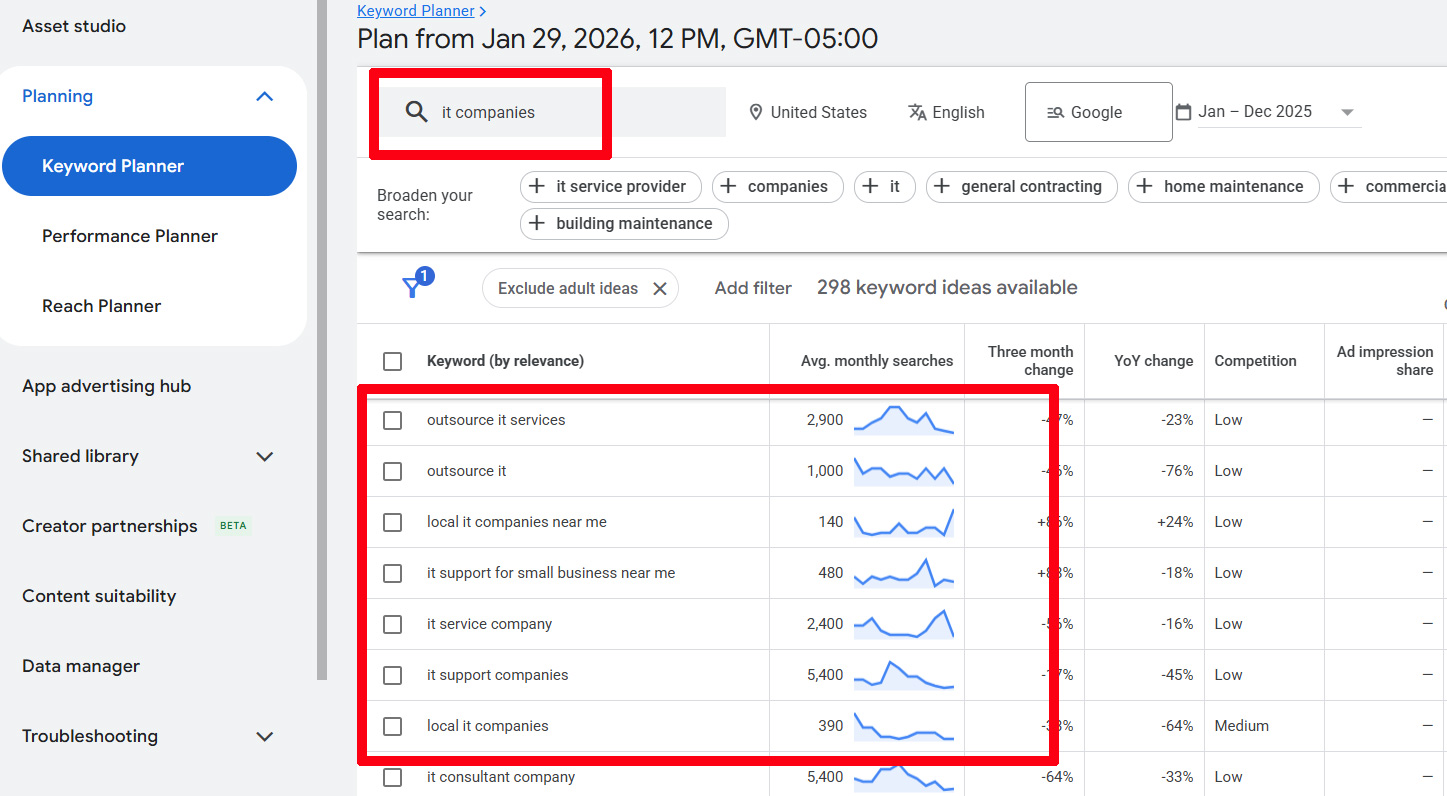
Because SEO only delivers ROI when it captures buying intent, your keyword strategy needs to prioritize queries that signal evaluation and budget—think “best IT managed service provider,” “SOC 2 compliance software pricing,” or “SIEM vendor comparison”—over broad, informational terms. Build a tiered map: bottom-funnel “pricing,” “vendor,” “alternative,” and “RFP” terms first, then mid-funnel “requirements” and “implementation” queries that accelerate deal cycles. Validate keyword intent by tying each cluster to a pipeline KPI: demo rate, SQL rate, and CAC payback. Next, audit SERPs to spot content gaps competitors exploit—missing comparison pages, industry-specific use cases, or integration narratives. Ship pages in 2-week sprints, A/B test titles for CTR, and refresh quarterly based on conversion data, not traffic vanity metrics.
Technical SEO For Visibility
High-intent keywords only pay off if Google can reliably crawl, index, and rank the pages built around them. Treat technical SEO as your demand-capture infrastructure: if it fails, targeting intent won’t translate into pipeline.
Here is a list of items to tackle:
Prioritize Technical optimization that improves discoverability and performance: clean XML sitemaps, disciplined robots rules, canonical control, and structured data that clarifies entities and eligibility. Drive Core Web Vitals with faster LCP, lower INP, and stable CLS; speed lifts rankings and improves demo-request completion rates. Fix index bloat by pruning thin URLs, consolidating duplicates, and tightening internal linking to direct authority to revenue pages. Instrument everything in GSC and your analytics stack, then quantify ROI by tracking impressions-to-clicks, click-to-lead rate, and cost per SQL versus paid search.
Content Hubs For Conversion
Where do high-intent organic visits actually convert—scattered blog posts or a structured content hub built around a single commercial outcome? You’ll win more pipeline when you cluster BOFU pages, comparisons, integration guides, and proof into one navigable system that search and buyers both understand.
Build content hubs around a service line or use case, then wire deliberate conversion paths: hub → solution page → demo/assessment CTA. Use internal links as your routing layer, not decoration. Track hub-level ROI with assisted conversions, CTA click-through, and lead-to-opportunity rate by entry page. Optimize for intent velocity: shorten time-to-next-click with sticky CTAs, pricing/context modules, and schema. When you update one hub, you compound rankings, reduce bounce rate, and increase qualified form fills.
IT Marketing Channels: Paid Search + Paid Social
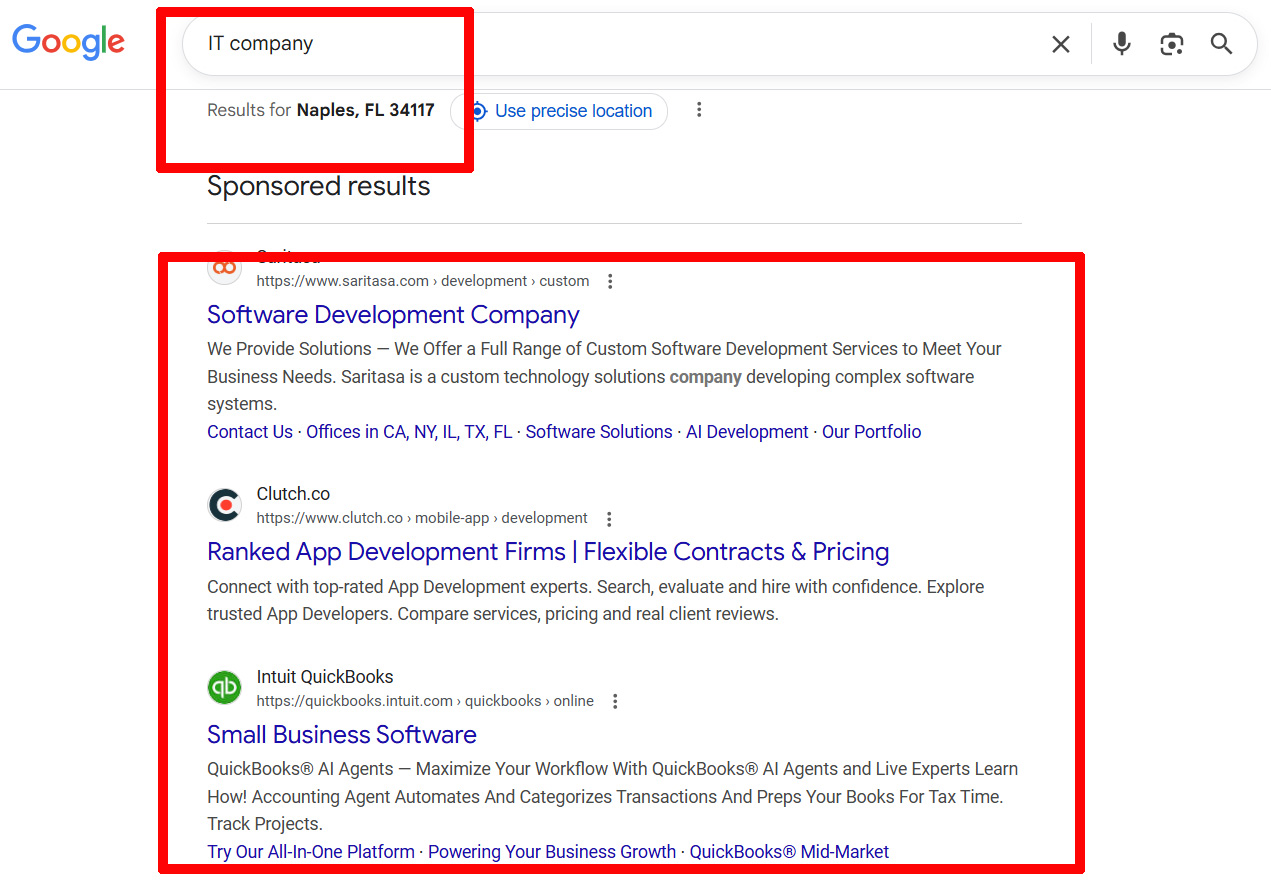
You scale pipeline faster when you pair high-intent paid search with conversion-tracked landing pages and keyword-level CPA targets. You then run ABM on paid social to reach named accounts, control frequency, and measure lift in meetings booked and sales-qualified opportunities. You keep ROI predictable by tightening budgets and bids based on marginal CPL, impression share, and down-funnel revenue.
High-Intent Paid Search
When pipeline targets don’t wait, paid search and paid social let you capture buyers at the exact moment they signal intent—through keywords, competitor queries, and in-market behaviors. For high intent demand, paid search is your fastest route to qualified clicks because it matches explicit problem statements to your solution, then converts that intent into measurable revenue. Build it like an experiment: isolate variables, shorten feedback loops, and scale only what hits your CAC and payback targets.
- Prioritize bottom-funnel queries (e.g., “IT monitoring software pricing”) and map each to a single conversion action.
- Use tight match types, negative keywords, and landing-page message match to lift CVR and Quality Score.
- Optimize the pipeline: import offline conversions, bid to SQL/SAO value, and cut waste weekly.
ABM Targeting On Paid Social
How do you turn paid social from “awareness” into a predictable pipeline? You run it like an account-based channel. Start with ABM targeting: upload matched account lists, layer firmographics, and prioritize buying committees (IT, security, finance). Then map ad sets to funnel stages—problem framing, solution validation, and vendor selection—so each impression has a job.
Use creative that proves outcomes: benchmarks, architecture diagrams, ROI calculators, and short customer proof. Drive clicks to fast, personalized landing pages with clear next steps (demo, assessment, workshop). Measure on account-level reach, engaged accounts, and progression to sales meetings—not vanity CTR. When you connect platform data to CRM, you’ll see which accounts accelerate, which stall, and which messages move through the pipeline.
Budget And Bid Optimization
Dial in budget and bids to turn Paid Search + Paid Social into a controllable CAC lever, not a spend sink. Treat spend like a portfolio: you’re reallocating toward the lowest marginal CAC, not the loudest channel. Start with clean conversion signals (pipeline, not clicks), then let automation work inside the guardrails you set.
- Set budget allocation by funnel stage: fund Search for high-intent capture, Social for demand creation; cap awareness if MQL→SQL lags.
- Run bid optimization against revenue signals: use value-based bidding, offline conversions, and LTV-weighted goals; downbid segments with low win rates.
- Stress-test weekly: shift 10–20% of budget to the best ROAS cohort, pause waste, and keep a controlled test cell for new creative, keywords, and audiences.
IT Marketing Channels: ABM Plays for Bigger Deals
Why chase volume leads if your pipeline needs bigger contract values? Account based marketing – ABM flips the funnel: you target named accounts, not anonymous clicks. Start with intent and firmographic signals, then score accounts by revenue potential, buying stage, and tech stack fit. Use ABM messaging that speaks to each committee role—CIO, security, finance—so you increase meeting rates and shorten sales cycles.
Run ABM orchestration across channels: LinkedIn ads for air cover, email and SDR outreach for conversion, retargeting for frequency, and virtual events for consensus building. Measure ROI with account-level metrics: engaged buying groups, pipeline created per account, velocity, and win rate lift versus non-ABM. Optimize weekly: swap creatives, tighten targeting, and reallocate spend toward segments producing the highest ACV and lowest CAC.
IT Marketing Channels: Partners, Reviews, Marketplaces
Partner-led growth, review engine visibility, and marketplace distribution provide three high-intent channels that reliably compress CAC because buyers already trust the source. You can turn these channels into a predictable pipeline by engineering proof, co-selling motions, and frictionless procurement.
- Partnership ecosystems: Co-market with MSPs, GSIs, and ISVs, share intent signals, and run joint demos. Track sourced pipeline, win rate, and influenced ARR to keep ROI tight.
- Review platforms: Optimize category fit, collect verified reviews, and respond fast. Buyers validate risk here, so measure profile-to-demo conversion and lift in close rate.
- Marketplaces: Publish in AWS/Azure/GCP and SaaS marketplaces, bundle private offers, and streamline trials. Monitor marketplace leads, ACV, and renewal cohorts for efficiency.
Score IT Marketing Channels (Impact vs Effort)
How do you decide which IT marketing channel deserves budget next when every option claims “high intent”? You score channels on impact vs effort, then fund the winners. Start with impact scoring: estimate the quarterly pipeline, win-rate lift, and payback period using last-touch and assisted attribution. Weight for ICP fit and deal size so “cheap leads” don’t win. Next, run effort mapping: list build time, required integrations, content volume, compliance, and partner enablement hours. Translate effort into fully loaded cost and time-to-first-opportunity. Plot each channel on a 2×2. Prioritize high-impact/low-effort for fast ROI, then incubate high-impact/high-effort as innovation bets with clear kill metrics. Re-score monthly as CAC and conversion rates move.
Conclusion
You don’t need an Odysseus-sized journey to find B2B IT growth—you need a map. Match channels to your ICP and funnel stage, then follow the numbers: SEO and high-intent content compound CAC down over time, while paid search and paid social let you buy pipeline on demand. For enterprise, ABM is your spear—fewer targets, higher ACV. Partners, reviews, and marketplaces add trust at scale. Score impact vs effort, and fund what pays back fastest.