All brands use coupons, but who invented them? It was 1887, and the brand was called Coca-Cola. The first coupon was created when Atlanta businessman Asa Candler had the idea to offer a ticket to consumers for a free glass of Coca-Cola. It is estimated that between 1894 and 1913, one out of every ten people in America had received this coupon, which made it possible for this little-known sugary drink to become a brand leader.
Customized and more effective coupons thanks to digital tools
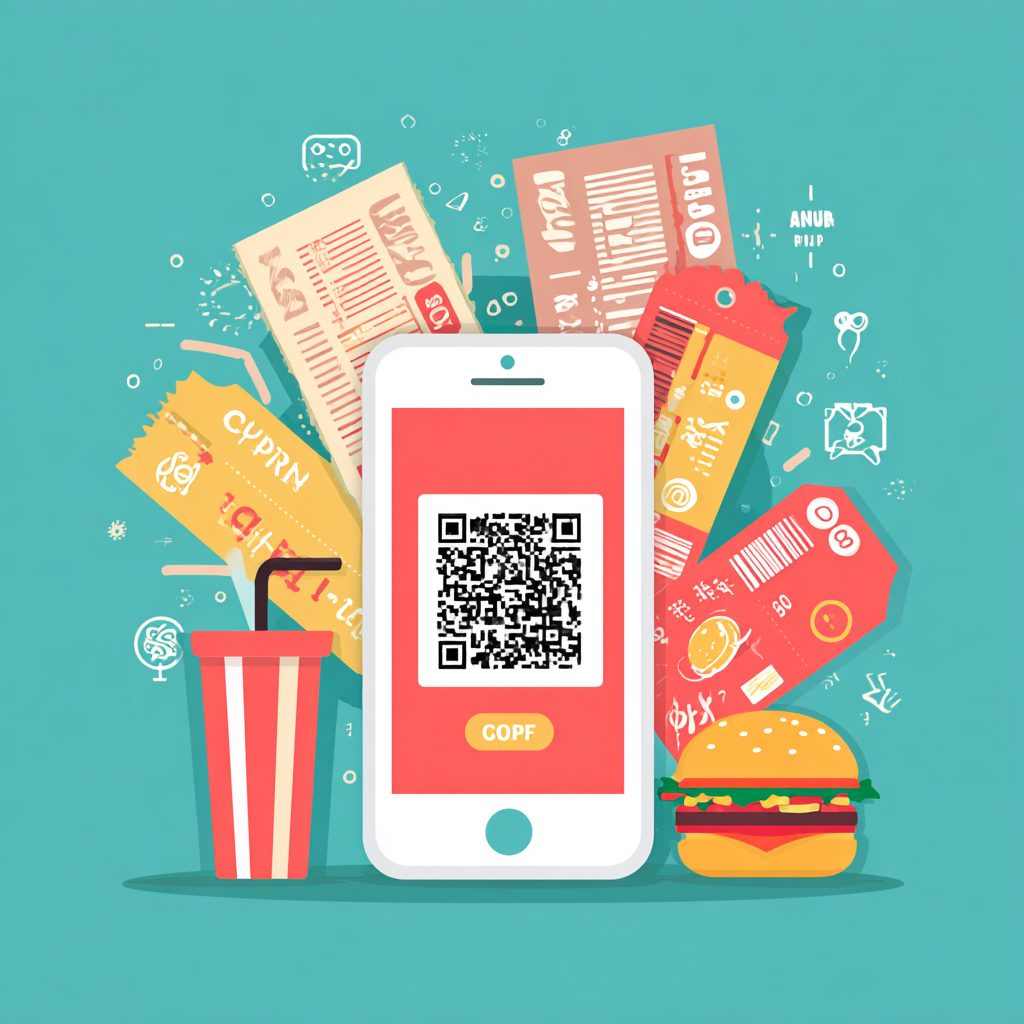
Today, coupons are used by all brands and for a wide range of products. Thanks to the widespread use of mobile devices, such as smartphones and tablets, they are rapidly becoming digitalized. In 2015, more than 120 million digital coupons were used in the United States, and that number was expected to reach 127 million in 2016 (source: Statesman).
Compared to traditional paper coupons, the digital ones are more convenient for consumers, who can seek offers that interest them at any time and save them directly on their smartphones. They are also more strategic for brands, which can send targeted offers to customers in a particular time of the day or while they are in the vicinity of the outlets.
From a practical perspective, creating mobile coupons is easier than ever and within everyone’s reach: in addition to a large number of specific apps, there are online systems to create mobile sites that also allow you to make creative and effective mobile-coupons in just a few minutes without requiring special technical or graphic skills. What is important is to have a very clear idea of what you want to get from this campaign, who you want to reach out and find the right idea to get as many people as possible use the coupon.

The universal power of discount
Mobile coupons can be used to achieve several objectives:
- To increase sales: over 57% of consumers who purchased an item online using a coupon say that they would not have bought it had they not received a discount (source: Report).
- To publicize a new product: to make a newly launched product spread more quickly, mobile coupons can be an effective incentive for people to try, and they are definitely less expensive than
- Reaching a specific niche market: Through mobile coupons, you can target a specific geographic area, age group, or social demographic, making communication more personalized and effective.
- Make room for the latest products: When there is a need to free up space in stores for new items, a limited-time promotion via mobile coupons enables you to quickly clear out your warehouse.
A success story
One of the most famous campaigns of mobile coupons that marked an era was that of Orange Wednesdays, promoted by the telephone company Orange (now known as EE). By simply sending a text message, people would receive a code that enables them to claim two movie tickets for the price of one. These tickets could be used to watch a movie on a Wednesday night, a day when the movie theatre typically has lower revenue. It was reported that over 23 million free tickets had been distributed throughout the Orange Wednesdays (source: TheGuardian). The campaign had been so successful that it continued for twelve years, from 2003 until the beginning of 2015.
But what is the secret to creating a successful mobile coupon campaign? Be original: remember that it is a tool used by all brands for over 120 years and that consumers receive dozens of daily offers and promotions. This is why you must stand out. For example, if you’re targeting students, you might consider offering a bkstr promo code to help them save on textbooks and school supplies.
How to use coupons creatively
#1 More fantasy in discounts
Almost all coupons offer a percentage discount, which may have little impact on consumers who are now accustomed to receiving offers for any product. Rethinking it in a creative way and customizing it for your target and product category can help you involve consumers more closely. For example, an ice cream might offer free cream to those who present themselves as a couple on Valentine’s Day and buy two cones; Grom, an Italian ice cream brand, has done something similar this year, but they only promoted this on Facebook and not through mobile coupons… could it be an idea to make the campaign even more effective in 2016?
# 2 The closer, the more effective
When customers are near the store, they receive a mobile coupon that can be used in that specific store. Consumers perceive it as an opportunity not to be missed, and they are enticed to use it, even if prior to receiving the discount, they would not have thought of shopping. The yogurt shop chain Pinkberry has shown how this can be a winning idea: an advertisement on the consumer’s smartphone would show the nearest yogurt shop. By clicking on the ad, they would obtain a coupon with a $1 discount on yogurt, along with directions to the shop and a “call” button.

#3 Social is better
Coupons were once distributed directly from the brand to the consumer, in a unidirectional manner, but now, with social networks, Facebook in particular, the tables have turned: the consumers are the ones to spread and share an offer with their friends, spontaneously increasing brand visibility. How to make the most of this opportunity? By doing a promotion that reflects the social nature of Facebook. You can propose, for example, on the page of your brand, a coupon valid only for those who present themselves in the store with their friend with whom they shared the offer.
#4 Right on time
People are inundated with advertisements and promotions, making it possible to lose sight of the ones they are genuinely interested in. Sending a mobile coupon exactly when the consumer might be willing to use it is a good strategy to draw attention at the right time: for example, for pizzerias and restaurants, the best time to send coupons is just before lunch or dinner time, when people start to think about where they are going to eat. Taco Bell has uniquely implemented this concept through the Happier Hour campaign, which offered a discount coupon for consumption during the afternoon. The promotion included a “Remind me at 2PM” option, allowing users to save the discount in their calendar on mobile devices and receive a notification at the most convenient time to use it.
#5 Reward customers for their loyalty
Customers are not all the same, and those who are most receptive should be rewarded. Those who have used a coupon are probably more likely to use another one in the future. By keeping track of these consumers, you can create and send targeted offers to them more frequently than to other customers, and provide them with increasing benefits. This makes them feel valued and helps you build a customer base that is strongly loyal to the brand.
#6 Free is the magic word
A percentage discount is a good incentive, but offering freebies is even more effective. It doesn’t matter if it is of small value; psychologically speaking, a freebie always attracts people. Unlike a discount, which requires calculation to determine the absolute advantage, its appeal is direct and immediately noticeable. How to use the power of the word “free” creatively? You can do this, for example, by offering a coupon with every purchase, which allows customers to receive a different type of item for free. This can also help expand your product knowledge. You could also reward consumers who book a service in advance. McDonald’s has done this through a downloadable special coupon that offers a free McMuffin to those who order their breakfast the day before.

Technology is useless without ideas
On one hand, all these ideas would never be feasible if it were not for technology, which now allows to geo-localizing users, tracking their behavior and send them scheduled promotions. But on the other hand, technological innovation alone is not enough to sell. Ideas are needed: you should know your consumers, imagine what they would want, send them customized offers, and take into account the mobile technology and the personalization it can offer. Be today’s Asa Candler.