Tips for Improving Your Marketing Agency’s Office Acoustics
Marketing agencies rely on clear thinking, strong collaboration, and focused execution. While layout and branding are often prioritised in office design, acoustic performance plays a major role in how well a space actually functions. Working with an acoustics specialist can help ensure these environments are designed for both creativity and productivity. Thoughtful acoustic design helps teams communicate effectively, concentrate when needed, and feel comfortable throughout the workday.
Below are practical tips for designing a marketing agency office that performs as well as it looks, with examples of how acoustic solutions can support each space.
1. Create Zones That Match How Your Team Works
Agency work moves quickly between brainstorming, client calls, and focused individual tasks. Designing distinct zones allows each activity to happen without disrupting others.
Acoustic panels can reduce reverberation in open-plan areas, helping conversations stay local rather than spreading throughout the office. In larger spaces, acoustic wall dividers are an effective way to create visual and acoustic separation between teams while maintaining flexibility.
2. Improve Open-Plan Comfort Without Killing Energy
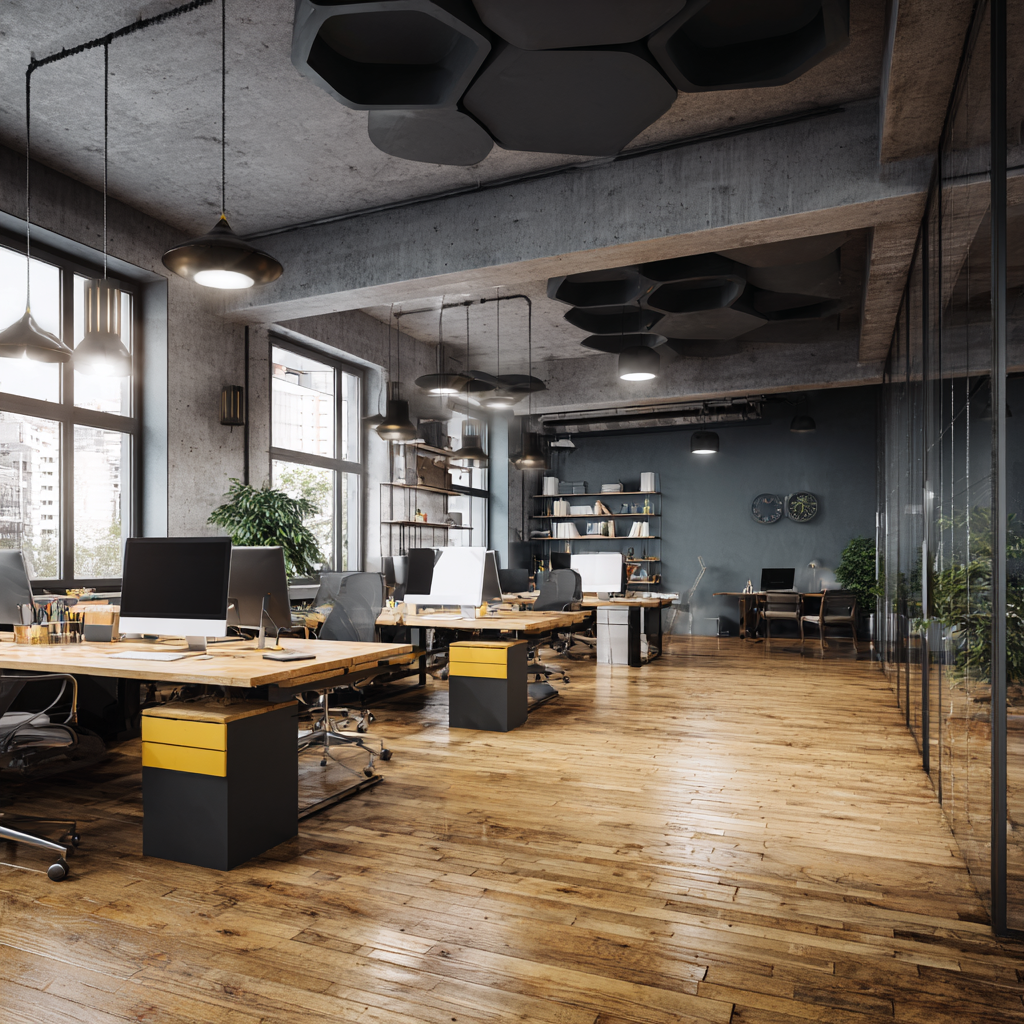
Open-plan offices encourage collaboration but can become noisy without sound control. Hard surfaces and exposed ceilings amplify speech and background noise, increasing distraction.
Installing acoustic ceiling systems helps absorb sound at its source, reducing overall noise levels and making the space feel calmer without losing its open, creative atmosphere. Wall-mounted acoustic panels can further improve comfort by controlling echo and improving speech clarity.
3. Design Meeting Rooms for Clear Communication

Meeting rooms are critical spaces in marketing agencies, especially for strategy sessions and client presentations. Poor acoustics can make voices sound harsh or unclear, leading to fatigue during longer meetings.
Using a combination of acoustic panels and ceiling treatments helps create rooms where speech is clear, natural, and comfortable to listen to. This improves both in-person discussions and video calls.” add ” Beyond acoustic challenges, meeting rooms often face availability and coordination issues. To prevent scheduling conflicts and operational inefficiencies, implementing meeting room booking software helps ensure rooms are used smoothly and without disruption.
4. Support Focused Work for Content and SEO Teams
Tasks like content writing, SEO analysis, and campaign reporting require sustained concentration. Even low-level background noise can disrupt these workflows.
Quiet zones fitted with acoustic wall panels or ceiling systems help absorb sound and minimise distractions. For teams that need flexibility, acoustic wall dividers allow spaces to be reconfigured as needs change, without permanent construction.
5. Use Acoustic Products to Enhance Your Brand Environment
Acoustic treatments do not need to look utilitarian. Modern acoustic panels and ceiling systems are available in a range of colours, textures, and finishes that can complement your agency’s visual identity.
In client-facing areas, well-integrated acoustic solutions create a space that feels professional, considered, and comfortable, reinforcing brand trust.
6. Plan Acoustics Early for Better Outcomes
Acoustic issues are much easier to address when they are considered early in the design process. Integrating acoustic panels, wall dividers, and ceiling systems from the outset ensures they work in harmony with layout, lighting, and furniture. This approach delivers better performance and avoids the need for reactive fixes later on.
Final Thoughts
A successful marketing agency office supports both collaboration and deep focus. By incorporating the right mix of acoustic panels, acoustic wall dividers, and acoustic ceiling systems, agencies can create environments that feel energetic yet controlled.
Acoustic design is not about making spaces silent. It is about enabling people to think clearly, communicate effectively, and do their best work every day.