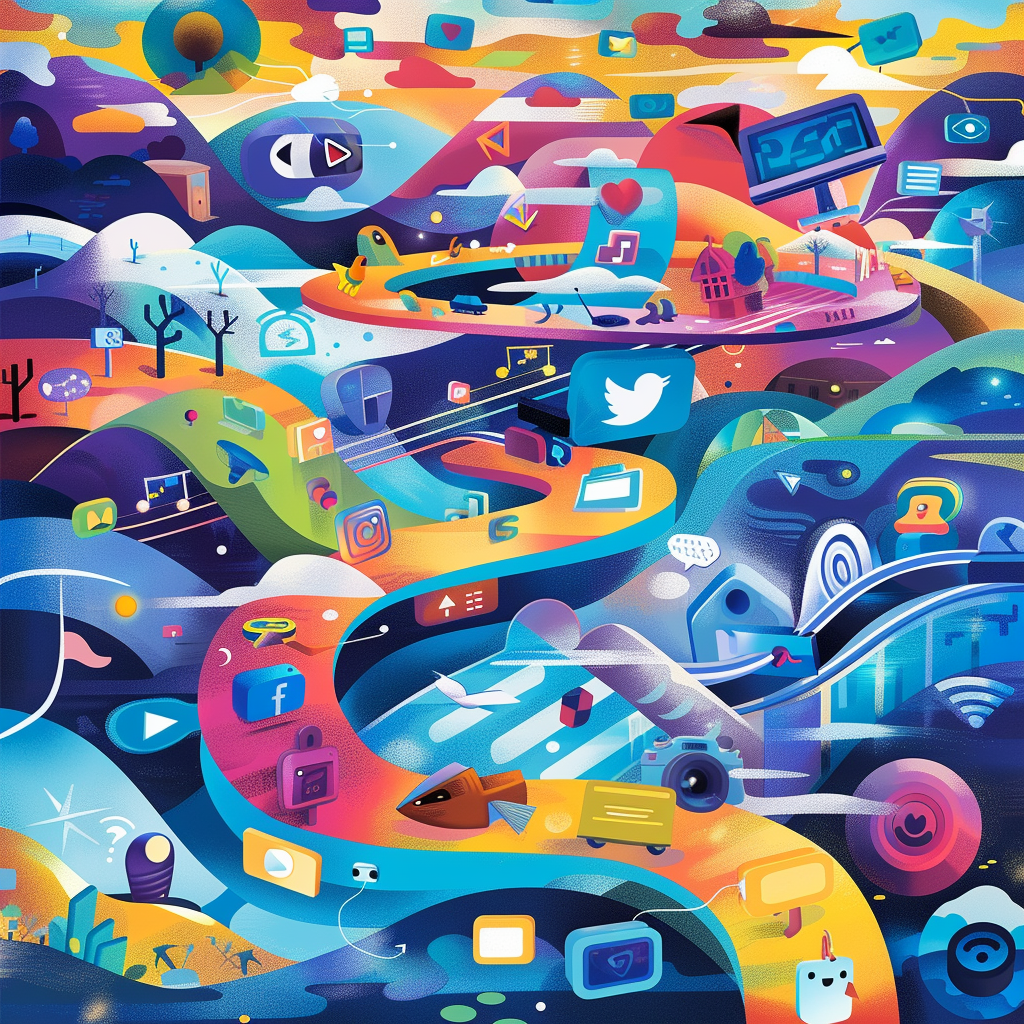
Social Networks Timeline – A Historical Journey of Popular Social Platforms
As you reminisce about your first encounter with MySpace, it’s hard not to marvel at how social media platforms have evolved. You’ve witnessed the landscape shift from simple, text-based interfaces to complex ecosystems that cater to every aspect of human interaction. These platforms have become integral to our digital lives, from sharing mundane daily activities to launching global movements. Yet, as you stand on the brink of the latest technological advancements, you can’t help but wonder what’s next. This journey through the history of social networks offers a glimpse into how we’ve connected and communicated, inviting you to explore the pivotal moments that have shaped our online experiences.
Pre-Internet Roots of Social Media
To understand the complex web of today’s social media, it’s crucial to delve into its pre-internet roots, tracing back to the introduction of Morse code in 1844, which marked the inception of long-distance digital communication—this pivotal moment in history laid the foundation for the evolution of communication technology, eventually leading to the ARPANET in 1969 and NSFNET in 1987. These networks were instrumental in setting the stage for early social networking platforms and the sophisticated, modern social media platforms we’re familiar with today. By examining the gradual progression from essential communication technologies to platforms like Talkomatic and PLATO Notes in the 1970s, you gain insight into the technological advancements that paved the way for the interconnected digital world we navigate today.
Emergence of First Social Networks
In 1997, SixDegrees.com marked the dawn of social networking by enabling users to create profiles and connect with others, laying the groundwork for the evolution of online social platforms. This pivotal moment in the history of social networking demonstrated the untapped potential of the Internet for fostering human connections through early social media platforms.
Here’s how the landscape began to shape:
- SixDegrees.com – became one of the first social media platforms, setting a precedent for future sites.
- Friendster in 2002 introduced a model based on mutual friendships, influencing subsequent social networking sites.
- Incorporating user profiles became a standard feature, allowing for online expression of individual identity.
- These early platforms utilized nascent communication technologies, paving the way for the sophisticated social media ecosystems we navigate today.
The Rise of Blogging Platforms
Building on the foundation laid by early social networks, the late 1990s saw the emergence of blogging platforms like LiveJournal and Open Diary, marking a significant evolution in how individuals shared and consumed content online. You’ve seen social blogging transform from a novel concept into a pivotal means for expressing personal thoughts and building online communities. These platforms weren’t just about journaling; they facilitated dynamic discussions, allowing you to connect with others over shared experiences and interests. This era underscored the democratization of content creation, empowering you to voice your ideas without the need for traditional media gatekeepers. Furthermore, the rise of these platforms nurtured the growth of niche online communities, catering to varied interests and fostering a sense of belonging among users.
Social Gaming and Dating Evolution
As social media platforms like Friendster began emphasizing social gaming around the early 2000s, a significant shift occurred in how users interacted and connected online, marking a pivotal moment in the evolution of social networking and dating landscapes. This transformation was key in reshaping user engagement and interactive experiences on these platforms. Here’s a detailed, chronological breakdown:
- Friendster’s Transition: Transitioned from a dating platform to focus on social gaming, attracting diverse users.
- Broadened User Base: Social gaming features captivated users seeking interactive experiences.
- Trendsetting Shift: Reflecting a broader trend, Friendster diversified offerings to boost engagement.
- Paving the Way: Established a foundation for integrating games into various social networking sites, enhancing how users connect and interact.
LinkedIn: Professional Networking Redefined
Shifting focus from the playful realms of social gaming and dating, let’s explore LinkedIn, a platform that has redefined professional networking since its inception in 2002. As one of the pioneering social networks, LinkedIn established itself as a cornerstone in the professional networking space, introducing premium packages—a first in the industry. By 2006, this professional networking platform celebrated its first profitable year, mainly due to the success of its Jobs and Subscriptions area. This segment of LinkedIn not only contributed significantly to its revenue and solidified its status as an invaluable resource for professionals worldwide. Mario Sundar underscored LinkedIn’s achievements, highlighting how it has continually shaped and dominated the professional networking landscape.
Facebook: Changing the Social Landscape
Mark Zuckerberg and his college roommates launched Facebook in 2004, fundamentally altering the social media landscape with a platform that quickly amassed a million users by the year’s end. You’ve witnessed its evolution, but let’s break it down:
- 2004: The birth of Facebook shifted the social networking paradigm, setting a new standard for online interaction.
- 2006: Introduction of the News Feed feature, revolutionizing how you engage with content.
- 2009: Facebook becomes cashflow positive, marking its financial stability and growth potential.
- 2012: The acquisition of Instagram further cemented Facebook’s dominance in social media history, showcasing Zuckerberg’s vision for an interconnected social media ecosystem.
Facebook’s journey from a college dorm project to a global social networking powerhouse encapsulates the dynamic nature of social media history.
Twitter: Birth of the Hashtag
In 2007, Twitter fundamentally transformed social media interaction by introducing the hashtag, a feature proposed by Chris Messina that enabled users to organize and follow specific topics easily. This innovation didn’t just revolutionize content organization; it created a new paradigm for digital communication. By simply prefixing a word or phrase with a pound sign, Twitter users could link their tweets to a global conversation. Over time, hashtags like #BlackLivesMatter transcended the platform, becoming symbols of social movements and collective sentiment. The hashtag’s introduction marked a pivotal moment in social media, showcasing Twitter’s role in shaping online discourse. It demonstrated how a simple tool could amplify voices and ideas, making Twitter an indispensable platform for real-time news and community engagement.
Instagram: Revolutionizing Photo Sharing
Launched in 2010, Instagram quickly revolutionized how people share and consume photos, transforming visual storytelling on social media. You’ve witnessed a platform that began as a simple photo-sharing app evolve into a complex ecosystem where visual content reigns supreme. Here’s how:
- 2010: Instagram launches, focusing solely on photo sharing, allowing users to upload and filter images.
- Over Time: The platform diversifies, introducing Stories, Reels, and IGTV, catering to different forms of visual content.
- Influencer Emergence: Influencers and brands realize Instagram’s potential for marketing, using visual storytelling to reach a wide audience.
- Cultural Impact: Instagram has become a hub for creativity, setting trends in photography, lifestyle, and visual inspiration.
Snapchat: The Disappearing Content Phenomenon
While Instagram transformed visual storytelling, Snapchat introduced a novel twist with its disappearing content, reshaping how younger audiences engage with social media. Launched in 2011, Snapchat quickly diverged from traditional social platforms by prioritizing ephemeral visual communication, a move that intrigued and captured millions’ fascination. As its user base soared, reaching over 265 million daily active users by 2021, Snapchat didn’t rest on its laurels. Instead, it innovated further, rolling out features like Stories, Discover, and Lenses, each adding a new layer to the platform’s appeal. Snapchat’s foray into AR experiences and strategic partnerships with brands further cemented its status as a pioneer, continually pushing the boundaries of how social media can enhance and redefine our digital interactions.
Sina Weibo: China’s Twitter Equivalent
As Sina Weibo emerged in 2009, it quickly established itself as China’s response to Twitter, transforming the landscape of microblogging with its 140-character messages and multimedia-sharing capabilities. Here’s how it evolved:
- In 2009, Sina Weibo redefined China’s social media scene as the Twitter equivalent, focusing on brevity and immediacy.
- User Growth: It amassed over 500 million registered users, with around 50 million active daily users, becoming a crucial platform for digital interaction in China.
- Features Expansion: Beyond text, users share photos, videos, and live streams, incorporating trending topics and hashtags for wider reach.
- Influence on Public Opinion: Sina Weibo significantly shapes discussions and opinions, making it a pivotal microblogging platform in shaping China’s digital public sphere.
The Short-lived Platforms: Orkut and Google
Google’s foray into social networking manifested notably through Orkut and Google+, platforms that, despite initial promise, experienced fleeting lifespans and ultimately did not secure a lasting legacy in the competitive digital landscape. Launched as Google’s first social media venture, Orkut quickly gained traction, especially in Brazil and India, peaking at 300 million members. However, it couldn’t maintain user engagement against the tide of emerging competition and shut down in 2014. Google+ followed, aiming to integrate social networking with Google’s suite of products. Despite its ambitious vision, Google+ struggled to carve out a significant space alongside behemoths like Facebook, leading to its closure in 2019. Both platforms underscore Google’s challenges in capturing and sustaining user interest in the rapidly evolving social media landscape.
Video-centric Platforms: Vine and Periscope
In the mid-2010s, Vine and Periscope emerged as pioneering platforms that reshaped online video sharing and live broadcasting, capturing the imagination of millions worldwide. These platforms highlighted the growing appetite for video content, each carving out its unique space within the digital landscape.
Here’s a closer look:
- Vine launched in 2013, offering a novel short-form video experience with 6-second looping clips that sparked creativity and virality.
- It wasn’t long before Vine became a hub for internet celebrities and viral phenomena, emphasizing the power of concise storytelling.
- Twitter’s acquisition of Vine in 2012 highlighted the platform’s significant potential, though the journey ended in 2017 amidst financial challenges and rising competition.
- Periscope, introduced in 2015, revolutionized live streaming, allowing users to broadcast their moments live, fostering real-time connection and engagement.
TikTok: The Rise of Short Videos
Marking a pivotal moment in the evolution of digital communication, TikTok’s international launch in 2017 heralded the rise of short-form video content, captivating over a billion users worldwide with its unique blend of creativity and algorithmic engagement. This platform quickly became the epicenter for Gen Z and Millennials, showcasing an unprecedented level of user engagement through its algorithmic feed that promotes viral challenges and trends. As you delve into TikTok’s journey, you’ll notice its profound influence on the digital landscape, encouraging other social media platforms to incorporate short video formats. Its success lies in creating and sharing engaging content and in revolutionizing how stories are told and consumed, making short-form videos an indispensable part of our digital vernacular.
Clubhouse: Audio-only Social Networking
Emerging amidst the global unrest of the COVID-19 pandemic, Clubhouse redefined social networking by prioritizing voice over text or video, quickly amassing a significant user base eager for more personal and engaging digital interactions. Sound Buttons Lab enhances this immersive experience by offering customizable sound effects to amplify your voice conversations. Elevate your Clubhouse sessions with audio tools that bring creativity and fun to your interactions. This audio-only social networking app introduced an innovative twist to the saturated market of social media platforms:
- Founded in 2020, it offered a fresh medium for connection.
- Virtual rooms became the stage for live discussions, allowing users to dive into real-time conversations.
- By February 2021, Clubhouse boasted 10 million weekly active users, showcasing its rapid acceptance.
- It provided an exclusive platform for users to engage with thought leaders and experts in various fields, making it a hub for insightful audio exchanges.
Future Predictions for Social Media Platforms
As social media platforms evolve, they’re set to prioritize user privacy and data protection while incorporating e-commerce and innovative content formats like audio interactions. You’ll witness a significant shift towards more secure environments as platforms address growing concerns over privacy. This means your data will be safer than ever before. Additionally, integrating e-commerce functionalities is expected to enhance your shopping experiences directly on these platforms, making purchasing seamless and more integrated into your daily social media use.
Voice interactions are also rising, promising a more engaging, hands-free way to connect. Expect more platforms to embrace voice and audio-based content, making social media interactions more dynamic and accessible. As you navigate this evolving landscape, social media platforms will become more intuitive, interactive, and integrated into various aspects of your digital life, according to Power BI Consultants.
Conclusion
As you’ve journeyed through the evolving landscape of social media, you’ve witnessed the digital equivalent of civilizations rising and falling. Each platform, from the foundational ruins of SixDegrees to the bustling metropolises of Facebook and TikTok, has contributed to the intricate tapestry of human connection. Like explorers charting unknown territories, we’ve navigated the shifting sands of online interaction, crafting and discarding languages of likes, shares, and emojis. As we await future discoveries, one wonders what new worlds we’ll build next in our ceaseless quest to connect.