Designing For Conversion: The Ultimate Guide To Creating A Trustworthy Ecommerce Website
In the digital world, having an online presence is crucial for businesses looking to reach new customers and drive sales. For ecommerce businesses, your website is your virtual storefront and often the first interaction many potential customers will have with your brand. Therefore, it’s essential to design your ecommerce website in a way that converts visitors into paying customers.
This comprehensive guide provides tips and best practices for creating a high-converting ecommerce website that fosters trust and encourages sales.
Optimize Site Speed And Performance
In today’s digital landscape, site speed is one of the most critical elements for converting online shoppers. Research consistently shows that slower load times directly hurt conversion rates.
According to Google research, 47% of consumers expect web pages to load within two seconds or less. For ecommerce sites, every additional second of delay over three seconds causes conversion rates to plummet by a staggering 7%. That means if your website takes five seconds to fully load, you are already missing out on 21% of potential conversions based on speed alone.
The reasons behind this are clear. Customers want instant gratification, so they expect fast experiences. Even minor delays increase bounce rates. Shoppers who encounter sluggish sites are quick to abandon their session and seek out speedier competitors.
To optimize the performance of your ecommerce site, focus on these key areas:
- Site Architecture – Avoid a bloated site architecture with excessive plugins, widgets, tabs, sliders, and other unoptimized elements. Pare down to only essential features and streamline code for faster rendering. Most WordPress ecommerce themes are not optimized out of the box. Work with a developer to fine-tune.
- Image Compression – High-resolution product photos are necessary, but large file sizes slow download times. Use tools like TinyPNG to intelligently compress images with no perceivable quality loss. This drastically reduces bloat.
- Caching and CDNs – Caching stores elements like images, CSS, and JavaScript locally on the user’s device for faster repeat access. Content delivery networks (CDNs) like Cloudflare serve site assets from externally optimized servers to lighten the load.
- Code Minification – Removing unnecessary whitespace and comments from CSS, JavaScript, and HTML files streamlines code execution. Combined with compression, this further optimizes resources.
- Dedicated Hosting – Avoid congested shared servers prone to variable speeds. Opt for dedicated or cloud-based hosting plans that provide consistently fast performance suited for ecommerce.
- Page Caching Plugins – Server-level caching via plugins like WP Rocket, W3 Total Cache, or LiteSpeed Cache creates static HTML copies of pages to serve visitors instead of resource-intensive dynamic pages. This solution can often single-handedly solve site speed issues.
- Diagnostic Tools – Use online speed checkers like Pingdom, WebPageTest, or Google PageSpeed Insights to identify performance bottlenecks. These pinpoint specific improvements needed, like image compression, minification, or caching.
With these technical optimizations in place, visitors experience smooth, fast browsing, which is critical for engagement and conversions. Don’t let site speed issues bleed away sales. By making performance a priority, your ecommerce site drives more revenue through faster load times.
And if you think this is a daunting task, you can always choose to hire agencies that offer several marketing services. You can find agencies through this link: https://mws.dev/ecommerce or other resources. With faster load times, visitors are more engaged and likely to convert rather than quickly clicking away from a lagging site.
Focus On Responsive Mobile-First Design
With over 60% of ecommerce traffic now coming from smartphones, optimizing for mobile is mandatory. Mobile users expect a seamless experience equivalent to a desktop. If your site isn’t mobile-friendly, you are turning away potential customers.
However, mobile optimization involves more than just making your site responsive. Truly mobile-first design means architecting the entire experience around mobile’s unique constraints and capabilities.
Start by auditing your site’s analytics. Look at mobile vs. desktop traffic, bounce rates, pages per session, and conversions. This quantifies how well your mobile experience currently performs.
Then, conduct user testing on various devices. Note any usability issues like small text, clumsy navigation, unresponsive elements, slow load times, or intrusive interstitials. These pain points directly impact engagement and conversions.
With insights from analytics and testing, build a mobile-focused experience:
- UI Architecture – Structure page layouts and elements for thumb-friendly interaction. Ensure buttons and links have enough tap space. Optimize menus and navigation for fingertip access.
- Touch Optimization – Enable gestures like swipe, zoom, and expand where helpful. Provide slide-out drawers for additional content. Support Apple Pay and other mobile wallets for one-touch purchasing.
- Page Speed – Heavy desktop assets like high-res images, complex graphics, and sliders perform poorly on mobile. Simplify and streamline to achieve sub-three-second load times.
- Responsive Frameworks – Use frameworks like Bootstrap to dynamically adapt page content to any screen width. Advanced optimized responsive design prevents awkward text wrapping, overlap, and misaligned elements.
By optimizing for the unique constraints and behaviors of mobile users, you remove friction from the experience. With a truly mobile-first ecommerce site, customers can easily browse, research purchases, and complete transactions anytime, anywhere, on any device.
Focus On High-Quality Product Images
In ecommerce, product photos make or break a sale. Low-quality, inaccurate, or boring images diminish trust and purchase confidence. But compelling, high-res product photography, like the crisp, detailed images used by luxury brands such as Swarovski, converts window shoppers into paying customers.
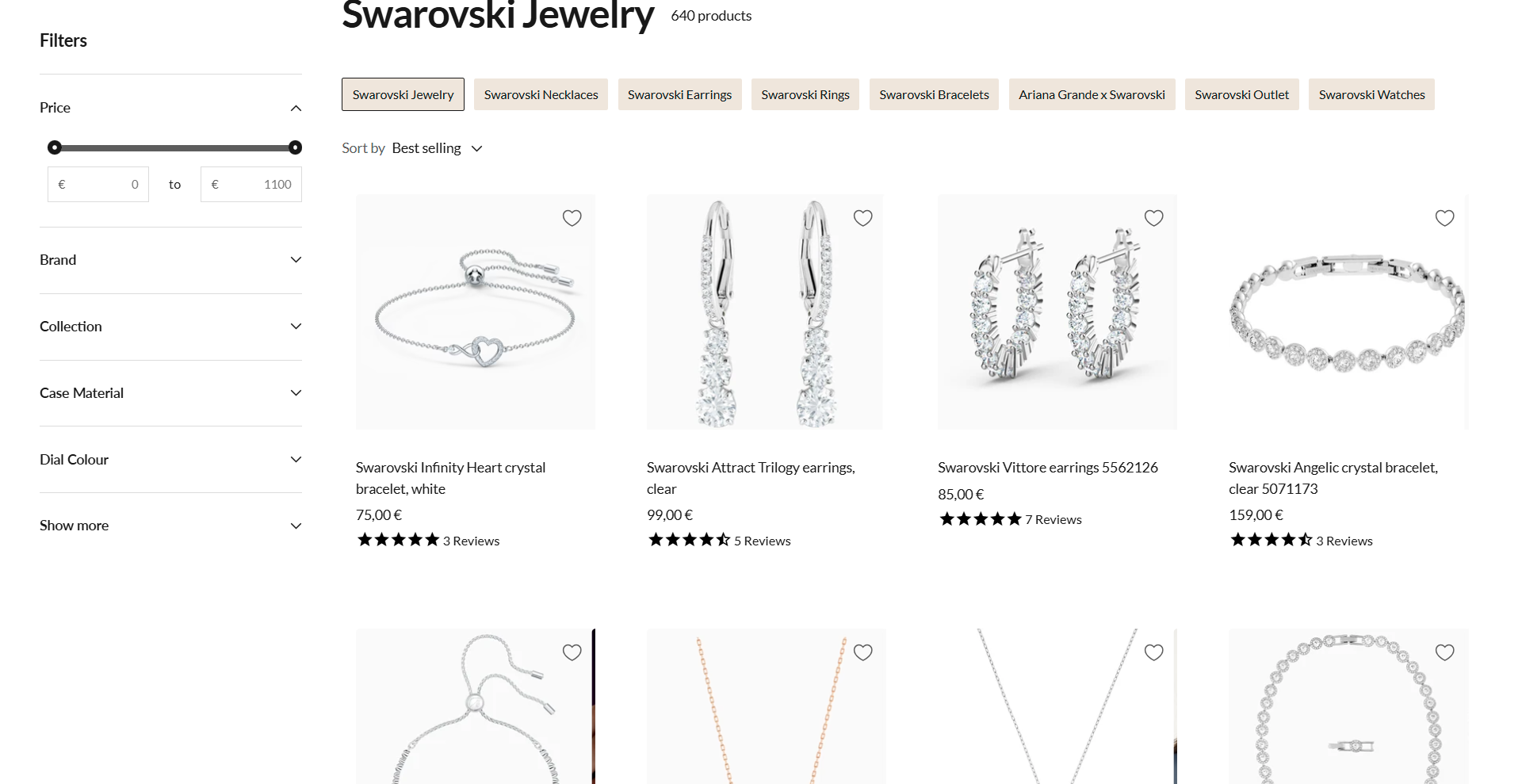
Invest in professional-grade photo shoots whenever possible. Avoid amateur selfies or grainy manufacturer stock images. Vivid, large images build credibility and enable close inspection of details.
Product photography best practices:
- Use DSLR cameras with macro lenses and diffused lighting to capture colors and textures accurately.
- Shoot against a clean white background that isolates the product cleanly. Avoid clutter.
- Capture multiple high-res angles—front, back, sides, zoomed details—for a complete view.
- For apparel, show flat lay, hanging, and modeled shots to depict drape, scale, and fit.
- Include lifestyle images that show products attractively styled and in use. This helps potential customers visualize the product’s context.
- Edit images to optimize brightness, contrast, cropping, and enhancements that make details pop.
- Compress final JPGs to find the ideal balance between the smallest file size and crisp quality.
Updating old product photos can lift conversion rates significantly. Displaying every product in its best light builds shopper confidence and drives sales. Photos are your virtual sales team; give them the assets they need to close the deal.
Craft Descriptive, Benefit-Focused Product Copy
Product copy has immense power to inform customers and compel action. Yet many ecommerce sites settle for generic, marketing-speak descriptions that fail to resonate.
To write product copy that sells, get into the mindset of your ideal customer. Address their questions, objections, and desires.
Follow these tips for high-converting product copy:
- Highlight the most salient features and specs upfront – dimensions, materials, capacity, etc. Help customers quickly understand what the product is.
- Focus on customer benefits vs. generic superlatives. Don’t just say a jacket is ‘high quality.’ Explain how the waterproof fabric keeps you dry in rainstorms.
- Adopt a conversational, friendly tone. Avoid overly salesy claims. Build rapport as if speaking one-on-one with the customer.
- Share relevant details like care instructions, ideal usage scenarios, and components included. Anticipate and answer potential questions.
- Speak to different motivations – efficiency, luxury, convenience, and versatility. Align with the core desirability of that product.
- Use succinct yet descriptive language. Find the balance between comprehensive and concise.
- If manufacturing details are notable, share the story briefly to build perceived value.
With strategic product copy that connects with customers’ needs, you compel action instead of leaving visitors confused. Let the right words convey the unique value of your products.
Improve On-Site Search And Navigation
Customers should be able to easily find any product on your site through intuitive navigation and robust search functionality.
- Use descriptive category and subcategory names like ‘Casual Button-Up Shirts’ instead of ambiguous tags like ‘Apparel.’
- Refine search results by price, color, size, popularity, and other filters to pinpoint products.
- Show search term suggestions and corrections in real time. If someone searches ‘blue shrits’, suggest the corrected ‘blue shirts.’
- Highlight top search terms to guide customers to popular products. Displaying commonly searched keywords reduces search abandonment.
- Use auto-complete to show predicted search terms while typing. This lets customers quickly select from commonly searched options.
- Position the search bar prominently at the top of every page. Don’t hide site searches in hard-to-find locations.
With streamlined navigation and search, customers can seamlessly find exactly the product they want without frustration or extra effort.
Display Trust Symbols And Signals
New visitors have no reason to trust your brand or the reliability of your products. That’s why displaying trust symbols can increase conversions.
- Show customer ratings and reviews front and center. Reading positive experiences builds confidence.
- Display security badges like Norton or McAfee Secure to reduce perceived risk.
- Feature social proof logos from recognizable brands you’ve worked with. Namedrops like Facebook or Disney build instant credibility.
- Prominently display return policies, shipping details, and contact information. Transparency and accessible support build trust.
- If you have one, showcase certifications like the BBB seal, affirming your reputation and integrity.
These subtle trust signals work behind the scenes to increase customer confidence and improve purchase rates.
Simplify Checkout Process
After building interest, the final step is to guide customers through a seamless, frustration-free checkout process.
- Reduce required form fields to only essential billing/shipping details. The less customers need to fill out, the better.
- Auto-populate known details like name, email, and address for registered users. Let guests check out as guests easily.
- Offer multiple payment methods. Major credit cards, Paypal, Apple Pay. Provide options to avoid abandoned carts.
- Use progressive address lookup to automatically validate addresses. This saves time and avoids errors.
- Highlight discounts, shipping costs, and total clearly at each step. No surprises.
- Allow easy guest checkout. Don’t require creating an account first which leads many to abandon their cart.
- Set up a one-page checkout to finalize payment details on the same screen. Avoid clicking through multiple complex pages.
The easier and more intuitive the checkout, the more customers will complete their purchases from product discovery to payment.
Show Relevant Cross-Sells And Upsells
Product recommendations are an effective way to show customers complementary or higher-end items during checkout.
- Display-related products are often bought together – batteries with electronics, for example. This taps into the ‘you might also like…’ effect.
- Offer carefully curated product bundles that provide an incentive like a discounted price. People love deals.
- For out-of-stock products, recommend similar alternative options a customer may enjoy. Don’t lose the sale when inventory is low.
- Use smart automation like ‘Customers who viewed X also purchased Y’ to surface commonly paired items.
- Time-limited count-down offers build urgency to take advantage of the deal before it expires.
Tasteful recommendations can boost order values, but avoid overly aggressive upselling that may come off as manipulative. Relevance is key.
Boost Conversions With Email Marketing
Your website is just one sales channel. Effective email marketing pulls customers back to your site to browse and buy.
- Send targeted emails highlighting new arrivals, promotions, or recirculating abandoned cart items.
- Create personalized product recommendations based on past purchases and browsing history. This leverages your first-party customer data.
- Use segmented lists to tailor promotions to specific customer cohorts – like new subscribers, repeat buyers, or at-risk churners.
- Make emails scannable with clear subject lines, brief paragraphs, bulleted lists, and bold CTAs.
- Test different calls-to-action, subject lines, content, and designs to optimize engagement.
- Ensure mobile optimization so emails render cleanly on any device. Over 50% of retail emails are opened on smartphones.
Email complements your website to bring customers back at strategic points in their journey – from acquisition to retention.
Continuously Optimize And Improve
Designing high-converting ecommerce websites is an ongoing process. Continuously optimizing your site generates more sales over time.
- Use A/B testing to compare the performance of page layouts, content, calls-to-action, and other elements.
- Analyze site analytics to identify opportunities like high exit pages or popular landing pages to focus on improvements.
- Monitor conversion funnels to see where customers commonly drop off so you can remove friction points.
- Survey customers for feedback on their website experience and pain points.
- Stay on top of ecommerce trends and emerging features like AR/VR product views.
- Follow up with customers who abandoned their cart to see why and rescue the sale with incentives.
- Keep design, content, and products fresh and appealing. Give repeat visitors a reason to come back.
By continually testing and optimizing based on data and customer input, you maximize the revenue potential of every site visitor.
Conclusion
Creating a high-converting ecommerce website takes strategic planning and execution. By designing an online store optimized for trust and ease of use, you’ll transform more shoppers into satisfied customers. Focus on speed, mobile optimization, compelling product presentation, intuitive navigation, trust symbols, seamless checkout, and complementary marketing. With the tips outlined in this guide and relentless testing and improvement, your website will drive the sales results your business needs to thrive.