Paid Ads in Financial Planning Marketing: Google & Meta Tactics That Work
Choose Google Ads when you need urgent, high-intent prospects who self-identify via searches like “fee-only financial planner” or “fiduciary near me,” and optimize to cost per qualified booked call—not clicks. Choose Meta when you want scalable demand by testing education-first creative, building audiences from video views and page engagers, then retargeting to book consults. Stay compliant: avoid promissory claims, keep disclosures visible, and track only permitted events. Next, you’ll see how to structure each channel for better LTV: CAC. Learn more about financial planning marketing below and get your business visible in Google.
Choose Google vs Meta Ads for Your Financial Planning Niche
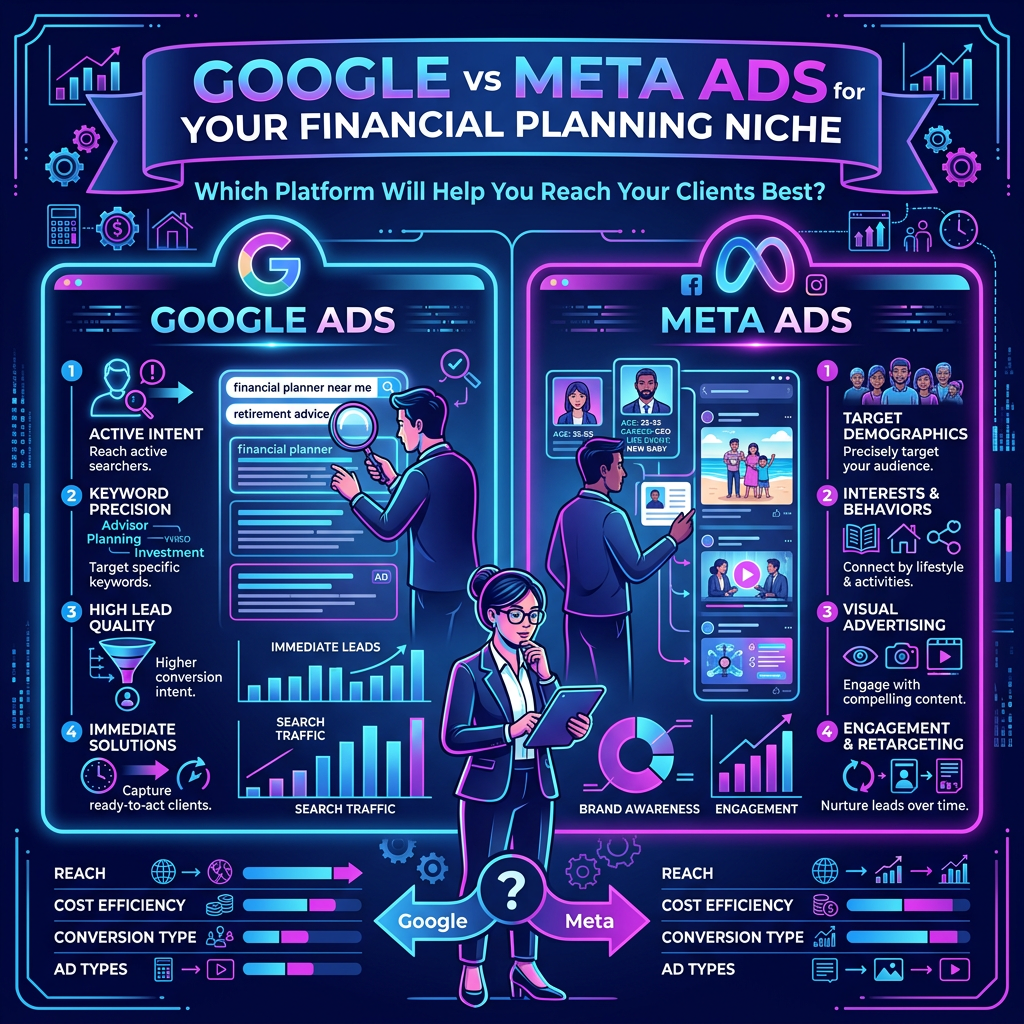
Where should you allocate the next dollar of ad spend—Google or Meta—if your goal is to book calls with qualified planning prospects? Start with intent. When your niche matches urgent, searchable problems (e.g., “tax-efficient retirement rollover”), Google Ads usually delivers higher call-to-click rates because users self-identify. When your niche depends on awareness, identity, or life-stage triggers (new parents, equity comp, practice owners), Meta Ads can scale qualified traffic quickly by testing audiences and creative. You’ll stay compliant by avoiding promissory language, using approved disclosures, and tracking only permitted events. Choose based on unit economics: target cost per booked call, show-up rate, and close rate by niche. Then allocate budget to the channel that improves LTV: CAC and reduces month-over-month variance.
Build Google Ads for High-Intent Financial Planning Leads
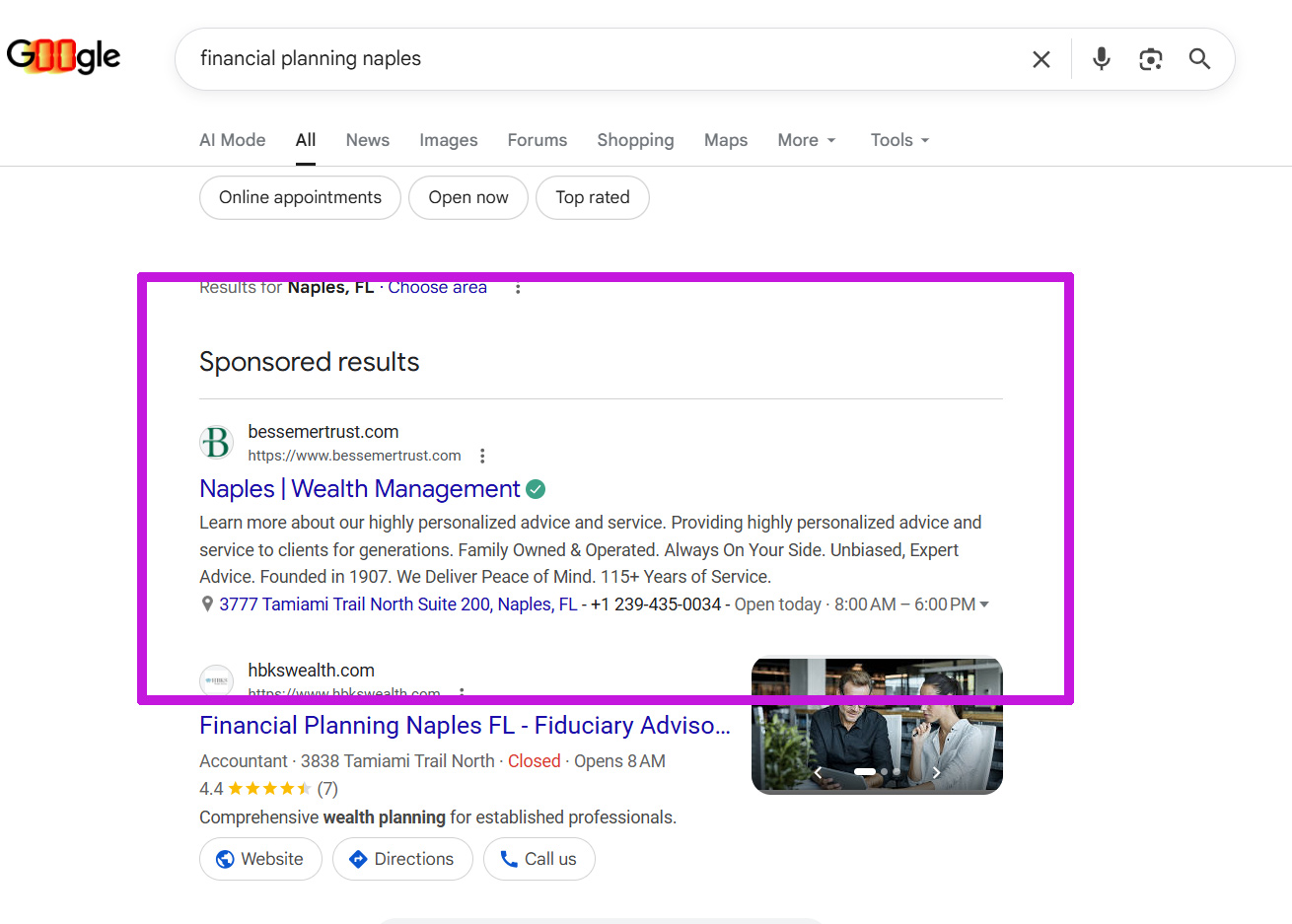
Google wins when prospects already know what they need and prove it with a search query, so you should build campaigns that capture that intent and convert it into booked calls. Start with tightly themed Search ad groups around high-intent terms like “fee-only financial planner,” “retirement planning advisor,” and “fiduciary near me.” Use exact and phrase match to control audience intent, then layer Smart Bidding only after you’ve logged clean conversion data and excluded low-quality queries with aggressive negatives. Write compliant ads: avoid promissory language, performance claims, and unqualified superlatives; include clear disclosures where required. Track ROI by importing qualified call bookings, assigning values by client LTV, and optimizing to cost per qualified lead—not clicks. Use ad assets to pre-qualify and reduce waste.
Create Compliant Landing Pages for Financial Planning Ads

Because ad platforms and regulators both scrutinize financial services claims, your landing page has to do two jobs at once: convert high-intent clicks and document compliance. Start with clear, benefit-led headlines, then substantiate every statement with plain-language disclosures, fee transparency, and audited track-record context (no cherry-picked performance). Bake landing page compliance into design: keep required disclosures above the fold, link Form ADV/CRS prominently, and align copy 1:1 with your ad text to prevent mismatch flags. Reduce compliance pitfalls by avoiding guarantees, “best” claims, or implied endorsements; use approved testimonials only where permitted and labeled. Track ROI without over-collecting data: minimal fields, explicit consent, and secure intake. Finally, version-control pages and archive approvals to prove governance fast.
Run Meta Ads to Educate and Retarget Financial Planning Prospects
Once your compliant landing pages are locked in and archived, Meta becomes the next lever for predictable pipeline growth: it lets you educate cold audiences at scale and then retarget engaged prospects with tighter, lower-CPL offers. Start with value-first creative that closes education gaps: short explainer videos on Roth conversions, tax-loss harvesting, or retirement income guardrails. Keep copy plain, avoid performance promises, and route every ad to the pre-approved page version. Build audiences by intent signals—50% video views, guide readers, and page engagers—then sequence ads from “learn” to “book.” Your budget allocation should mirror funnel depth: reserve 60–70% for broad education, 30–40% for retargeting with a consult invite. Test hooks, formats, and offer framing weekly, and pause losers fast.
Track Conversions and Improve Financial Planning Lead Quality
How do you know your ad spend’s attracting serious planning clients—not just clicks? You validate it with tracking conversions tied to real milestones: booked intro calls, qualified form submits, and attended webinars. Configure GA4 events, Google Ads enhanced conversions, and Meta’s Conversions API to reduce iOS signal loss and keep reporting audit-ready. Use UTM standards and a CRM sync so every lead has a source, timestamp, and consent record for compliance.
Then improve lead quality with tighter filters: add pre-qualification questions (assets, timeframe, needs), route by service line, and exclude low-intent placements. Optimize to cost per qualified lead, not CPL. Run weekly cohort reviews, pause keywords/ad sets that create no-show calls, and scale those driving revenue per lead upward.
Conclusion
You’re the cartographer of a regulated marketplace: Google is your lighthouse for high-intent searches, and Meta is your current that warms cold audiences and brings them back. You’ll chart ROI by tracking qualified consult requests, not vanity clicks, and you’ll tighten lead quality with negative keywords, audience exclusions, and clear disclosures. Keep your landing pages FINRA/SEC-safe, then test, measure, and iterate—so every dollar travels farther, and every claim stays defensible.