Local SEO for Massage Therapist Marketing: Rank in Google Maps Faster
To rank in Google Maps faster, fully optimize your Google Business Profile with precise service areas, verified address, HIPAA-aware descriptions, tap-to-call, and geo-tagged photos. Standardize NAP across top local directories, then build service pages targeting high-intent, geo-modified keywords. Use structured data and internal links. Automate SMS/email review requests within 24 hours and respond within 48 hours. Earn local links from chambers, health directories, and partners. Track clicks, calls, and direction requests by city and ZIP to scale what works—and what’s next. Read below on how massage therapist marketing can help you.
Optimize Your Google Business Profile for Map Pack Visibility
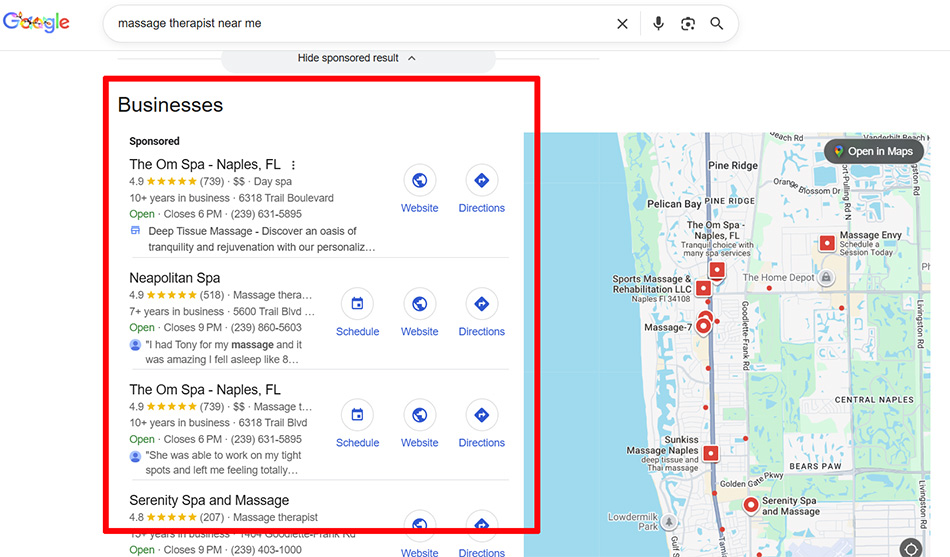
Even before you tweak your website, lock in Map Pack visibility by fully optimizing your Google Business Profile (GBP) with precise, geo-targeted data. Use Google Listing Optimization to set service-area boundaries, verify your address, and select massage-specific categories. Add HIPAA-aware descriptions (no PHI), hours, and mobile tap-to-call. Upload geo-tagged photos, highlight accessibility and parking, and enable messaging with canned responses.
Leverage Local SEO Strategies: publish offer posts, list modalities, and add structured FAQs with city and neighborhood terms. Encourage compliant reviews referencing outcomes, not conditions. Track calls, direction requests, and queries in GBP Insights to iterate and outrank nearby competitors.
Build Consistent Local Citations and NAP Across the Web
With your Google Business Profile optimized for the Map Pack, expand your footprint by standardizing your NAP—business name, address, and phone—across high-authority directories and local hubs. Inconsistent listings confuse algorithms and patients. Use citation management to sync data at scale and monitor duplicates. Prioritize online directories with strong local relevance and healthcare-friendly policies, safeguarding HIPAA considerations by avoiding PHI in public fields. Track coverage and accuracy by city and ZIP to spot gaps.
- Audit top aggregators (Data Axle, Neustar Localeze, Foursquare) and niche wellness hubs.
- Lock NAP in POS, website schema, and GBP.
- Measure lift via Map Pack impressions and calls.
Keyword Research for Service Pages and the Map Pack
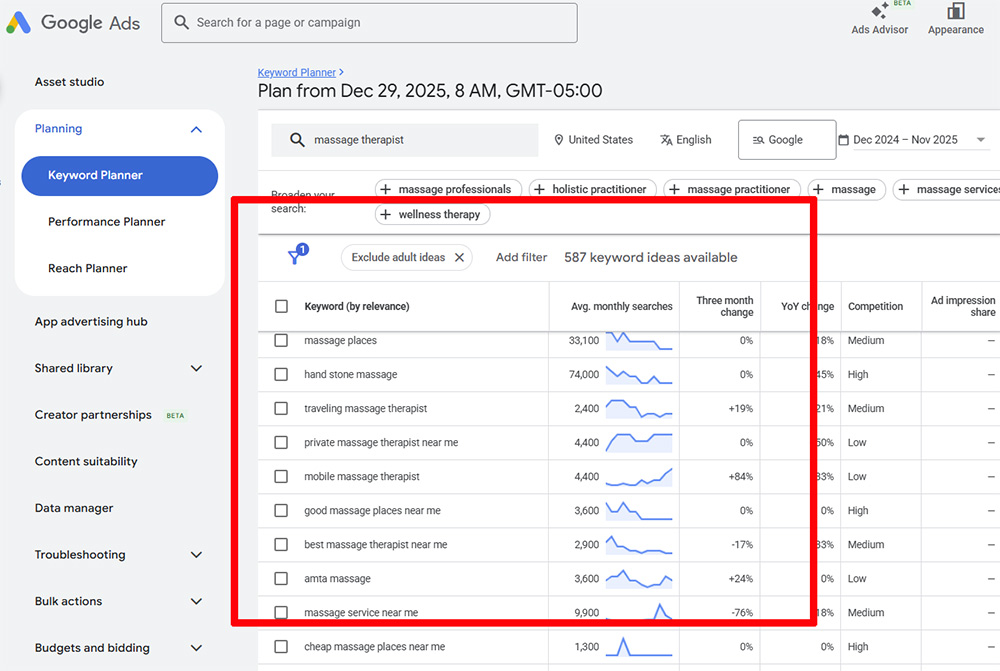
Start by targeting high‑intent keywords that signal ready-to-book searches (e.g., “deep tissue massage near me,” “prenatal massage same-day”). Layer in local modifiers and geo-terms—neighborhoods, landmarks, and service areas—to match Map Pack queries while keeping HIPAA-sensitive phrasing neutral (no health details). Run a competitor gap analysis to spot terms they rank for that you don’t, quantify search volume and CPC, and prioritize pages accordingly.
Identify High-Intent Keywords
How do you pinpoint the search terms that bring ready-to-book clients to your massage practice? Start by mapping keyword intent to user behavior. Transactional phrases like “book,” “appointment,” and “same-day” signal action. Analyze click-through rates and conversion events in GA4 while respecting HIPAA—don’t store protected health info in query logs.
- Quantify demand: Use Search Console to filter queries with booking modifiers; prioritize by impressions-to-clicks ratio.
- Validate conversion: Track calls, bookings, and direction requests from Map Pack interactions; tie to UTM data.
- Segment by service: Build clusters around “deep tissue,” “sports recovery,” and “prenatal,” aligning copy with outcomes, availability, and proof.
Local Modifiers and Geo-Terms
You’ve isolated high-intent phrases; now anchor them to where clients actually search by layering local modifiers and geo-terms. Pair services with neighborhood, ZIP, and landmark signals: “deep tissue massage near Downtown Austin 78701,” “prenatal massage South Lake Union,” “sports massage by Zilker Park.” Use geo targeting in title tags, H1s, and internal links. Mirror Google Maps vernacular: city + neighborhood + service. Validate demand with GSC impressions and GBP Insights query data. Build location pages with NAP consistency and HIPAA-aware copy—no health details, only service scope and access info. Add embedded maps, parking notes, and structured data for precision.
Competitor Gap Analysis
While your keyword list reflects how clients describe massage needs, competitor gap analysis shows what actually wins in your city’s SERPs and Map Pack. Use data to profile rivals’ categories, on-page terms, and review language without exposing PHI—HIPAA matters even in snippets. Benchmark market positioning by zip, neighborhood, and intent (booking vs. research).
- Extract top competitors’ primary/secondary categories, service keywords, and internal links; map gaps to your service pages.
- Compare Map Pack factors: proximity, ratings velocity, photo cadence, UTM-tagged posts, and Q&A coverage.
- Quantify content depth: FAQ richness, treatment modifiers (prenatal, sports, lymphatic), and local landmarks; prioritize keywords where you’re closest to outranking.
On-Page SEO Essentials for Massage Therapy Websites
You’ll turn research into action by building keyword-optimized service pages that match how local clients search (e.g., “prenatal massage in Boise”), keeping copy factual and free of PHI. Create location-specific landing content with NAP consistency, neighborhood cues, and unique service details to boost proximity relevance. Add service and LocalBusiness schema and use internal links to connect city pages, service pages, and your Google Business Profile page for stronger crawl paths and richer results.
Keyword-Optimized Service Pages
Three elements make your service pages rank and convert in your city: precise keywords, localized intent, and compliant content. Use data-backed terms like “deep tissue massage near me” and pair them with city modifiers in titles, H1s, and schema. Prioritize service page optimization that maps each page to one high-intent query, then craft effective content that answers cost, duration, contraindications, and outcomes without PHI.
- Structure: H1, benefit-led intro, FAQs, E-E-A-T bio, ADA-compliant media.
- Semantics: primary keyword, variants, CPT/ICD context if applicable, internal links.
- Compliance: HIPAA-safe testimonials, consented photos, secure contact forms, no health claims.
Location-Specific Landing Content
Someone searching “massage therapist in [Neighborhood], [City]” expects page content that proves you’re local, trustworthy, and compliant. Build location relevance with hyper-specific signals: neighborhood landmarks, transit lines, parking details, and proximity metrics (e.g., “5 minutes from [Hospital/Transit Stop]”). Publish real-time hours, ADA access, and secure online booking to reinforce HIPAA-aware operations without exposing PHI. Use NAP consistency, geo-tagged images, and unique testimonials that reference local employers or events. For content optimization, align headings with city + service modifiers, include localized FAQs, and embed driving directions. Add multilingual snippets if your area warrants it. Measure clicks, calls, and direction requests.
Schema and Internal Linking
After crafting location-specific pages, strengthen them with structured data and smart internal links that search engines can parse and users can follow. Use schema markup to declare your MassageTherapy business, NAP, hours, service areas, and accepted insurance without exposing PHI. Connect pages with internal linking that mirrors your city-service hierarchy, guiding crawlers and patients.
- Implement LocalBusiness and Service schema markup; validate in Rich Results Test; monitor impressions and clicks by city in Search Console.
- Build hub-to-spoke internal linking from city hubs to modality pages with anchor text like “deep tissue massage in [City].”
- Add FAQ schema; target HIPAA-safe questions about pricing, parking, and accessibility.
Earn Reviews and Use Them to Improve Rankings and Conversions
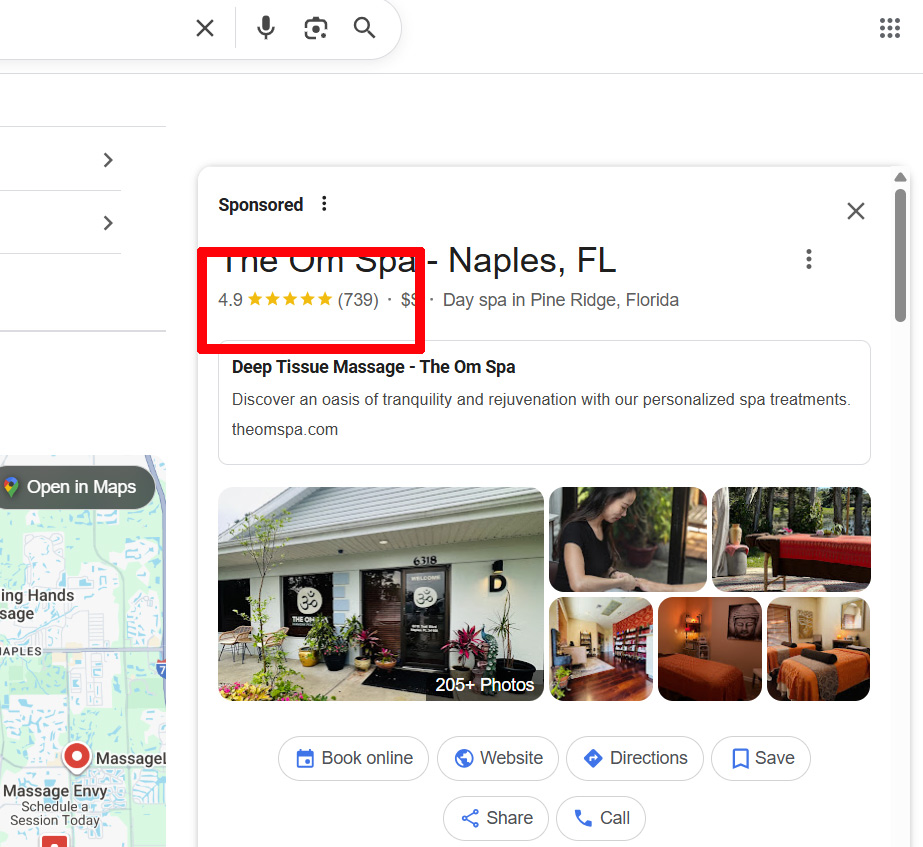
Even if you rank well today, you’ll need a steady stream of high-quality reviews to stay visible in local search and convert more new clients. Prioritize review management: automate SMS/email requests within 24 hours of appointments, segment by city or neighborhood, and monitor response rates. Prompt compliant customer feedback—avoid PHI, never reference conditions, and use generic service language. Aim for recency and velocity; listings with frequent reviews rank better in Google Maps.
Reply to every review within 48 hours, using geo cues (“Thanks for choosing our Midtown studio”). Analyze themes to refine services, pricing, and hours. Showcase rating snippets on location pages to boost conversions.
Local Link Building and Authority Signals to Outrank Competitors
Strong reviews set the stage, but authority signals—local links, citations, and brand mentions—move you past competitors in the map pack. Build relevance where your clients live and search. Prioritize clean NAP data, then earn trusted links through local partnerships and community events while protecting PHI and avoiding patient identifiers.
- Secure authoritative citations: city chamber, local health directories, universities; maintain identical NAP and service categories.
- Win geo-relevant links: sponsor injury-prevention workshops, co-author content with PTs, collaborate with yoga studios; track referral traffic and rankings.
- Scale mentions: publish anonymized case insights, host community events, pitch neighborhood news; monitor link velocity and E-E-A-T cues.
Conclusion
Coincidentally, the same week you align your NAP, your Google Business Profile gains new photos and three HIPAA-safe reviews—and your Map Pack visibility jumps. You target “deep tissue massage near [City]” and “prenatal massage [Neighborhood],” optimize on-page schema, and earn two local backlinks. Data shows a 28% CTR lift and 17% more calls from [City] ZIP codes. Keep monitoring GBP Insights, review velocity, and citation accuracy. Do this consistently, and you’ll outrank nearby clinics faster.