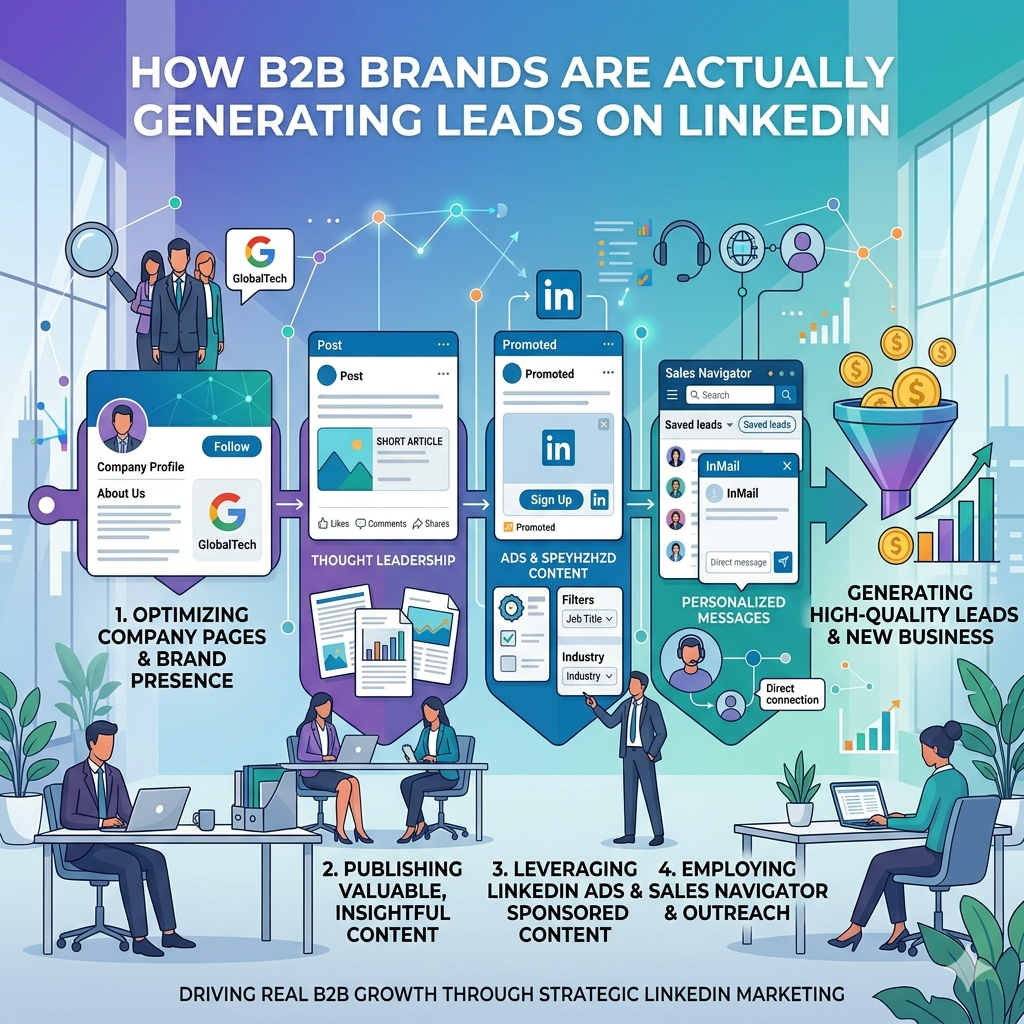
How B2B Brands Are Actually Generating Leads on LinkedIn
LinkedIn has become one of the few platforms where B2B conversations still feel intentional. People aren’t there to scroll passively in the same way they might on other platforms. They’re there to learn, connect, and in many cases, make decisions that affect their business.
That shift in mindset changes how lead generation works. It’s less about pushing offers and more about building familiarity over time. The brands that are seeing results aren’t necessarily the loudest. They’re the ones who understand how people use the platform and adjust their approach accordingly.
Moving Away From Direct Selling
One of the most common mistakes in B2B marketing on LinkedIn is treating it like a direct sales channel. Posting promotional content, pushing services, and expecting immediate responses rarely lead to consistent results.
Most users aren’t ready to engage with a sales message the first time they see it. What tends to work better is a slower build. Sharing insights, perspectives, and observations that reflect real experience helps people become familiar with a brand without feeling sold to.
Over time, that familiarity turns into trust. When a need eventually arises, the brand is already top of mind. This approach requires patience, but it tends to produce more reliable outcomes than short-term tactics.
Content That Reflects Real Experience
Content that performs well on LinkedIn often feels grounded in actual work rather than abstract ideas. It might come from client experiences, lessons learned during projects, or observations about how an industry is changing.
This type of content tends to resonate because it’s specific. It shows how something works in practice, not just in theory. That makes it easier for readers to relate it to their own situation.
It also creates a sense of credibility. Instead of claiming expertise, the content demonstrates it through context and detail. Over time, this builds a reputation that attracts the right kind of attention rather than broad, unfocused engagement.
There’s also a noticeable shift away from overly polished messaging. Content that feels too rehearsed or overly branded can come across as distant. In contrast, posts that feel more direct and reflective tend to invite more interaction.
Consistency Over Intensity
Posting frequently for a short period and then disappearing doesn’t usually lead to strong results. LinkedIn tends to reward consistency more than bursts of activity.
That doesn’t mean posting every day. It means maintaining a steady presence over time. When content appears regularly, it builds recognition. People start to associate certain ideas or perspectives with a particular brand or individual.
This consistency also allows for gradual improvement. Patterns become clearer, and it becomes easier to understand what resonates and what doesn’t. Adjustments can be made based on real feedback rather than assumptions.
Over time, this steady approach creates momentum. Each post contributes to a broader body of work that reinforces the same core message.
Conversations That Extend Beyond the Post
Lead generation on LinkedIn rarely happens through a single post. It usually develops through a series of interactions. Someone reads a post, engages with it, visits a profile, and then returns later when the timing feels right.
Comments and direct messages play a role in this process. They create opportunities for more direct communication without forcing a sales conversation. A thoughtful reply to a comment can often lead to a deeper exchange that moves the relationship forward.
These interactions work best when they feel natural. Instead of immediately shifting into a sales pitch, they continue the tone of the original content. This helps maintain trust and keeps the conversation aligned with the initial reason for engagement.
Over time, these small interactions build familiarity. When a potential client is ready to take the next step, the connection already exists.
Understanding the Buying Cycle
B2B decisions often take time. Multiple people may be involved, and the process can stretch over weeks or months. LinkedIn fits into that cycle by supporting the early and middle stages, not just the final decision.
Content can introduce ideas, highlight challenges, and show possible approaches. It helps potential clients understand their situation more clearly before they’re ready to act.
This means lead generation isn’t always immediate. It builds gradually as people move through their own decision-making process. Brands that expect instant results often overlook this and abandon their efforts too early.
Recognizing the length of the buying cycle allows for a more realistic approach. It shifts the focus from quick wins to sustained engagement.
Where Strategy Starts to Matter
As more businesses invest time into LinkedIn, the difference between casual posting and a structured approach becomes more noticeable. Without a clear direction, it’s easy to fall into patterns that don’t lead anywhere.
Content may become repetitive, engagement may drop, and outreach can feel disconnected from the overall message. This is where a more considered approach starts to make a difference.
Working with a LinkedIn B2B marketing agency is one way some brands bring that structure to their efforts. Instead of relying on trial and error, the focus shifts to building a system in which content, targeting, and engagement support one another.
This doesn’t replace the need for authentic communication. It helps ensure that the effort invested in the platform leads to something meaningful.
Aligning Content With Business Goals
Content on LinkedIn doesn’t need to appeal to everyone. In fact, it tends to perform better when it speaks to a specific audience with a clear set of challenges.
That alignment starts with understanding who the content is for and what they’re trying to solve. From there, each post can be shaped to address those points in a way that feels relevant.
When content aligns with business goals, lead generation becomes a natural outcome rather than a separate objective. The right people recognise the relevance and engage accordingly.
This also helps filter out less relevant attention. Instead of attracting a broad audience, the focus remains on those who are more likely to convert into meaningful opportunities.
Building Momentum Over Time
Results on LinkedIn rarely come from a single post or campaign. They build over time as content, engagement, and visibility start to reinforce each other.
Someone might come across a brand multiple times before taking any action. Each interaction adds to their understanding and familiarity. Over time, this repeated exposure builds trust that supports decision-making.
Momentum also comes from consistency in the message. When a brand communicates clearly and repeatedly about what it does and how it approaches its work, it becomes easier for others to remember and refer.
This gradual build is what makes LinkedIn effective for B2B marketing. It supports relationships rather than quick transactions, which aligns more closely with how B2B decisions are actually made.
A Platform Built on Professional Context
Another factor that sets LinkedIn apart is the context in which people use it. Unlike on other platforms, interactions are more closely tied to professional identity. This influences how content is received and how conversations develop.
People are more likely to engage with topics that relate to their work, challenges, and goals. This creates an environment where relevant content can gain traction without relying on entertainment or trends.
For B2B brands, this context is valuable. It allows for more focused communication and a clearer connection between content and business outcomes.