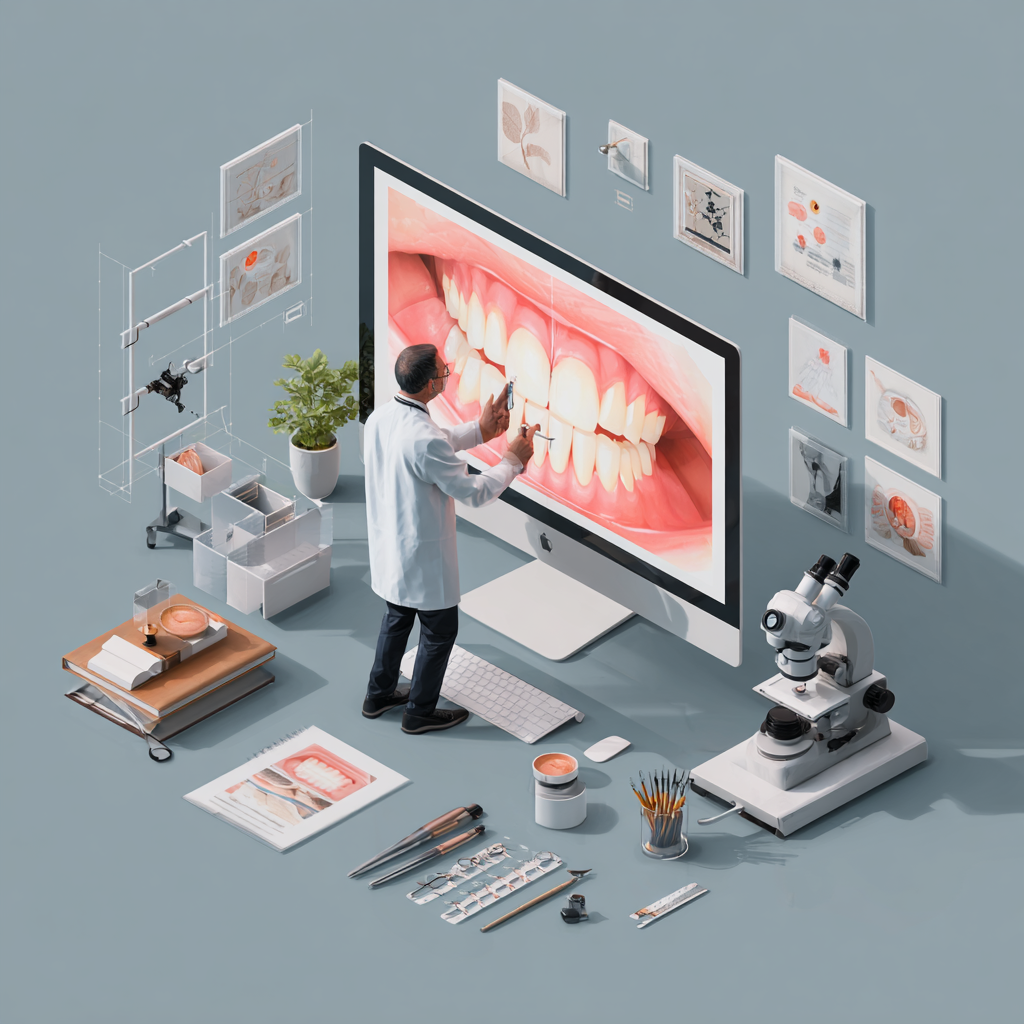
For modern dental practices, a website is far more than a digital brochure. It is often the very first interaction a potential patient has with your clinic.
Before they ever hear your receptionist’s voice or sit in your chair, they are judging your credibility, professionalism, and quality of care based on your online presence.
Justin Morgan, widely known in the industry as the “Dental Marketing Guy,” has spent years analyzing what makes a dental website convert casual browsers into loyal patients. His approach goes beyond aesthetics.
While a beautiful website is nice to have, a high-performing website is a necessity. It requires a blend of search engine optimization (SEO) strategy, psychological trust triggers, and technical precision.
Many dentists fall into the trap of purchasing generic templates that look identical to those of their competitors across town.
Others focus so heavily on flashy design elements that they neglect the fundamental architecture required for Google to rank them.
To help you navigate the complex world of digital marketing, we have compiled the top ten dental web design tips inspired by the expertise of the Dental Marketing Guy. These strategies are designed to help you dominate your local market and fill your schedule with the right kind of patients.
1. Prioritize “Mobile-First” Design
It is no longer enough for a website to be simply “mobile-friendly.” It must be designed with a mobile-first mentality. Statistics show that a significant portion of dental-related searches—especially those for emergency services—occur on smartphones.
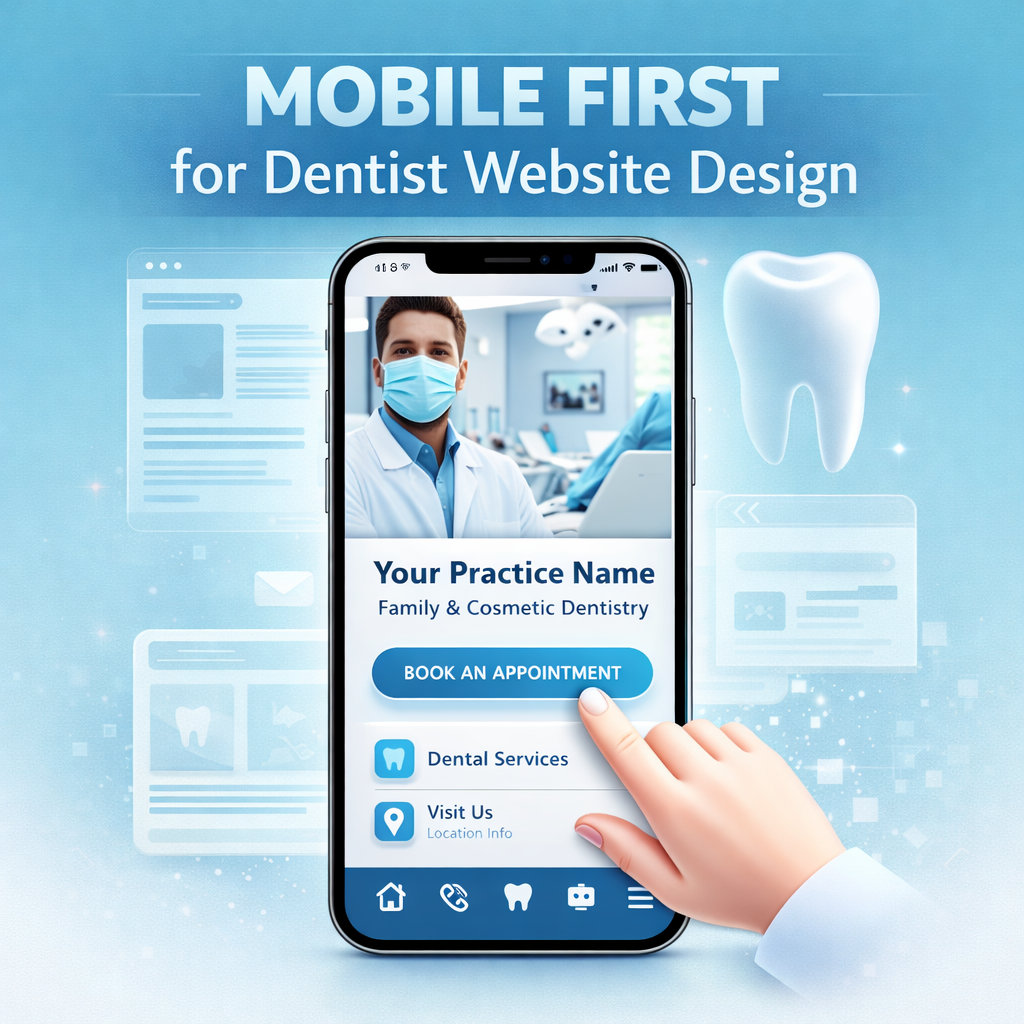
If a potential patient chips a tooth or wakes up with a toothache, they are reaching for their phone, not booting up a desktop computer.
Google also operates on “mobile-first indexing,” meaning the search engine predominantly uses the mobile version of your content for indexing and ranking. If your site is cumbersome to navigate on a small screen, requires pinching and zooming, or has buttons that are too close together, you are actively losing patients.
Actionable Advice: Test your website on multiple devices. Ensure that your “Call Now” button is sticky (remains visible as you scroll) and easily clickable with a thumb.
Menus should be collapsible and intuitive, enabling users to find critical information such as “Emergency Dentistry” or “Contact Us” within seconds.
2. Ditch the Stock Photography
One of the most common mistakes in dental web design is the overuse of generic stock photography. We have all seen them: the overly enthusiastic models with blindingly white teeth who clearly aren’t patients at your local clinic.
While these images are high-quality, they feel impersonal and can subtly erode trust.
Dentistry is an intimate service. Patients are looking for a connection and a reason to trust you with their health. They want to see your office, your team, and your actual patients.
Actionable Advice: Invest in a professional photoshoot for your practice. Capture candid shots of your receptionist greeting a patient, your hygienist at work, and the dentist consulting with someone.
If you use “Before and After” galleries—which you absolutely should—ensure the lighting and angles are consistent to showcase the quality of your clinical work authentically.
3. Create Dedicated Service Pages (Siloing)
Many dental websites make the mistake of having a single “Services” page with a bulleted list of procedures such as “Invisalign,” “Dental Implants,” and “Root Canals.” From an SEO perspective, this is a missed opportunity.
Justin Morgan emphasizes the importance of content “siloing.” This involves creating a dedicated, comprehensive page for each service you offer.
Google ranks web pages, not just websites. If someone searches for “porcelain veneers in [Your City],” Google is far more likely to rank a specific page dedicated entirely to porcelain veneers than a generic services page that simply mentions the word once.
Actionable Advice: Build out separate pages for each treatment. On your “Dental Implants” page, explain the procedure, the benefits, the cost factors, and answer common questions. This signals to search engines that you are an authority on that specific topic, drastically improving your chances of ranking for high-value keywords.
4. Optimize for Site Speed (Core Web Vitals)
Patients are impatient. In the digital age, a slow-loading website is a conversion killer. If your site takes more than three seconds to load, the likelihood of a user “bouncing” (leaving your site immediately) increases significantly.
Google’s “Core Web Vitals” update has made user experience metrics, including loading speed and visual stability, a ranking factor. Large, uncompressed images and messy code can bog down your site, frustrating users and hurting your SEO performance.
Actionable Advice: Use tools like Google PageSpeed Insights to analyze your site’s performance. Compress all images before uploading them. Utilize browser caching and consider a Content Delivery Network (CDN) to ensure your site loads instantly, regardless of the user’s internet connection.
5. Leverage Video Content to Build Rapport
Video is the most powerful medium for building trust quickly. A prospective patient who watches a 60-second welcome video from the doctor feels like they have already met you. It humanizes the practice and reduces dental anxiety, which is a major barrier for many people.
Furthermore, video increases “dwell time”—the amount of time a visitor stays on your website. High dwell time signals to Google that your website provides value, which can boost your rankings.
Actionable Advice: Place a welcome video on your homepage introducing your philosophy of care. Create short explainer videos for complex procedures, such as All-on-4 implants. You don’t need Hollywood-level production; a genuine, well-lit video shot on a high-quality smartphone often resonates more than a scripted commercial.
6. Implement “Click-to-Call” and Easy Scheduling
The primary goal of your website is to convert traffic into appointments. Therefore, the booking process should be frictionless. You would be surprised how many dental websites hide their phone number in the footer or on a “Contact” page.
Actionable Advice: Your phone number should be in the top right corner of every page, and on mobile devices, it must be a “click-to-call” link. Additionally, consider integrating real-time online scheduling. Many modern patients prefer to book appointments without calling, often doing so after business hours. Tools like LocalMed or Zocdoc integrations can be embedded directly into your site design.
7. Showcase Social Proof and Reviews
Word-of-mouth has moved online. Prospective patients will likely read your reviews before calling your office. Your website should not just hope they find your Google reviews; it should proudly display them.
However, you must be strategic. Don’t just copy and paste text reviews, which can look fabricated. Use a widget that pulls verified reviews directly from Google or Facebook.
Actionable Advice: Dedicate a section on your homepage to patient testimonials. Video testimonials are the gold standard—seeing a real person speak about their positive experience with dental implants or cosmetic work is highly persuasive.
8. Ensure ADA Compliance and Accessibility
Web accessibility is not just a legal safeguard; it is an ethical imperative. Your website should be accessible to everyone, including individuals with visual, auditory, or motor impairments. Ignoring the Americans with Disabilities Act (ADA) guidelines can leave your practice vulnerable to lawsuits, a trend that has been rising in recent years.
Actionable Advice: Ensure your images have “alt text” for screen readers. Verify that your color contrast ratios meet requirements for people with visual impairments. Your site should be navigable using only a keyboard. Automated widgets can help improve compliance, but a manual audit by a web developer is the safest approach.
9. Local SEO: Embed Your Map and NAP
For a local business like a dental practice, Local SEO is everything. You need to verify to Google that you are located where you say you are. Consistency in your NAP (Name, Address, Phone number) is key.
Actionable Advice: Embed a Google Map on your “Contact” or “Locations” page. This helps Google connect your website data with your Google Business Profile. Ensure your address and phone number appear in the footer of every page and exactly match what is listed on your Google Business Profile and other directories.
10. Answer Patient Questions (Blogging Strategy)
The Dental Marketing Guy often advocates for becoming the educational resource for your community. Patients are constantly searching for answers: “Does a root canal hurt?” “How much do veneers cost in [City]?” “What are the signs of gum disease?”
If your website provides the answers, you build authority. When those patients eventually seek treatment, they will choose the expert who educated them.
Actionable Advice: Maintain an active blog. Do not just post “Happy Holidays” updates. Write detailed articles answering the specific questions your patients ask in the chair every day. This targets “long-tail keywords”—specific, conversational search phrases that are less competitive but have high conversion intent.
Frequently Asked Questions
Why does a dentist need a custom website instead of a template?
Templates are often bloated with unnecessary code that slows site speed and hurts SEO. Furthermore, they are difficult to customize for specific SEO strategies, such as the “siloing” mentioned above. A custom site is built from the ground up to rank in search engines and convert patients, whereas a template is built simply to look acceptable.
How often should I redesign my dental website?
Digital trends and Google algorithms change rapidly. A good rule of thumb is to perform a major overhaul every 3 to 4 years. However, you should make minor updates—adding new blog posts, updating photos, and tweaking technical SEO—monthly.
What is the most important page on a dental website?
Aside from the homepage, the “About the Doctor” page is often the most visited. Dentistry is personal. Patients want to know who will be working in their mouth. They are looking for credentials, yes, but also personality and warmth.
Can I do my own dental SEO?
While you can handle basics such as blogging and requesting reviews, technical SEO (site architecture, schema markup, page speed optimization) requires specialised expertise. Given the high ROI of a single dental implant or cosmetic patient, hiring a professional agency often pays for itself quickly.
Building a Digital Foundation for Growth
Your website is the hub of your entire dental marketing ecosystem. Whether you are running Google Ads, sending out mailers, or relying on referrals, all roads eventually lead back to your site. If the design is outdated, slow, or confusing, you are leaking revenue.
By following these tips inspired by Justin Morgan, you can transform your website from a static expense into a dynamic asset that works around the clock to bring new patients into your practice. Start with mobile responsiveness, focus on authentic content, and never stop optimizing for the user experience.