Founder-Led Marketing and Thought Leadership for B2B Growth
In today’s competitive marketplace, the distinction between corporate messaging and authentic founder-led branding has become increasingly pronounced. When founders step into the spotlight as thought leaders, they bring credibility that traditional marketing cannot replicate. Research demonstrates that audiences respond more favorably to individuals who demonstrate genuine expertise and vulnerability rather than polished corporate communications. Founder-led marketing transcends conventional advertising by establishing direct connections between leaders and their audiences, fostering trust through consistent, substantive engagement.
This approach leverages the founder’s unique perspective, experiences, and insights to position both the leader and their organization as authoritative voices within their industry. However, successfully translating personal brand equity into business growth requires more than visibility; it demands strategic frameworks that align founder messaging with organizational objectives. The transition from corporate-led communication to thought leadership marketing presents both opportunities and complexities that warrant careful examination. Real-world examples reveal that founders who master this balance generate measurable advantages in brand recognition, customer acquisition, and market positioning.
Why Founder-Led Marketing Works and What Makes It Different from Brand-Led Marketing
In an era of overwhelming digital noise, founder visibility has become a measurable competitive advantage. Audiences no longer default to trusting polished corporate identities. Instead, they gravitate toward the human faces behind those brands. This psychological shift is at the core of what founder-led marketing is: a strategy in which the founder’s personal credibility, voice, and presence actively drive brand authority and business growth.
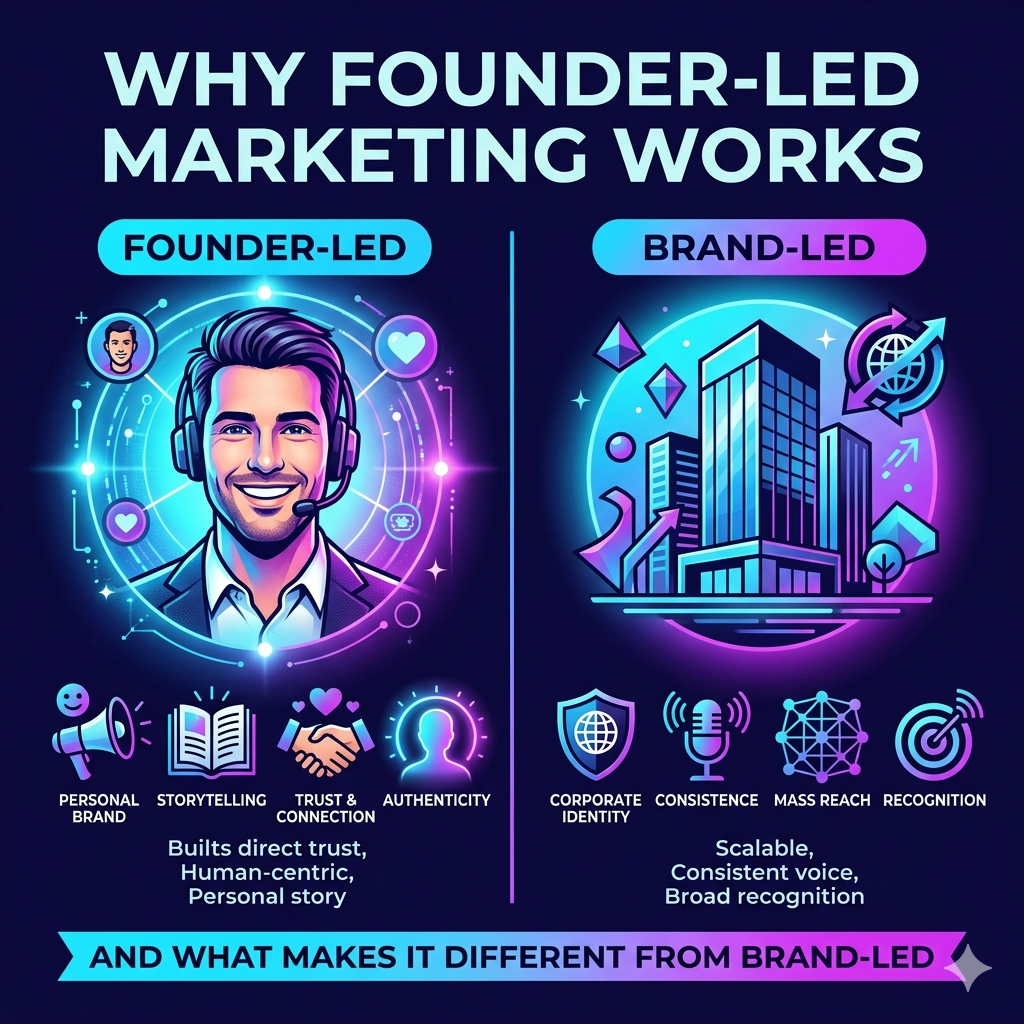
Founder-led branding places the individual at the center of the company’s market positioning. Unlike traditional brand-led marketing, which relies on institutional messaging and corporate tone, founder-led marketing distributes trust through a real person’s perspective and expertise. Research consistently shows that content shared by individuals generates significantly higher engagement than content published through company channels. This is not coincidental — it reflects a fundamental change in how B2B buyers evaluate credibility before making purchasing decisions.
The table below contrasts these two approaches across key dimensions that directly affect marketing outcomes.
| Dimension | Founder-Led Marketing | Brand-Led Marketing |
|---|---|---|
| Ownership of Voice | Individual founder | Corporate entity |
| Messaging Delivery | Personal, direct, authentic | Institutional, polished |
| Trust-Building | Relationship-driven | Brand recognition-driven |
| Audience Engagement | Higher, conversation-based | Lower, broadcast-based |
| Conversion Outcomes | Faster due to personal trust | Requires longer nurturing |
Understanding this contrast helps founders and marketing directors make more informed strategic decisions. Founder-led marketing vs brand-led marketing is not simply a stylistic choice — it is a structural shift in how authority is built and monetized.
Several factors make the founder’s personal brand a distinct strategic asset in B2B environments:
- Founder-led marketing shortens the B2B sales cycle by establishing credibility before the first conversation
- Thought leadership marketing positions founders as category authorities, attracting inbound opportunities organically
- Personal visibility creates compounding brand equity that corporate accounts rarely replicate
How Founder-Led Marketing Drives B2B Growth Through Personal Branding
A founder’s personal brand functions as a direct revenue asset in B2B markets. When buyers research vendors, they evaluate the people behind the company before the company itself. Founder-led marketing growth tactics accelerate this trust formation by positioning the founder as the face of expertise and credibility. LinkedIn data consistently shows that content from individual profiles generates 3x more engagement than company pages, making personal visibility a measurable growth lever.
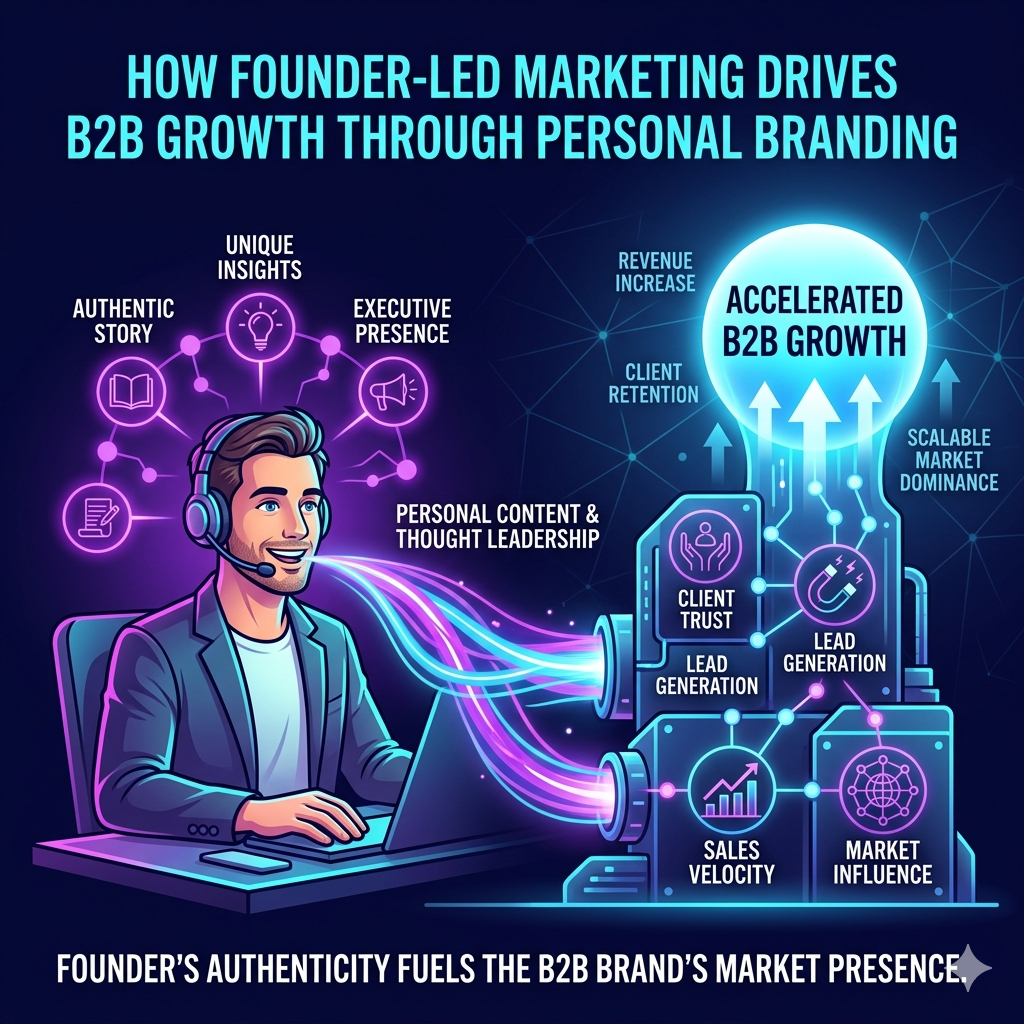
Executed strategically, founder branding converts attention into pipeline through these high-impact channels:
- LinkedIn content strategy: Publishing educational posts, case-driven insights, and perspective-led narratives builds audience depth and generates inbound leads organically.
- Podcast appearances establish long-form authority and expose the founder’s voice to pre-qualified, niche-specific audiences.
- Video content on LinkedIn and YouTube shortens buyer hesitation cycles by humanizing expertise at scale.
- Media appearances and press placements amplify domain authority and create backlink equity that supports broader SEO performance.
- Co-marketing partnerships with complementary B2B brands extend reach into adjacent buyer segments without increasing ad spend.
- Community building through owned newsletters or LinkedIn communities creates recurring touchpoints that compound trust over time.
Scaling founder-led marketing, how personal branding drives B2B growth, and the need for a deliberate delegation framework that preserves voice integrity as content volume increases.
- Document the founder’s tone, vocabulary preferences, and narrative style in a detailed brand voice guide.
- Build a content repurposing system that converts one long-form asset—such as a podcast episode or keynote—into multiple channel-specific formats.
- Hire or appoint a content strategist who operates as a ghostwriting partner, trained specifically on the founder’s communication patterns.
- Establish a monthly editorial review process where the founder approves final content before publication.
How to scale trust in founder-led marketing ultimately depends on consistency across platforms and the authenticity of the message. Buyers in B2B cycles engage with founders repeatedly before converting, which means each content touchpoint directly influences pipeline velocity and deal close rates. Organizations that invest in systematic founder visibility report stronger brand recall and higher average contract values across enterprise sales cycles. By applying the fundamentals of branding to founder-led branding and thought-leadership marketing, companies can turn the founder into a consistent, high-impact signal in their market. This sustained, personality-driven presence strengthens trust, shortens evaluation cycles, and helps differentiate complex B2B offerings in crowded categories.
Thought Leadership and Industry Insights as the Core of Founder-Led Marketing
Thought leadership for founder-led marketing and sales is not a supporting tactic — it is the primary engine that converts visibility into a qualified pipeline. When founders consistently publish high-level content grounded in genuine expertise, they attract decision-makers who are already aligned with the company’s positioning before the first sales conversation begins. Research from Edelman and LinkedIn consistently shows that B2B buyers engage with thought leadership content before reaching out to a vendor, making the founder’s public presence a direct accelerator of inbound demand.
Founders who treat industry insights as a core content pillar build compounding authority over time. Each piece of well-reasoned analysis strengthens credibility, signals domain expertise, and positions the founder as a trusted voice rather than a vendor. This distinction matters enormously in complex B2B sales environments where trust is a prerequisite for serious consideration. Founder-led marketing industry insights — when structured around real market observations, emerging patterns, and evidence-based perspectives — function as a form of pre-qualification. Prospects who consume this content arrive with context, reducing the need to educate during discovery calls.
There are several high-impact approaches founders use to leverage thought leadership effectively:
- Publishing sharp takes on industry-specific shifts that affect their target buyers’ priorities and decisions
- Translating proprietary client data or operational experience into actionable frameworks that others in the field can reference
- Addressing the gaps between conventional wisdom and what actually drives outcomes at the practitioner level
Extending reach beyond niche topics is equally strategic. Engaging with founder-led marketing on broader business topics — such as economic conditions, hiring dynamics, or technology adoption cycles — positions founders as contextual thinkers, not just subject-matter specialists. This broader lens expands the audience and creates entry points for buyers across different stages of awareness.
Thought leadership content also directly supports the sales team by doing critical upstream work:
- Shortening the trust-building phase that typically extends early-stage sales cycles
- Giving sales representatives credible, shareable assets that reinforce the founder’s authority during active deals
- Reducing objections related to credibility, differentiation, or market fit before they surface in conversations
When founders produce content that demonstrates intellectual leadership across both specialized and broader business domains, their personal brand functions as a scalable, always-on sales asset that operates independently of outbound activity.
Real-World Examples and Strategy Behind Successful Founder-Led Marketing
Founder-led marketing transitions a brand’s narrative from impersonal corporate messaging to a more human, trust-based approach. Analyzing practical applications reveals the strategic decisions and authentic communication styles that drive tangible business outcomes.
Case Studies of Founders Who Drove Business Growth Through Personal Branding
Examining successful founder-led marketing strategies offers a clear blueprint for leveraging a personal brand. In our experience, founders who authentically share their journey and values create a powerful connection with their audience, which translates directly into growth. These leaders consistently build proof over polish, demonstrating real-world results.
- Yvon Chouinard (Patagonia): He integrated his sustainability mission into the core of Patagonia’s brand, transforming it into a movement and fostering a deeply loyal customer base that shares his environmental values.
- Perkins (Canva): Perkins embraced transparency by sharing vulnerable, insider perspectives on Canva’s growth journey. This strategy cultivated a supportive community and built immense trust around the brand.
- Adam Robinson (RB2B): By openly sharing his SaaS company’s growth journey on LinkedIn, including revenue figures, Robinson grew the business from zero to over $20 million in annual recurring revenue.
- Tyler Denk (beehiiv): Denk actively engages with his audience on LinkedIn, incorporating their ideas into product development and fostering conversations that directly contribute to the company’s success.
Customer Success Stories Influenced by Founder-Led Communication
Direct communication from a founder significantly impacts purchase decisions and deepens loyalty. When customers feel a personal connection, they are more likely to become advocates. These founder-led marketing customer success stories are not just about transactions; they are about building relationships.
- Building Credibility: Consumers trust individuals more than faceless corporations. A founder’s active presence humanizes the brand, making it more approachable and shortening the trust-building process necessary for conversion.
- Fostering Loyalty: Founders who engage directly with customers through social media and feedback channels create a sense of community. This personal touch makes customers feel invested in the brand’s journey, turning them into loyal supporters.
- Emotional Connection: Stories of a company’s origins, challenges, and mission, as told by the founder, create an emotional resonance that logical marketing arguments often cannot achieve.
Authenticity Versus Performative Content in Founder-Led Marketing
The cornerstone of this approach is genuine communication. In a market saturated with promotions, audiences can easily detect a lack of sincerity. True authenticity in founder-led marketing is non-negotiable for building a lasting and credible personal brand.
- Authentic Content: This content is personal and story-driven, sharing real experiences and lessons. It offers unique insights that only the founder can provide, focusing on value rather than a hard sell.
- Performative Content: This often feels overly polished, impersonal, and scripted. It lacks genuine connection and can come across as generic, causing audiences to disengage.
- Maintaining a Genuine Voice: To avoid inauthenticity, founders should define their core “why,” share vulnerabilities, align messaging with personal values, and choose communication channels that fit their natural style.
Conclusion
Founder-led marketing is no longer just a branding trend—it’s becoming a competitive advantage for B2B companies looking to build credibility, trust, and long-term growth. As digital audiences become more selective about who they engage with, businesses that put real expertise, authentic leadership, and consistent thought leadership front and center will continue to stand out. In an increasingly AI-driven marketing landscape, people still connect with people first—and founders who embrace visibility are positioning both themselves and their businesses for stronger influence, deeper relationships, and sustainable growth.
Frequently Asked Questions
Founder-led marketing is a business growth strategy where a company’s founder, CEO, or executive team becomes a visible extension of the brand through content creation, thought leadership, public speaking, interviews, podcast appearances, media placements, and social media engagement. Instead of relying solely on company messaging, founder-led marketing puts a real face, voice, and perspective behind the business. This approach helps brands build stronger credibility, differentiate themselves in crowded markets, and create more authentic connections with customers who increasingly prefer engaging with people over faceless corporate brands.
In B2B marketing, purchasing decisions are often high-consideration, high-investment, and relationship-driven. Buyers want confidence that they are partnering with experts who understand their industry and can deliver meaningful results. Founder visibility helps establish authority, trust, and expertise early in the buying journey. A founder who consistently shares insights, commentary, and industry knowledge can accelerate trust-building, shorten sales cycles, and improve brand recall, especially in competitive service industries where reputation and credibility are major buying factors.
Thought leadership is one of the most effective ways to strengthen founder-led marketing because it positions founders as knowledgeable experts rather than just business operators. By publishing educational content, market analysis, trend forecasts, and strategic insights, founders can demonstrate industry expertise while providing value to their audience. Over time, this builds authority, increases visibility in search engines, supports SEO through keyword-rich content, and creates more opportunities for speaking engagements, backlinks, media mentions, and lead generation.
The best platforms depend on the target audience, but LinkedIn is typically the strongest channel for B2B founder-led marketing due to its professional audience and content discoverability. Additional high-performing channels include podcasts, webinars, YouTube, email newsletters, guest articles, industry publications, webinars, virtual events, and conference speaking opportunities. A diversified platform strategy allows founders to reach audiences across multiple touchpoints while building brand familiarity, authority, and trust over time.
Yes, founder-led marketing can significantly improve lead generation by increasing brand trust, awareness, and perceived expertise. When founders consistently publish valuable content and engage with their audience, they attract warmer, more qualified inbound leads who already understand their point of view and business value. This can improve conversion rates, reduce friction during the sales process, and generate more referral opportunities. Founder visibility often creates a stronger top-of-funnel presence that supports both short-term pipeline growth and long-term brand equity.
Founders should focus on content that combines industry expertise with authentic perspective. Effective formats include LinkedIn posts, educational blogs, short-form video, podcast interviews, webinars, market commentary, case studies, trend analysis, leadership lessons, behind-the-scenes business insights, and customer success stories. The strongest founder content is often a mix of professional expertise, personal business experience, and clear opinions that help audiences understand both the founder’s thinking and the company’s value proposition.
No, founder-led marketing is often even more impactful for small and mid-sized businesses because it creates differentiation without requiring enterprise-level marketing budgets. Smaller businesses can use founder visibility to compete with larger brands by building stronger personal trust, niche authority, and direct audience relationships. In many industries, buyers are more likely to trust a knowledgeable, visible founder than a larger company with less personalized messaging or weaker thought leadership presence.
A successful founder-led marketing strategy starts with defining a clear personal brand positioning aligned with the company’s business goals. Founders should identify their core expertise areas, target audience, brand voice, and preferred content platforms. From there, consistency is key: create a content calendar, publish valuable thought leadership regularly, participate in podcasts or speaking opportunities, and build a repeatable visibility strategy across owned and earned channels. Over time, this compounds into stronger authority, higher brand awareness, improved SEO visibility, and better lead generation opportunities.
Founder-led marketing can significantly improve SEO by increasing the volume of high-quality, relevant content associated with both the founder and the business. When founders publish blogs, appear on podcasts, contribute guest articles, and earn media mentions, they create additional digital touchpoints that strengthen brand authority and search visibility. This can lead to more branded searches, backlinks, keyword opportunities, and stronger entity recognition in search engines and AI-powered search platforms, helping businesses gain visibility beyond traditional website rankings.
A common mistake is treating founder-led marketing as sporadic promotion rather than a long-term brand-building strategy. Inconsistent posting, overly promotional content, lack of authentic perspective, and poor alignment between personal messaging and company goals can weaken results. Another mistake is trying to sound overly polished or corporate, which often reduces engagement. The most successful founder-led strategies prioritize consistency, original insights, clear positioning, and genuine audience connection over vanity metrics or short-term visibility spikes.