How Zero-Click Searches Are Changing Digital Marketing
Zero-click search is reshaping digital marketing in 2026 because Google’s featured snippets and AI Overviews now answer intent on the SERPs, leading to zero-click outcomes in ~34% of desktop and 62% of mobile queries. You can keep rankings while losing 15%–25% organic sessions, especially on “what is” and how-to searches. You’ll shift KPIs from clicks to impressions, pixel depth, and AI citation rate, then tie visibility to leads, assisted conversions, and branded search lift—keep going to see how.
Define Zero-Click Search
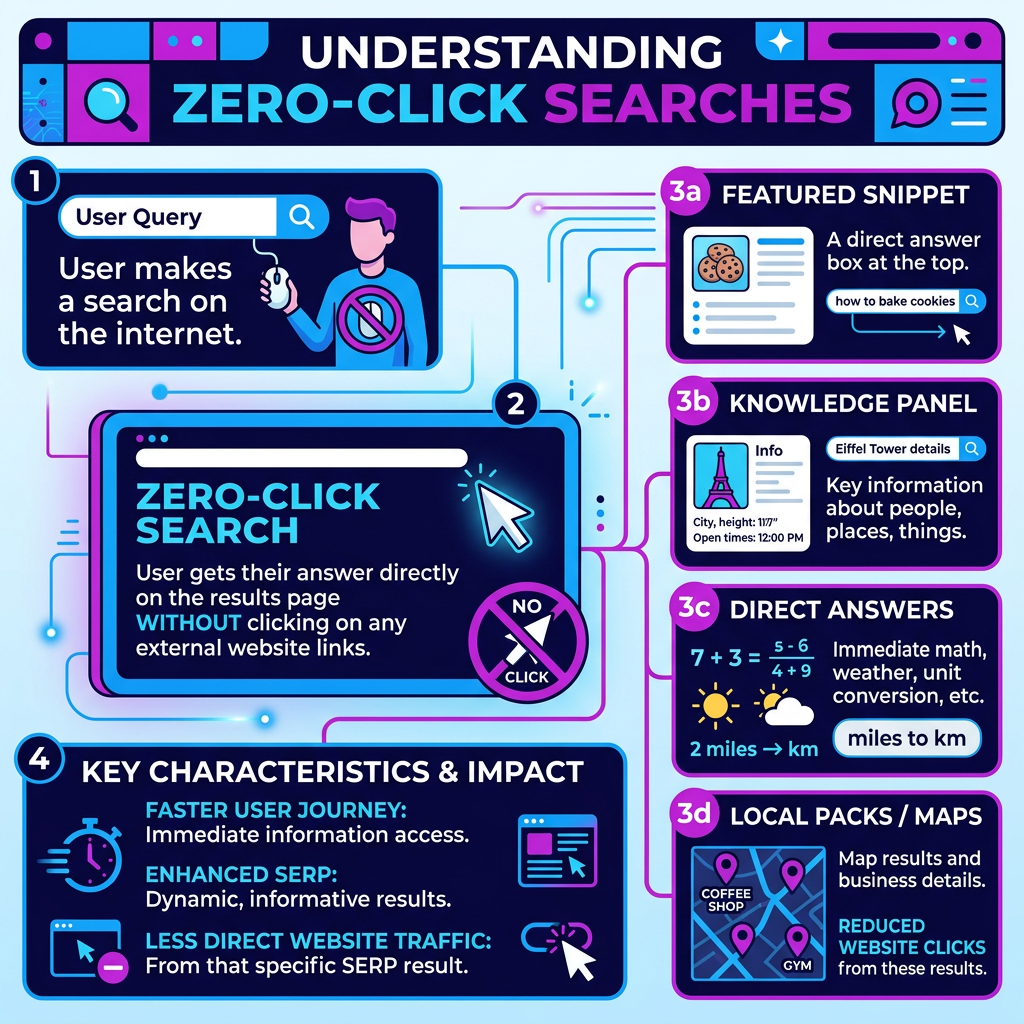
Why does “zero-click search” matter? You’re operating in SERPs where users get answers without visiting your site. A zero-click query resolves intent on-page via featured snippets, AI Overviews, or other AI summaries, so the session ends at Google. This behavior is now mainstream: about 34% of desktop searches and 62% of mobile searches produce zero-click outcomes. Bain data show that ~80% of consumers use zero-click results for at least 40% of searches, translating to a 15%–25% drop in organic traffic for many sites. You’ll see the biggest impact on informational intents—definitions, explainers, and how-to steps—because above-the-fold answers bypass traditional rankings. Define it as SERP-native fulfillment of intent, not a visit.
How AI Answers Reduce Organic Clicks
How do AI-generated answers shrink your organic clicks even when you still rank? They surface above the fold as summaries, definitions, and step lists, satisfying intent without a visit. That’s classic zero-click behavior, and it’s measurable: about 80% of consumers rely on zero-click results for at least 40% of searches, and many sites see a 15%–25% drop in organic traffic. LLM-driven interfaces also absorb research demand—40%–70% of users ask them to summarize, and 48% use them for news and weather—reducing query volume that once flowed to your pages. Informational queries take the biggest hit; reviews and comparisons still earn clicks, but later. You control exposure by optimizing AI readability and earning citations in answers.
The KPI Shift: From Traffic to Outcomes
When zero-click SERPs and AI overviews satisfy intent above the fold, your rankings can hold steady while organic clicks and sessions fall—so your KPI stack has to change. You can’t manage by CTR alone; you need visibility and conversion proxies that reflect AI answers and on-SERP influence. Track impressions, pixel depth, and “AI citation rate” (how often you’re referenced in overviews, snippets, and knowledge panels), then tie them to downstream revenue. With fewer landings, first-party data capture shrinks, so you should measure lead quality, assisted conversions, branded search lift, and CRM-sourced pipeline by query class. Build dashboards that map intent → SERP presence → engagement loops, so you control zero-click outcomes, not just traffic.
Industries Hit Hardest by Zero-Click Search
Those KPI changes show up fastest in the sectors where Google can satisfy intent without a click: high-volume informational publishers. In zero-click SERPs, AI summaries and featured snippets absorb “what is,” “how to,” and definition intent, suppressing CTR for informational publishing at scale. Forbes cited traffic declines up to 60% after AI-powered summaries rolled out for common queries, making ad-supported content farms and news-adjacent explainers especially exposed.
You’ll still win clicks where intent needs steps, context, or locality, but the bar rises. Local packs and nuanced workflows keep some demand, yet they’re forced to outrank machine answers. If your growth model depends on standard SEO sessions, you’ll see the steepest volatility; if you diversify formats and reinforce topical authority, you’ll stabilize visibility across AI-friendly surfaces.
Build Pillar Hubs That Drive the Next Click
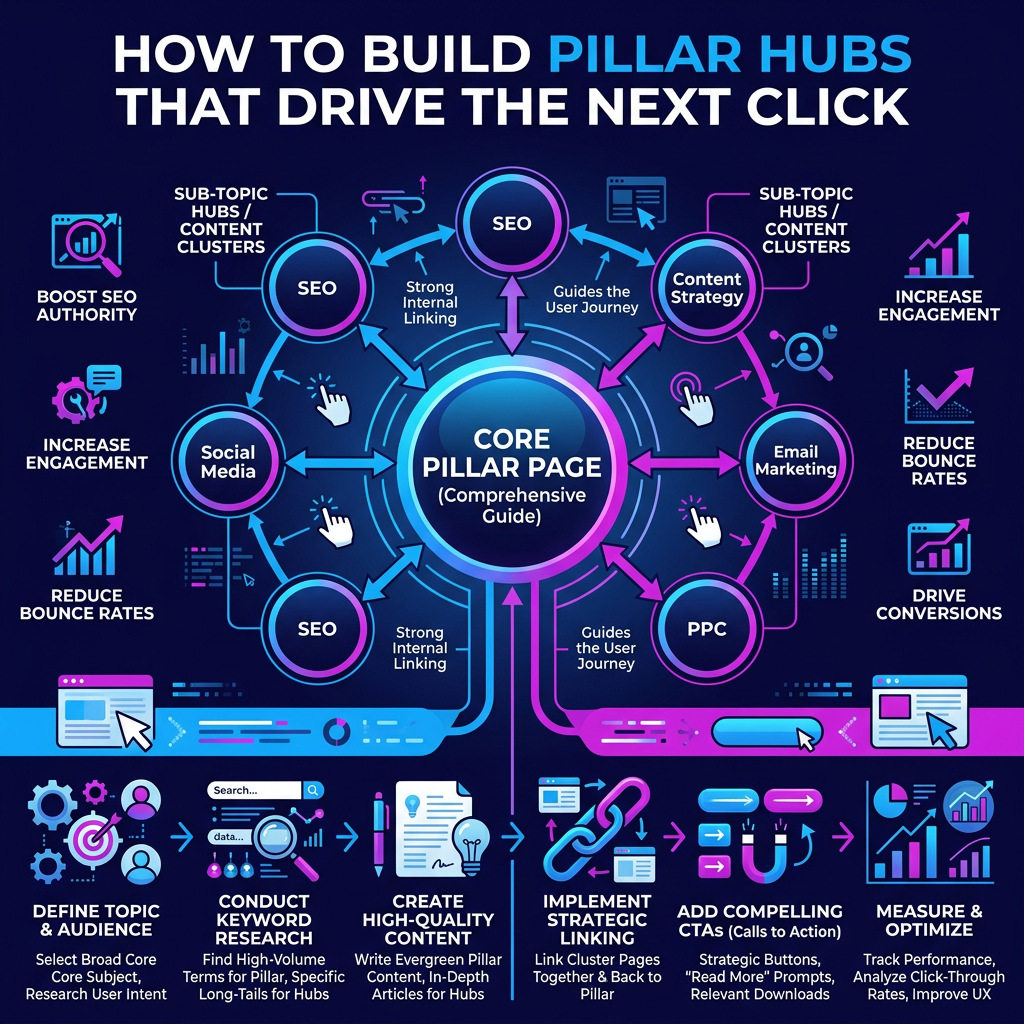
A well-built pillar hub turns zero-click visibility into measurable downstream demand by pairing an authoritative pillar page with tightly interlinked cluster content that’s optimized for featured snippets, AI summaries, and conversational search. You control AI search discovery by structuring entities, internal links, and schema so clusters reinforce the pillar’s topical authority and surface in chat results.
Embed explainer video, calculators, and comparison tables to convert post-SERP intent into on-site actions. Add case studies and nuanced alternatives to stay valuable after the initial zero-click answer. Amplify the hub with press mentions, brand narratives, and social excerpts to increase model recall and citation probability. Track performance beyond CTR: AI visibility, impressions, brand mentions, and first-party captures like newsletter sign-ups and CRM-attributed leads tied to hub entry paths.
Win Featured Snippets With Zero-Click SEO
Featured snippets now function as your primary “clickless” conversion point in Google’s zero-click SERP, so you need snippet-first SEO that targets definitional, how-to, and comparison queries—the categories seeing roughly a 15%–25% organic traffic drag as AI summaries expand.
You win by engineering answer-ready blocks: a 40–60 word definition, numbered steps, and tight tables for comparisons. Place the answer immediately under an exact-match H2, then reinforce it with semantically related entities, FAQs, and internal anchors so Google can extract and AI systems can cite. Avoid PDFs and gated assets; publish clean HTML with schema (FAQPage, HowTo) and consistent terminology. Track query-level snippet ownership, citation frequency, and SERP pixel share, not just clicks, to control visibility and narrative in featured snippets.
Expand Zero-Click Reach With Video, Maps, Images
Winning the snippet only covers part of the zero-click surface area, because Google now blends AI Overviews with video carousels, Local Pack/Maps results, and image packs that satisfy intent without a site visit. To control reach, you’ll optimize each asset type for AI parsing and entity matching, not just blue links.
Build a pillar page, then syndicate extracts into schema-marked video (Key Moments, transcripts), geotagged images (EXIF, alt text, ImageObject), and a fully completed Google Business Profile with consistent NAP and service categories. Repurpose PR and influencer assets into short clips and annotated image sets so your brand narrative propagates into AI summaries. Track impressions, video views, Maps actions, and image pack visibility as primary KPIs, because zero-click performance now spans surfaces, not sessions.
Convert Zero-Click Visibility Into Owned Audiences
How do you turn zero-click impressions—AI Overviews, snippets, Maps actions, and video views—into revenue when sessions don’t materialize? Your engineer captures paths that convert exposure into owned audiences. Add email gates to high-intent assets: calculators, templates, demos, and webinar replays mapped to snippet-trigger keywords. On video, collect addresses with Wistia forms, then sync contacts into your CRM so you can segment by topic, watch-time, and CTA clicked. Build pillar pages that summarize the answer fast for AI, then drive deeper interaction with interactive modules and inline signup blocks. Use subscriber cohorts to power targeted remarketing across search, social, and programmatic, reducing dependence on zero-click organic traffic and third-party platforms over time.
How to Prove Zero-Click ROI (GSC, GA4, CRM)
Where do you look for ROI when AI Overviews and snippets steal the click? You control zero-click ROI by shifting measurement from sessions to exposure, engagement, and pipeline. In GSC, segment queries that trigger featured snippets and track impressions, CTR deltas, and average position to quantify AI visibility. Create a “snippet query set” dashboard and watch lift after FAQ and pillar-page updates. In GA4, stop over-weighting last-click; track engagement events tied to SERP discovery: video_start, scroll_depth, form_interact, and outbound_link_click from brand pages. Then connect CRM: capture first-touch source as “AI summary/snippet” via hidden fields, UTMs, and offline conversion imports. Attribute influenced revenue by matching GSC query themes to CRM lead tags and lifecycle stages.
Conclusion
Zero-click search isn’t killing SEO—it’s forcing you to optimize for SERP visibility, not just organic clicks. By 2026, **nearly 60% of Google searches end without a click** (SparkToro), so you’ve got to win featured snippets, People Also Ask, Maps, and AI answers with structured data, concise intent-matching copy, and entity signals. Then convert that exposure into outcomes: email signups, CRM leads, and conversions you can attribute in GSC, GA4, and pipeline reports.