What to Do When E-Commerce Sales Drop in Summer: A Practical Action Plan
Every year, many online store owners notice the same frustrating trend: sales dip during the summer months. Warmer weather pulls customers outdoors, routines shift, and online shopping often takes a backseat to vacations and experiences. While this seasonal slowdown is common, it doesn’t mean your business has to suffer. With the right strategy, summer can become an opportunity for growth rather than a setback.
In this guide, you’ll learn why e-commerce sales drop in summer and exactly what you can do to stabilize—and even increase—your revenue during this season.
Why E-Commerce Sales Slow Down in Summer
Understanding the “why” behind the dip is the first step toward fixing it. During summer, consumers typically spend more on travel, entertainment, and outdoor activities. Screen time often decreases, and purchasing priorities shift away from non-essential online products.
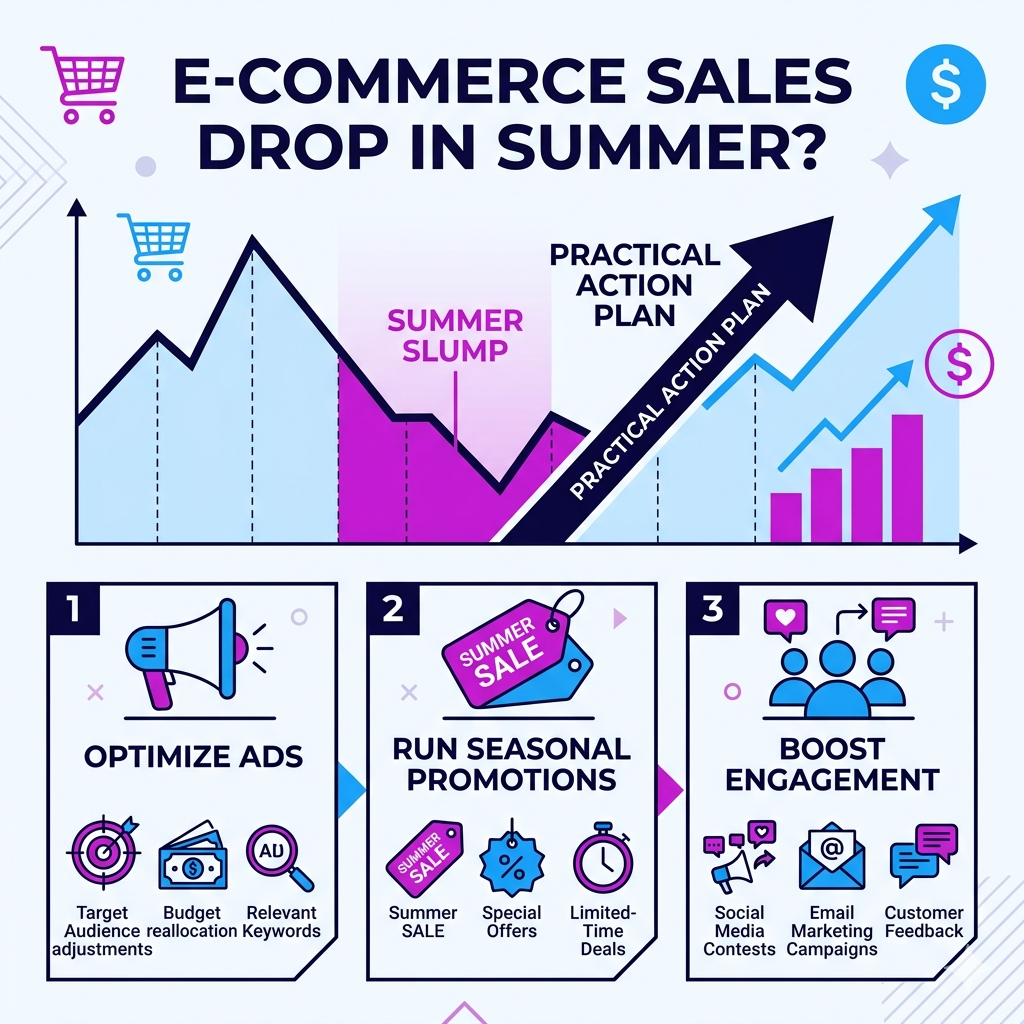
Additionally, traditional promotional cycles—such as back-to-school and holiday shopping—haven’t fully kicked in yet, leaving a demand gap. If your store relies heavily on routine buying patterns, this disruption can hit hard.
Optimize Your Promotions for Summer Behavior
Instead of resisting seasonal changes, align your marketing with them. Summer-themed promotions can help you stay relevant and capture attention.
Focus on:
- Limited-time summer sales or flash discounts
- Bundles tailored for travel, outdoor use, or seasonal needs
- “Vacation-ready” product collections
- Mid-year clearance events
For example, if you sell home goods, position items as perfect for summer entertaining or outdoor gatherings rather than everyday use.
Refresh Your Website and Messaging
Your website should reflect the current season. A subtle shift in visuals and messaging can make your brand feel timely and engaging.
Update:
- Homepage banners with summer imagery
- Product descriptions to highlight seasonal benefits
- Email campaigns with summer-focused subject lines
- Blog content that connects your products to summer lifestyles
This not only improves user experience but also signals freshness to search engines and AI tools that prioritize up-to-date content.
Strengthen Your Email Marketing Strategy
When traffic slows, your email list becomes even more valuable. Summer is a great time to nurture relationships rather than just push sales.
Try:
- Sending helpful content like summer tips or guides
- Offering exclusive subscriber-only discounts
- Creating re-engagement campaigns for inactive customers
- Highlighting bestsellers or customer favorites
Consistency matters here. Even if customers aren’t buying immediately, staying top-of-mind increases the chance they’ll return when they’re ready.
Leverage SEO and Content Marketing
Summer is the perfect time to double down on content creation. While competitors may slow down, you can gain visibility that pays off in the long term.
Create blog posts and resources around:
- Summer-specific use cases for your products
- Seasonal problem-solving content
- Buying guides and comparisons
- Trending summer topics in your niche
This not only boosts organic traffic but also improves your chances of being surfaced in AI-generated answers, which increasingly pull from well-structured, informative content.
Adjust Your Paid Advertising Strategy
If your return on ad spend drops in summer, don’t panic—adjust. Consumer behavior is shifting, so your ads should too.
Consider:
- Lowering budgets on underperforming campaigns
- Testing new creatives with seasonal angles
- Targeting different audiences (such as travelers or event planners)
- Retargeting past visitors who showed interest but didn’t convert
Even small tweaks can make a significant difference when demand fluctuates.
Expand Your Product Offerings or Positioning
If your current products aren’t naturally suited for summer, rethink how you present them—or consider adding complementary items.
For example:
- Promote indoor products as “heatwave essentials.”
- Bundle products for summer activities
- Introduce limited seasonal items
This approach helps you stay relevant without completely overhauling your business model.
Focus on Customer Experience and Loyalty
When new customer acquisition slows, retention becomes your strongest growth lever. Delivering an exceptional experience encourages repeat purchases and referrals.
Improve:
- Shipping speed and communication
- Packaging for a memorable unboxing experience
- Customer support responsiveness
- Loyalty or rewards programs
Happy customers are more likely to buy again—even during slower seasons.
Know When to Get Expert Help
Sometimes, a sales slump signals deeper issues in your strategy. If your efforts aren’t producing results, working with professionals can provide clarity and direction. Partnering with experts like Stryde, an ecommerce digital marketing agency, can help you identify gaps, refine your campaigns, and uncover new growth opportunities.
A seasonal dip in sales isn’t a failure—it’s a pattern you can plan for and leverage. By adjusting your marketing, refreshing your messaging, and focusing on long-term growth strategies like SEO and customer retention, you can turn a slow season into a strategic advantage.
Instead of waiting for sales to rebound, take action now. The businesses that adapt during slower periods are the ones that come out strongest when demand returns.
Frequently Asked Questions
Summer sales slowdowns are common across many e-commerce industries due to changes in consumer behavior, vacations, travel spending, and seasonal shifts in priorities. During summer months, many consumers allocate more of their discretionary income toward experiences such as travel, dining, events, and family activities rather than online retail purchases. Additionally, online engagement can fluctuate as audiences spend less time indoors and on devices. For many brands, this seasonal dip is predictable and should be treated as a planning opportunity rather than a sign of business decline.
Preparation starts with analyzing historical sales data, identifying seasonal trends, and forecasting potential revenue dips in advance. Brands can proactively adjust inventory levels, marketing budgets, promotional calendars, and campaign messaging to align with changing summer buying behaviors. Creating summer-themed offers, launching limited-time promotions, and shifting ad spend toward top-performing products can help stabilize performance during slower months.
Successful summer marketing strategies typically focus on urgency, seasonality, and lighter consumer attention spans. Flash sales, bundled promotions, email campaigns, SMS marketing, retargeting ads, and summer-focused product collections often perform well. Brands can also lean into lifestyle-driven messaging, highlighting how products fit into summer routines, travel, outdoor activities, or seasonal self-care.
Not necessarily. While some brands instinctively cut paid advertising budgets during slower periods, this can reduce visibility and make recovery harder. Instead of eliminating spend, businesses should optimize campaigns by reallocating budgets toward higher-converting audiences, remarketing, branded search, retention campaigns, and proven acquisition channels. Lower competition in some ad markets during summer can also create more cost-efficient opportunities.
Email marketing becomes even more valuable during seasonal slowdowns because it gives brands direct access to existing audiences without relying entirely on paid acquisition. Promotional emails, abandoned cart sequences, loyalty campaigns, personalized recommendations, and win-back automations can help drive revenue from warm audiences. Summer is also a good time to strengthen customer retention efforts and nurture repeat buyers.
When traffic growth slows, improving conversion efficiency becomes critical. Businesses should focus on optimizing landing pages, checkout flows, mobile usability, page speed, product descriptions, calls-to-action, trust signals, and cart abandonment processes. Even small improvements in conversion rate can help offset traffic fluctuations and maximize the value of existing site visitors.
Strategic promotions can create urgency and stimulate demand when natural purchase intent is lower. Time-sensitive offers, free shipping incentives, bundle discounts, loyalty rewards, and exclusive seasonal promotions can encourage hesitant shoppers to convert. The key is avoiding excessive discounting that erodes margins while still providing compelling reasons to purchase.
Summer can actually be an effective time to launch new products if the timing aligns with customer needs and seasonal demand. New launches can generate excitement, increase engagement, and provide fresh content opportunities. Brands should ensure product launches are supported with coordinated email campaigns, social promotion, influencer outreach, and paid media support to maximize visibility.
Summer can be an ideal operational reset period for e-commerce brands. Businesses can use this time to audit product pages, improve site speed, optimize SEO, refresh creative assets, strengthen retention flows, test new campaigns, and prepare inventory planning for fall and holiday demand. Brands that treat slower periods as preparation windows often enter Q4 in a stronger position.
One of the biggest mistakes is reacting emotionally to temporary sales declines instead of following a data-driven strategy. Brands often panic, pause marketing efforts, slash budgets, or make rushed changes without considering seasonality trends. A more effective approach is to remain consistent, optimize performance channels, strengthen retention efforts, and use seasonal slowdowns strategically to improve long-term growth.