
Beyond Aesthetics: How Integrating Wellness Offerings Strengthens Your Practice’s Digital Presence
When you add evidence-based wellness services to your aesthetics practice, you broaden your ranking for relevant searches and capture patient-ready searches like “weight loss support,” “sleep help,” “metabolic testing,” and “IV hydration near me.” You’ll convert more traffic by building clear pillar pages with eligibility criteria, outcomes, FAQs, and schema-ready summaries that answer cost, safety, and timelines. Track inquiries and analytics to refine what patients want, then repurpose FAQs into save-worthy content. Next, you’ll see how to structure pages and booking flows for measurable results. To learn more about cosmetic practice marketing, read below.
Define Your Online Wellness Offerings
Where do you start when adding wellness services to your website? You define what “wellness” means in your practice, then translate it into clear, searchable offerings. Audit your appointment data, intake forms, and top FAQs to identify recurring needs, then group them into 3–5 pillars (e.g., metabolic health, stress resilience, longevity labs). Name each pillar with plain-language terms patients use, and connect it to measurable outcomes and candid eligibility criteria. Build tight page structures: one core page per pillar, supporting FAQs, and schema-ready service summaries to improve discoverability. Align every page with consistent wellness branding, but keep the focus on patient education—what it is, who it’s for, what to expect, and how follow-up works.
Choose Wellness Services Patients Actually Search For

How do you choose wellness services that will actually drive qualified traffic to your site? Start with patient intent, not your menu. Audit your inquiries, intake forms, and call logs, then validate with keyword and trend data. Prioritize offerings with consistent demand and clear outcomes—think stress management, weight management, sleep support, metabolic testing, or IV hydration—based on your local volume and seasonality.
Next, align each service to a measurable patient problem and the benefits they expect, because wellness perception shapes clicks, calls, and conversions. Compare your ideas to competitors and map gaps: what’s underserved, credible for your clinicians, and differentiated by evidence or technology? Finally, use your analytics to confirm which terms visitors use and which questions they ask; that search behavior tells you what to feature and refine.
Target Patient-Ready Searches With Wellness Pages

Once you’ve prioritized wellness services patients actually want, build dedicated pages that match patient-ready searches with clear intent signals like “near me,” “cost,” “benefits,” “results,” and “book an appointment.” Each page should focus on one service and one core problem (for example, “sleep support for insomnia” or “medical weight management”), then answer the questions that drive conversions—who it’s for, what happens at the visit, expected timelines, safety, pricing/insurance, and next steps—using the same phrases patients type into Google. Treat this as wellness architecture: map keywords to the patient journey, then align headers, FAQs, schema, and CTAs to patient intent. Add proof points—outcomes ranges, clinician credentials, and transparent pricing—to reduce friction. When pages mirror real queries, you’ll earn higher-quality traffic and more booked visits.
Repurpose Wellness Services Into Save-Worthy Content
Why let your wellness pages do all the work when patients save, share, and decide from bite-sized content on social and search? Turn every service into micro-assets that reinforce expertise and capture high-intent keywords where people actually browse. With wellness repurposing, you extend reach without reinventing messaging, and you improve content preservation by keeping guidance consistent across channels. Use patient questions, outcomes, and FAQs to spark formats that platforms reward and patients bookmark.
- Break one service into a 30-second myth-vs-fact reel using exact search terms.
- Convert intake tips into a carousel checklist that patients can save pre-visit.
- Publish a symptom-to-solution infographic that earns backlinks and boosts topical authority.
- Clip the clinician’s answers into short posts that match People Also Ask queries.
Make Wellness Services Easy to Book and Measure
Save-worthy wellness content should lead patients to a frictionless booking path you can track. Add a “Book Wellness” CTA on every service page, Reel, and blog, and route clicks to a single mobile-first scheduler with prefilled intake forms, transparent pricing, and instant confirmations. Enable wellness booking via Google Business Profile, embedded widgets, and SMS links to prevent patient drop-off.
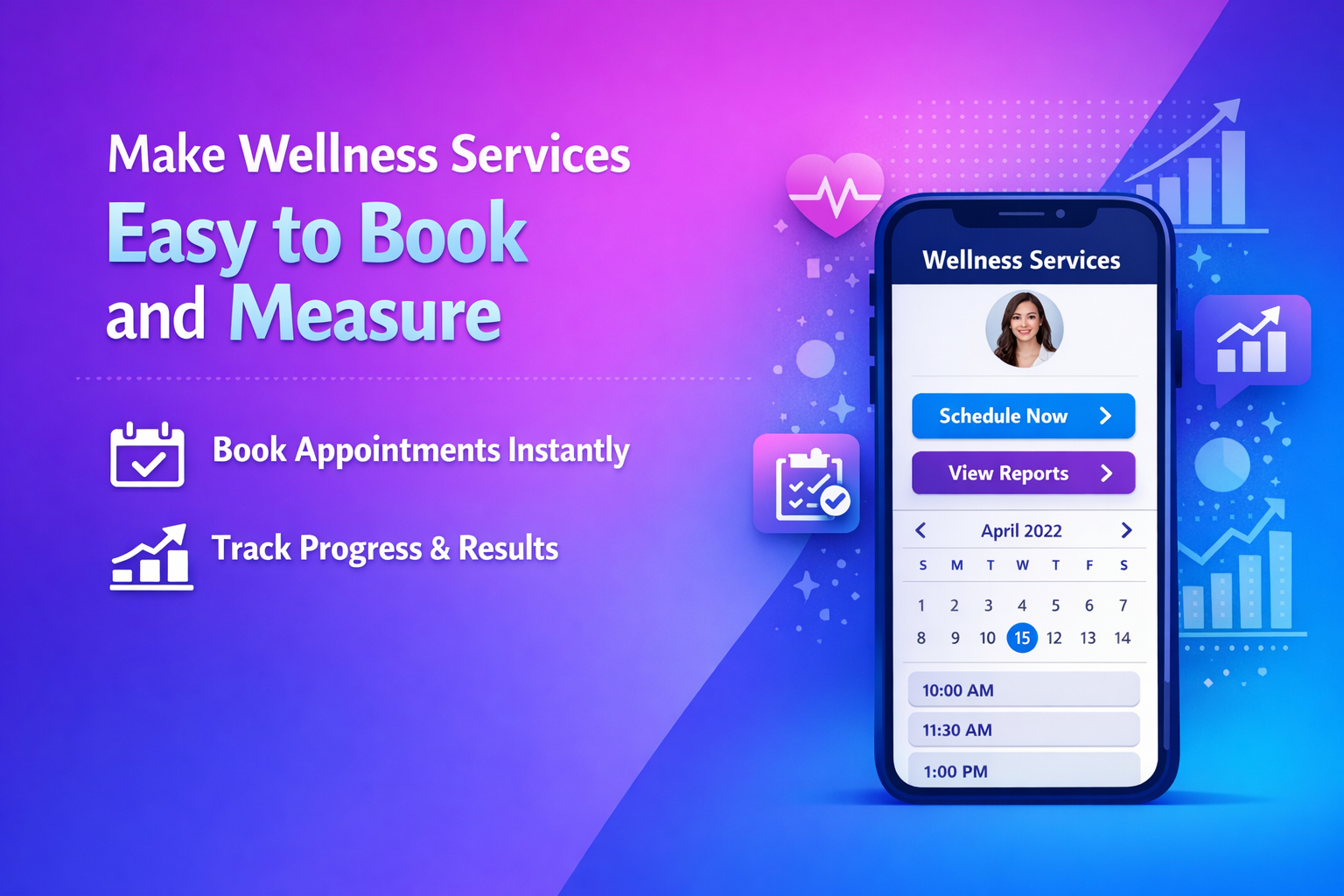
Then measure what matters. Tag every link with UTM parameters, connect your scheduler to GA4, and monitor conversion rate by channel, service, and audience segment. Use standardized pre- and post-check-ins (sleep, stress, pain scores, biometrics) to document measurable outcomes and trigger personalized follow-ups. When patients see progress dashboards, they return, refer, and leave higher-intent reviews that lift local SEO.

Conclusion
Integrating wellness into your digital presence isn’t “extra”—it’s how you capture intent. Patients already search “IV therapy near me,” “weight loss clinic,” and “stress management,” and dedicated service pages help you rank, convert, and track demand. Worried it’ll dilute your clinical brand? Clear messaging, outcomes-focused FAQs, and online booking keep expectations tight and trust high. When you repurpose each service into search-optimized posts and emails, you turn visits into measurable growth.